1. What Is ABS
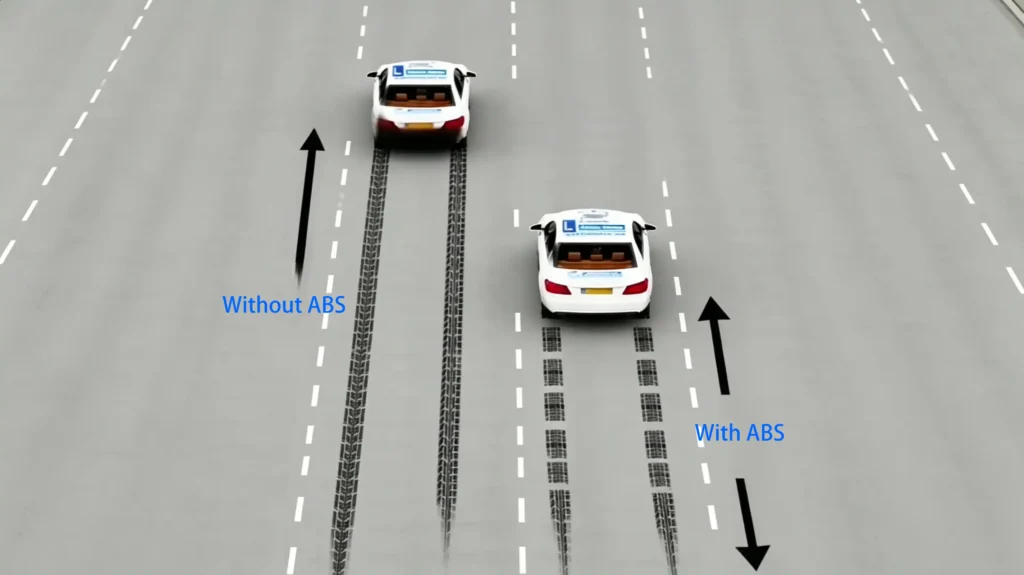
ABS stands for Anti-lock Braking System. It is a safety system that stops your wheels from locking up when you brake hard. Instead of the wheel freezing and skidding, ABS pulses the brakes rapidly — up to 15 times per second — so the wheel keeps turning while still slowing down. The driver keeps steering control. The vehicle stops shorter on most surfaces. That is the whole point.[1]
Think about what happens without ABS. You hit the brake pedal hard. The wheel stops rotating. The tire slides across the road surface. You turn the steering wheel, but nothing happens — the vehicle keeps going straight, wherever momentum takes it. On a wet road, an icy bridge, or loose gravel, this happens faster than you expect.
ABS prevents this. It uses electronic sensors, a computer, and hydraulic valves to constantly monitor each wheel. The moment a wheel is about to lock, the system releases brake pressure for a split second, then reapplies it. The driver feels this as a pulsing sensation in the brake pedal — that pulsing is the ABS doing its job.

Prevents Skidding
ABS keeps wheels rotating during hard braking, so the vehicle stays stable and controllable.
Maintains Steering
With ABS active, the driver can steer around obstacles even while braking at full force.
Reduces Stopping Distance
On wet or dry pavement, ABS typically shortens stopping distance compared to locked-wheel braking.
Mandatory Worldwide
ABS has been required on all new passenger cars sold in the EU since 2003 and on motorcycles above 125cc since 2016.[2]
2. How ABS Works — The Four Components
Every ABS system has four main parts. They work together in a loop that repeats many times per second. If any one of these parts fails, the ABS warning light comes on and the system shuts down — the brakes still work, but without the anti-lock function.
2.1 Wheel Speed Sensors
Each wheel has a speed sensor mounted near the wheel hub. It reads how fast the wheel is rotating and sends that data to the ABS computer. Most sensors use a magnetic tip and a toothed ring — as the ring spins past the sensor, it generates a signal. Faster rotation = higher frequency signal.
Why this matters for distributors: Wheel speed sensors are high-replacement parts. They sit in a harsh environment — exposed to water, road salt, brake dust, and vibration. A single contaminated sensor disables the entire ABS system. For any distributor selling brake components, ABS sensors are a steady-demand product line that complements brake drums and shoes.
2.2 Electronic Control Unit (ECU)
The ECU is the computer that runs the ABS. It reads sensor signals from all wheels and looks for one thing: a wheel decelerating faster than the vehicle can physically decelerate. That signals an impending lock-up. When the ECU detects it, it immediately commands the hydraulic unit to reduce brake pressure at that wheel.
The ECU is programmed to account for normal driving conditions — for example, during cornering, inner wheels turn slower than outer wheels. If the ECU did not filter for this, ABS would trigger falsely every time the driver turned the steering wheel.
2.3 Hydraulic Control Unit (HCU)
The HCU is the physical actuator. It contains solenoid valves, a small electric pump, and a motor. Each brake circuit has two valves:
- Inlet valve (normally open) — lets brake fluid flow from the master cylinder to the brake caliper. Closes to stop further pressure increase.
- Outlet valve (normally closed) — opens to release pressure into an accumulator when the ECU detects lock-up.
The pump restores pressure after the valves release it. This whole cycle — hold, release, reapply — happens in milliseconds. The driver feels it as a rapid pulsing in the brake pedal.
2.4 The Brake Components Themselves
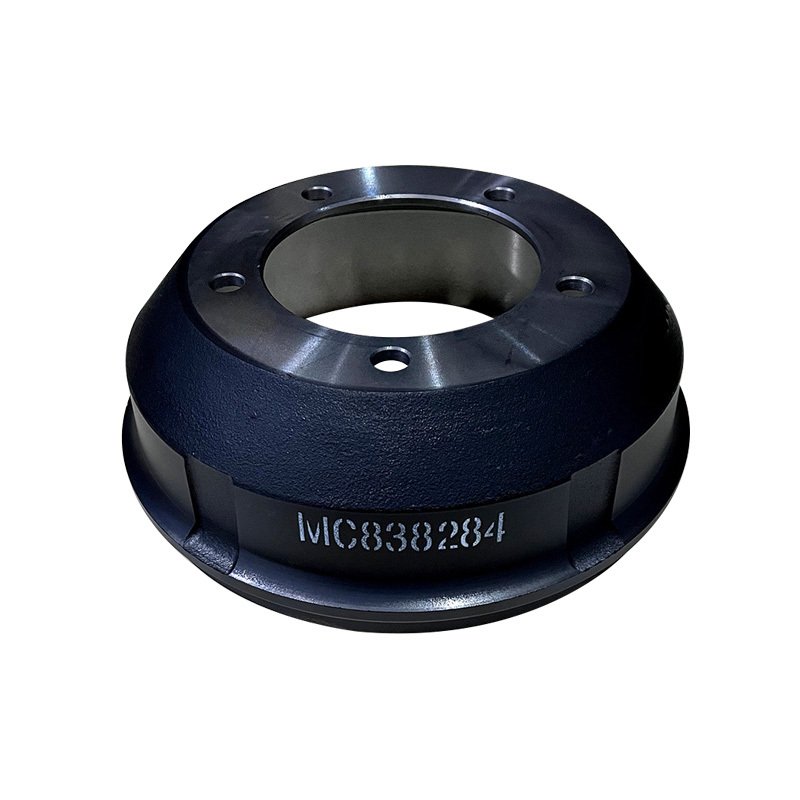
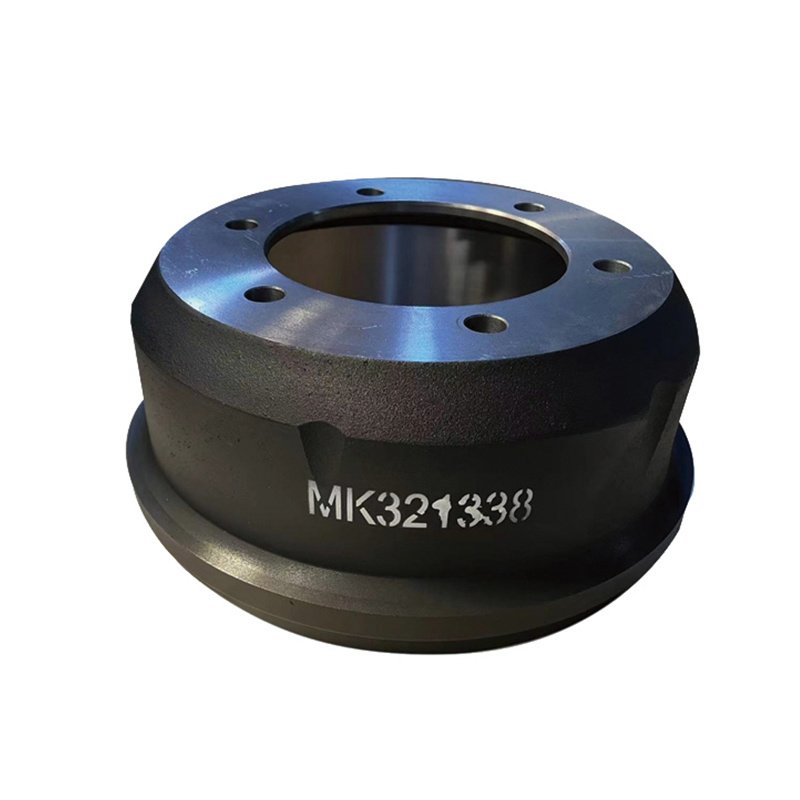
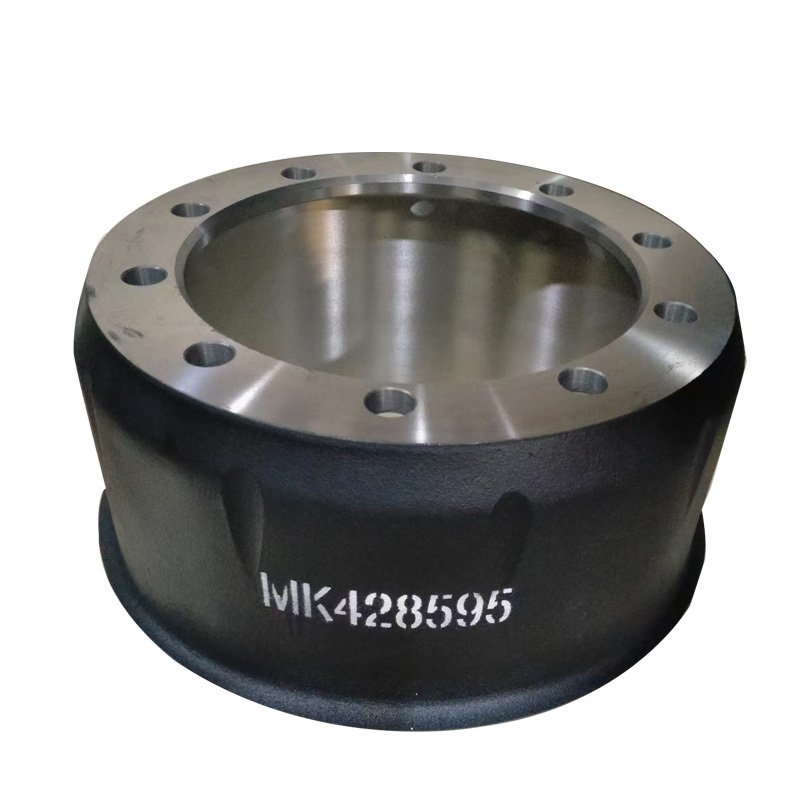
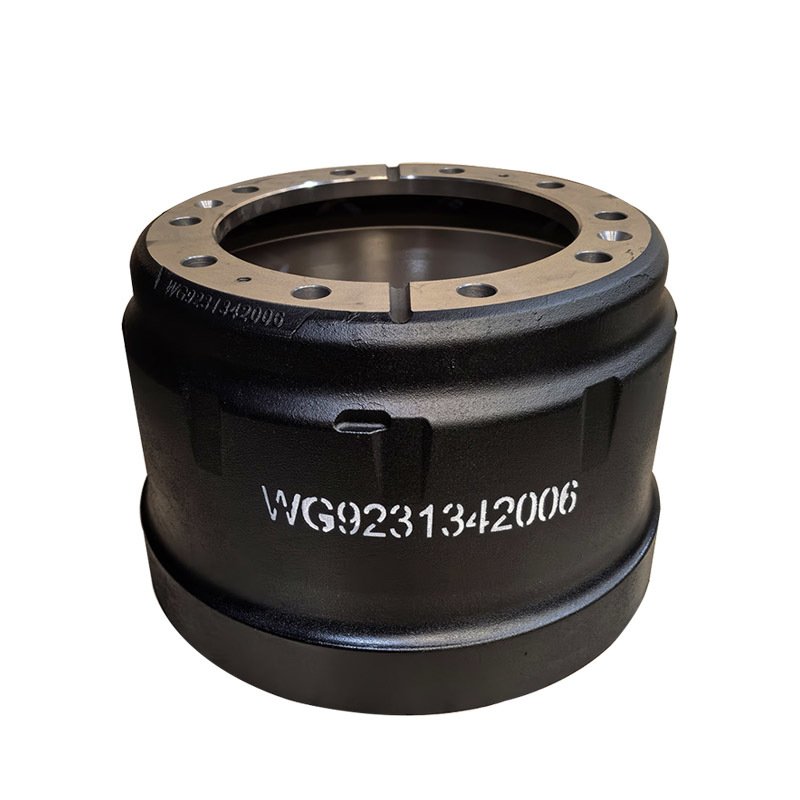
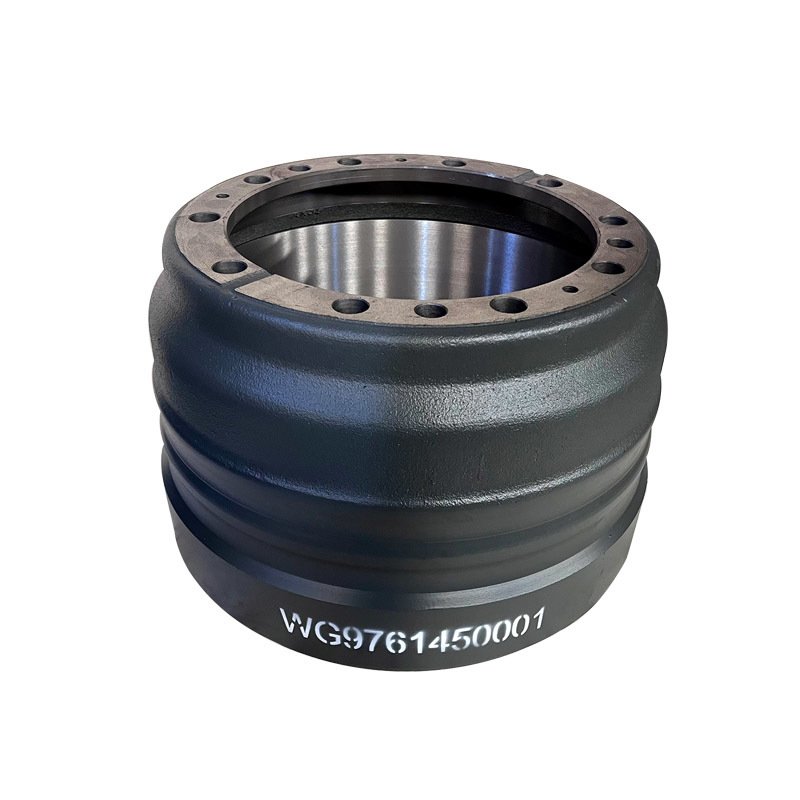
Here is the part that most ABS guides skip: the ABS system is only as good as the brake components it controls. The sensors, ECU, and HCU modulate brake pressure — but the actual braking force comes from the brake pads, shoes, drums, and rotors at each wheel. If those components are low quality, worn, or improperly fitted, even the most advanced ABS cannot compensate.
This is why brake drum quality matters. A brake drum with inconsistent material composition, poor heat dissipation, or imprecise machining tolerances will not respond predictably to ABS modulation. The result: uneven braking, longer stopping distances, and faster wear on the entire brake system — including the ABS sensors and modulator.
3. ABS in Trucks and Commercial Vehicles
ABS is even more important in commercial trucks, buses, and heavy-duty vehicles. A fully loaded truck weighs 40 tons. A wheel lock-up at highway speed in a vehicle that heavy is catastrophic — not just for the driver, but for the cargo and everyone else on the road.
Commercial vehicles use pneumatic (air) ABS instead of hydraulic ABS. The principle is the same, but compressed air replaces brake fluid as the pressure medium. Key components include:
- ABS modulator valves — air valves that regulate pressure to each brake chamber
- Tone rings and wheel speed sensors — mounted on each hub
- ECU — integrated with the vehicle’s electronic braking system (EBS)
For Southeast Asian markets, commercial vehicle ABS is especially relevant. Countries like Thailand, Indonesia, Vietnam, and the Philippines have large and growing trucking and bus fleets — and many of these vehicles operate in demanding conditions: mountainous roads, tropical rain, heavy loads. Brake system reliability is a safety issue and a business issue.
Market Insight: Why Brake Drums Are a High-Demand Product in Southeast Asia
Southeast Asia’s commercial vehicle parc is expanding rapidly. According to industry data, the ASEAN heavy truck market is projected to grow at a CAGR of over 5% through 2030. Every truck on the road needs brake drum replacement every 200,000–300,000 km under normal conditions, and more frequently in mountainous or heavy-load operations. This creates consistent, long-term demand for quality brake drums — and an opportunity for distributors who source from reliable manufacturers.
4. ABS Configurations — What Distributors Should Know
Not all ABS systems are the same. They differ by number of channels (independent brake circuits) and number of sensors. When your customers ask for ABS-related parts, knowing the configuration helps you supply the correct components.
| Configuration | Channels | Sensors | Where You Find It |
|---|---|---|---|
| Four-Channel, Four-Sensor | 4 | 4 | Modern passenger cars, premium SUVs, light trucks |
| Three-Channel, Three-Sensor | 3 | 3 | Pickup trucks, older commercial vehicles |
| Four/Six-Channel Pneumatic | 4–6 | 4–6 | Heavy trucks, buses, trailers (air brake systems) |
| One-Channel, One-Sensor | 1 | 1 | Entry-level pickups, vans (rear-wheel ABS only) |
The four-channel, four-sensor system is the safest configuration — each wheel is monitored and controlled independently. For heavy commercial vehicles, pneumatic ABS systems from suppliers like WABCO (ZF) and Knorr-Bremse are the industry standard.[3]
5. Frequently Asked Questions About ABS
Does ABS reduce stopping distance?
On most paved surfaces — yes. ABS typically reduces stopping distance compared to locked-wheel braking. On loose gravel or deep snow, ABS can increase stopping distance because locked wheels create a wedge effect. However, ABS still maintains steering control even on these surfaces, which is often more important than absolute stopping distance.[4]
What happens when the ABS warning light comes on?
The ABS system is disabled. The regular brakes still work, but without anti-lock protection. Common causes: a faulty wheel speed sensor, damaged wiring, contaminated tone ring, or low brake fluid. The vehicle should be inspected as soon as possible.
Are ABS parts interchangeable between different vehicle brands?
Some are, some are not. ABS sensors and tone rings are often vehicle-specific. Brake drums and shoes are more standardized but still vary by model and axle configuration. Always verify part numbers against the vehicle’s specifications. This is where working with a knowledgeable supplier saves time and prevents costly returns.
How often should brake drums be replaced?
Under normal conditions, brake drums typically last 200,000–300,000 km. In heavy-load or mountainous operation, replacement may be needed sooner. The key indicator is the drum’s inner diameter — once it exceeds the manufacturer’s maximum wear specification, the drum must be replaced. Regular inspection during brake shoe replacement is the best practice.
About the Author
Written by the product team at a leading brake drum manufacturing facility in China. We have supplied brake drums and brake system components to distributors and wholesalers in Southeast Asia, the Middle East, Africa, and South America for over a decade. Our goal is to help our distribution partners understand the products they sell — so they can serve their customers with confidence.
References
- Wikipedia, “Anti-lock Braking System.” Comprehensive reference covering ABS history, components, operation, types, and global regulations. https://en.wikipedia.org/wiki/Anti-lock_braking_system
- European Commission, EU ABS Mandate. ABS required on all new passenger cars since 2003 and motorcycles above 125cc since 2016. https://en.wikipedia.org/wiki/Anti-lock_braking_system#Laws_and_regulations