Types of Cast Iron: Cast Iron Description
Cast iron is not a single material. It is a family of iron-carbon alloys, each with a different internal structure that gives it a different set of properties. The key to telling them apart is not the chemistry, which varies only slightly, but the shape of the carbon inside the metal. This article covers the four main types of cast iron, the specialty types, and the engineering details that matter when choosing one.
What’s Cast Iron? — explain cast iron
Cast iron is an iron alloy that contains more than 2% carbon1. At that level, the carbon can no longer stay dissolved in the iron and instead forms a separate phase. In most cast irons, that phase is graphite, pure carbon in solid form. The alloy also contains 1% to 3% silicon, which promotes the formation of graphite, plus small amounts of manganese, sulfur, and phosphorus.
The defining trait of any cast iron is the shape of its graphite2. Graphite itself is soft and weak. The shape it takes inside the metal determines how much it weakens the surrounding iron. Flake graphite cuts through the metal like a crack and makes it brittle. Spheroidal graphite sits in the metal like a pebble, leaving the iron around it continuous and strong. Every type of cast iron is, at heart, a story about graphite shape.
The Four Main Types of Cast Iron
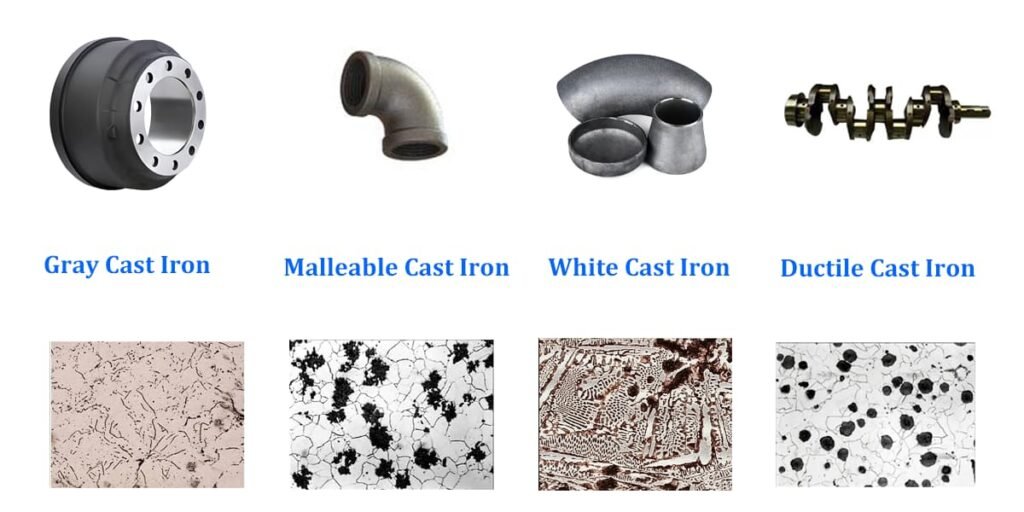
The four main types of cast iron are gray, white, ductile, and malleable iron.3 They are classified by the form the carbon takes when the metal solidifies.
| Type | Carbon form | Graphite shape | Key trait |
|---|---|---|---|
| Gray cast iron | Graphite flakes | Needle-like flakes | High compressive strength, damps vibration |
| White cast iron | Iron carbide (Fe3C) | No graphite | Extremely hard and wear-resistant |
| Ductile cast iron | Spheroidal graphite | Round nodules | High strength and ductility |
| Malleable cast iron | Temper carbon nodules | Irregular clumps | Good ductility, made from white iron |
Gray Cast Iron
Gray cast iron is one of the most widely used cast irons. It is commonly found in engine blocks, brake drums, brake discs, pump housings, machine tool bases, and manhole covers.
It gets its name from the gray appearance of its fracture surface, which results from the presence of graphite flakes within the iron matrix.
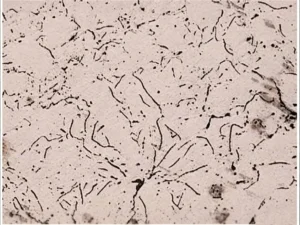
Under a microscope, these graphite flakes have irregular, elongated shapes. Their geometry has a major influence on the mechanical behavior of the material. The sharp ends of the flakes can act as stress concentration points, which limits tensile strength and makes gray cast iron relatively brittle under tension and impact.
At the same time, graphite flakes provide several useful properties. They help dissipate vibration, giving gray cast iron excellent damping capacity. Graphite also contributes to good machinability by reducing friction at the cutting interface.
Gray cast iron also has good thermal conductivity and performs well in applications where the material must absorb and distribute heat. This is one reason it is widely used for components exposed to repeated heating and cooling, including automotive brake components.
The main advantages of gray cast iron include:
Its main limitation is its relatively low tensile strength and limited ductility compared with ductile iron or steel.
White Cast Iron
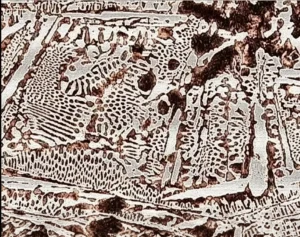
White cast iron forms when the carbon does not separate as graphite but instead bonds with the iron to form iron carbide, or cementite (Fe3C). The carbon is locked in a hard, brittle compound, and the fracture surface is white and crystalline, hence the name.
The cementite makes white cast iron extremely hard and wear-resistant. It also makes it very brittle, with almost no ductility. White cast iron is used where abrasion resistance is the primary requirement and impact loads are low, for example, in ball mill liners, slurry pump casings, and shot-blasting nozzles.
Whether a casting turns out white or gray depends on the cooling rate. Fast cooling, such as in a thin section or against a chill plate in the mold, favors the formation of cementite and produces a white iron surface. Slower cooling allows the carbon to separate as graphite and produces gray iron. This is how chilled cast iron is made: a white iron wear surface on a gray iron body.
Ductile Cast Iron
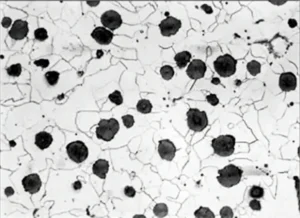
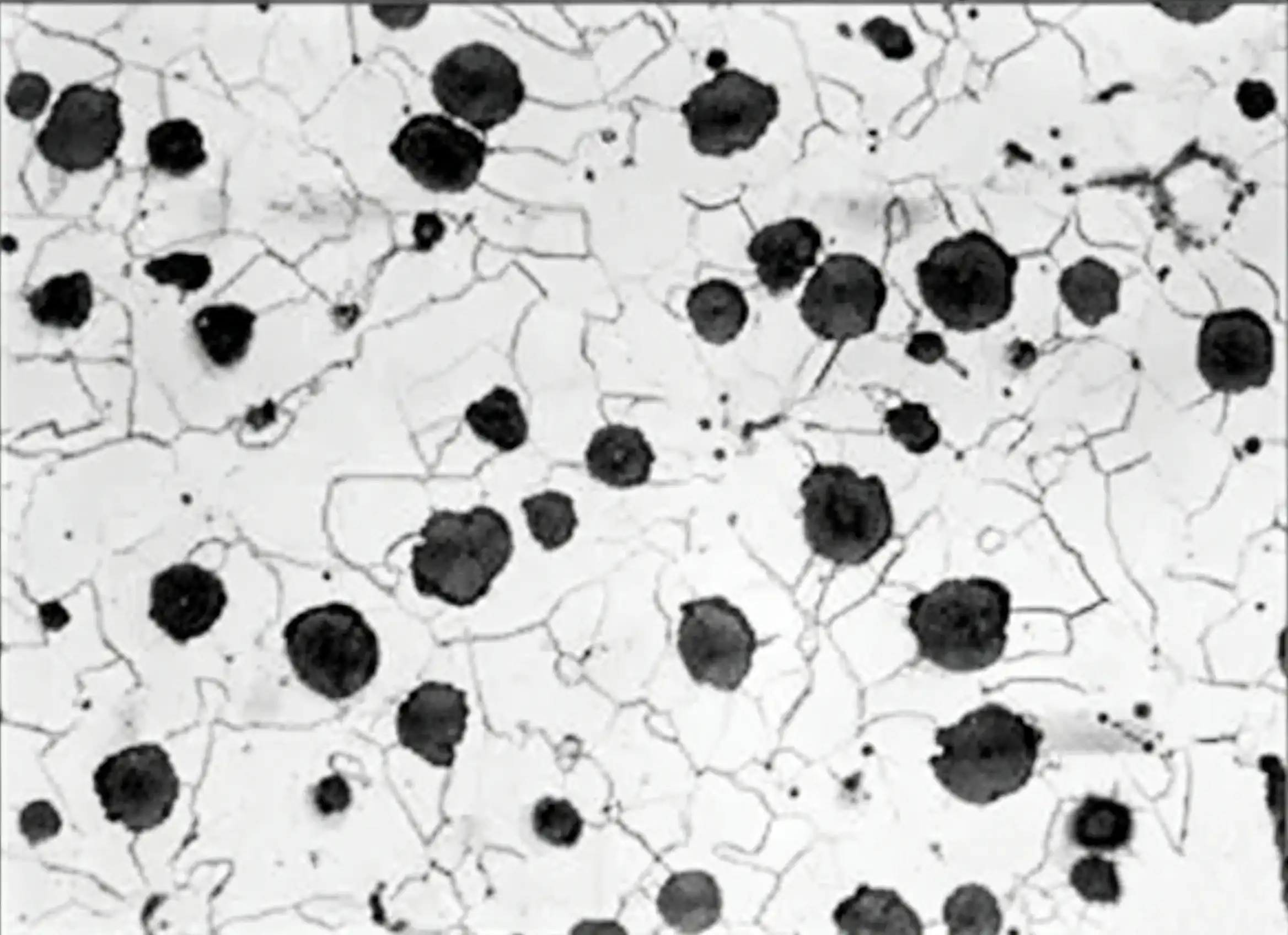
Ductile cast iron, also called nodular iron or spheroidal graphite iron, has its graphite in the form of small, rounded nodules instead of flakes. The difference is transformative. The nodules do not create the sharp stress concentrations that flakes do, so the iron matrix around them stays continuous and strong.
The nodular structure is produced by adding a small amount of magnesium4, or, in some cases, cerium, to the molten iron just before casting. The magnesium reacts with the sulfur and oxygen in the melt and causes the graphite to crystallize as spheres rather than flakes. The process is tightly controlled because too little magnesium leaves flakes, and too much can cause casting defects.
The result is a cast iron with mechanical properties closer to steel. Ductile iron has high tensile strength, good elongation, and impact resistance. It can be bent, twisted, and deformed without fracturing, which is impossible for gray iron. At the same time, it retains the casting advantages of cast iron: lower melting temperature, better fluidity, and lower cost than steel.
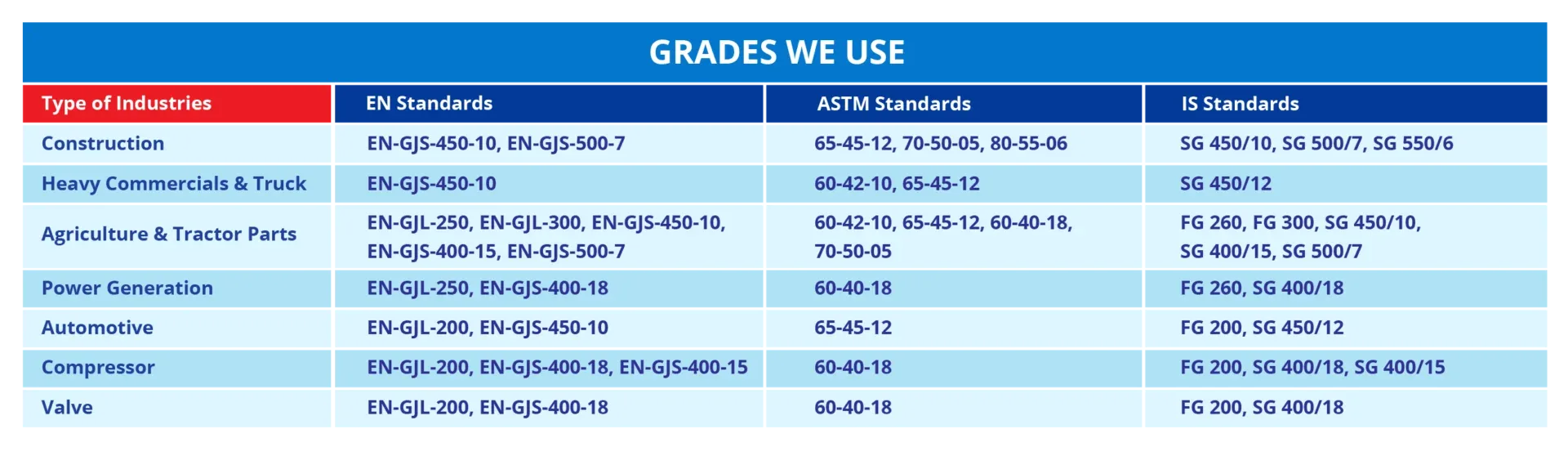
Ductile iron is specified by its tensile strength, yield strength, and elongation. A common grade, ASTM A536 60-40-18, has a tensile strength of 60 ksi, a yield strength of 40 ksi, and 18% elongation. Ductile iron is used for crankshafts, connecting rods, gears, steering knuckles, suspension components, and water and sewer pipes.
Malleable Cast Iron
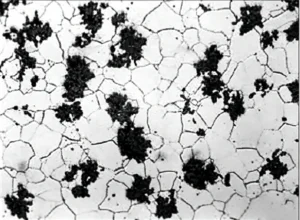
Malleable cast iron begins as white cast iron. A casting is first made in the white iron form, with all the carbon locked in cementite. The casting is then heat-treated, held at a temperature of roughly 900°C to 950°C for an extended period and slowly cooled. During this annealing, the cementite decomposes, and the carbon precipitates as irregularly shaped clumps of graphite called temper carbon.
The resulting microstructure is a ferritic or pearlitic iron matrix with dispersed temper carbon nodules. Malleable iron has good ductility and impact resistance, and for many years it was the only cast iron that could be reliably shaped after casting.
Today, malleable iron has largely been replaced by ductile iron, which achieves similar or better mechanical properties without the long and costly heat treatment. Malleable iron is still used for some pipe fittings, hand tools, and electrical components where its specific combination of ductility and castability remains useful.
Other Types of Cast Iron
Beyond the four main types, several specialty cast irons are engineered for particular applications.
Compacted graphite iron, or CGI, has graphite particles that are shorter and thicker than flakes but not fully spheroidal. They look like worms under a microscope, and are sometimes called vermicular graphite. CGI sits between gray and ductile iron in mechanical properties, with higher strength and stiffness than gray iron and better thermal conductivity than ductile iron. Its main application is in diesel engine blocks, where it handles high cylinder pressures without needing the thicker walls that a gray iron block would require.
Alloy cast irons are gray or ductile irons with added alloying elements that modify the properties for specific environments. Nickel, chromium, copper, molybdenum, and vanadium are the most common additions. Nickel improves corrosion resistance and toughness at low temperatures. Chromium increases hardness and wear resistance at high temperatures. High-silicon cast irons resist acid attack and are used in chemical processing equipment. High-chromium white irons, with 11% to 30% chromium, form hard chromium carbides and are used in severe abrasion service, such as in mining and cement plants.
Engineering Details :Cast Iron Chemical Composition
The cast iron chemical composition varies with the type. The table below shows typical ranges for the four main types.
| Element | Gray iron | White iron | Ductile iron | Malleable iron |
|---|---|---|---|---|
| Carbon | 2.5–4.0% | 1.8–3.6% | 3.0–4.0% | 2.0–2.9% |
| Silicon | 1.0–3.0% | 0.5–2.0% | 1.8–2.8% | 0.9–1.9% |
| Manganese | 0.2–1.0% | 0.2–0.8% | 0.1–1.0% | 0.2–0.6% |
| Sulfur | 0.02–0.25% | 0.02–0.25% | 0.005–0.02% | 0.02–0.25% |
| Phosphorus | 0.02–1.0% | 0.02–0.25% | 0.01–0.1% | 0.02–0.15% |
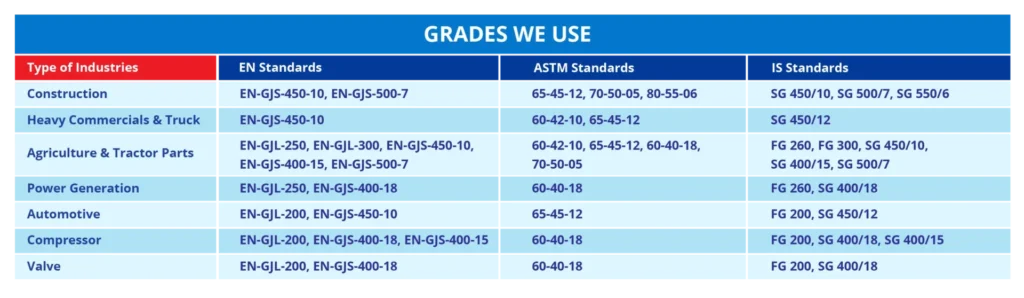
In the ASTM system, gray cast iron uses iron class identifiers and is specified by class number, which is the minimum tensile strength in ksi. Common grades include Class 20, Class 30, and Class 40, used for everything from municipal castings to machine tool structures. Ductile iron grades are specified by three numbers: tensile strength, yield strength, and elongation, as in the 60‑40‑18 example above. The most widely used grades are 60‑40‑18, 65‑45‑12, 80‑55‑06, and 100‑70‑03.
The manufacturing processes that create these types are as important as the compositions. Gray iron is cast without any special melt treatment, and the graphite flakes form naturally as the metal cools. Ductile iron requires the magnesium treatment, a controlled addition of magnesium ferrosilicon to the molten metal just before pouring. Malleable iron requires the solid casting to be packed in a neutral atmosphere and annealed for up to several days. CGI is produced by treating the melt with magnesium and titanium together, which requires a narrow process window and makes it harder to cast reliably than gray or ductile iron.
How to Choose the Right Type of Cast Iron
The best type of cast iron depends on the mechanical, thermal, and environmental requirements of the application.
Gray cast iron is a strong choice when good machinability, vibration damping, thermal conductivity, and cost efficiency are important.
White cast iron is suitable when extreme hardness and abrasion resistance are required and the component is not exposed to significant impact loading.
Ductile cast iron is preferred when higher tensile strength, ductility, fatigue resistance, and impact resistance are required.
Malleable cast iron remains useful for selected components where its combination of ductility and casting characteristics justifies the additional heat-treatment process.
For automotive components such as brake drums, material selection also requires consideration of thermal conductivity, thermal fatigue, wear, dimensional stability, machinability, and braking conditions. Gray cast iron remains widely used for brake drums because its graphite structure provides a useful combination of thermal behavior, damping capacity, castability, and machinability.
Ultimately, choosing the right cast iron is not simply a matter of comparing carbon content. The graphite morphology, matrix structure, chemical composition, cooling conditions, heat treatment, and required service performance all contribute to the properties of the finished casting.