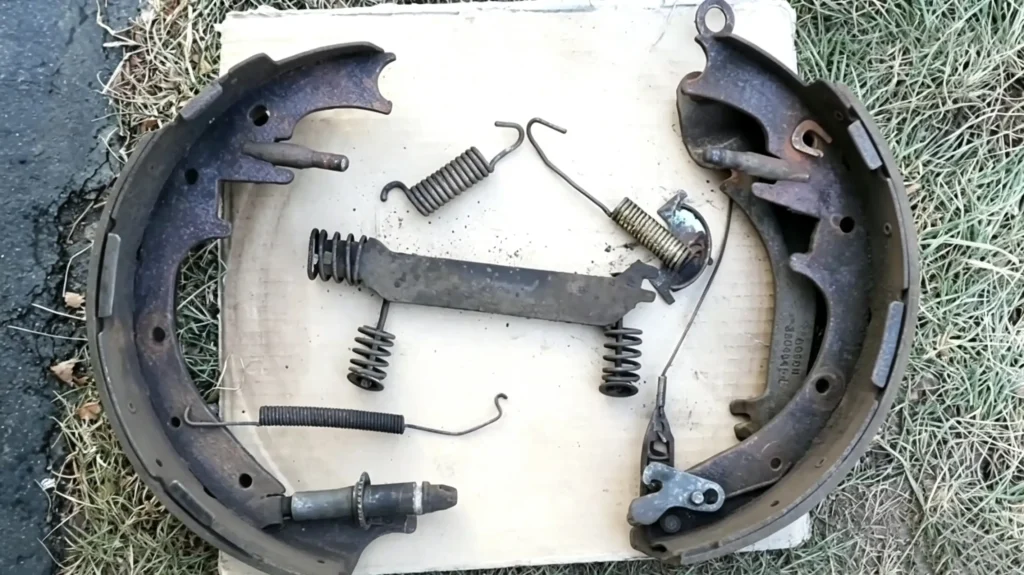
Many of the advantages and disadvantages of drum brakes come from their enclosed design. While the drum protects internal components from dirt, water, and debris, it can also trap heat. This article explores the Advantages and Disadvantages of Drum Brakes, how they work, and why they are still used in modern vehicles.
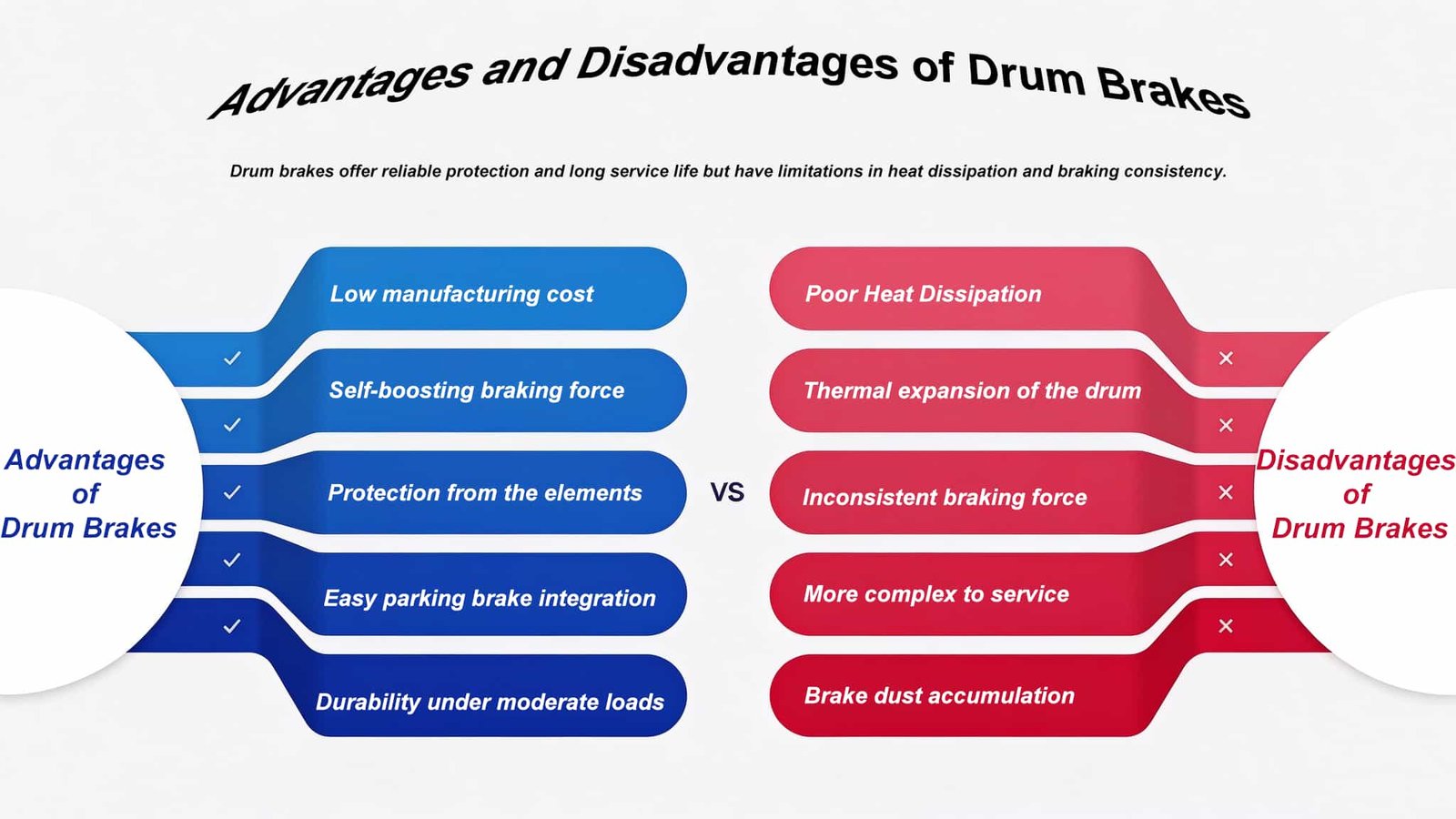
Advantages of Drum Brakes
01.
Low manufacturing cost.
Drum brakes use fewer parts and a simpler layout than other braking systems. The cast-iron drum, the shoes, the wheel cylinder, and the springs are straightforward to produce and assemble. This keeps the cost of the vehicle down, which is why economy cars and commercial vehicles have relied on drum brakes for decades.
02.
Self-boosting braking force
The servo effect means the brake does part of the work itself. Once the shoes touch the drum, the rotation pulls them tighter. A smaller wheel cylinder and lower hydraulic pressure can therefore produce the same stopping force. This is the physical reason the system can be both cheap and effective at the same time.
03.
Protection from the elements
The enclosed drum shields the brake shoes, springs, and wheel cylinder from water, mud, road salt, and grit. On unpaved roads and in wet conditions, the mechanism stays clean and functional. The enclosure also keeps brake dust off the wheel rim, so the wheels stay cleaner and suffer less visible wear.
04.
Easy parking brake integration
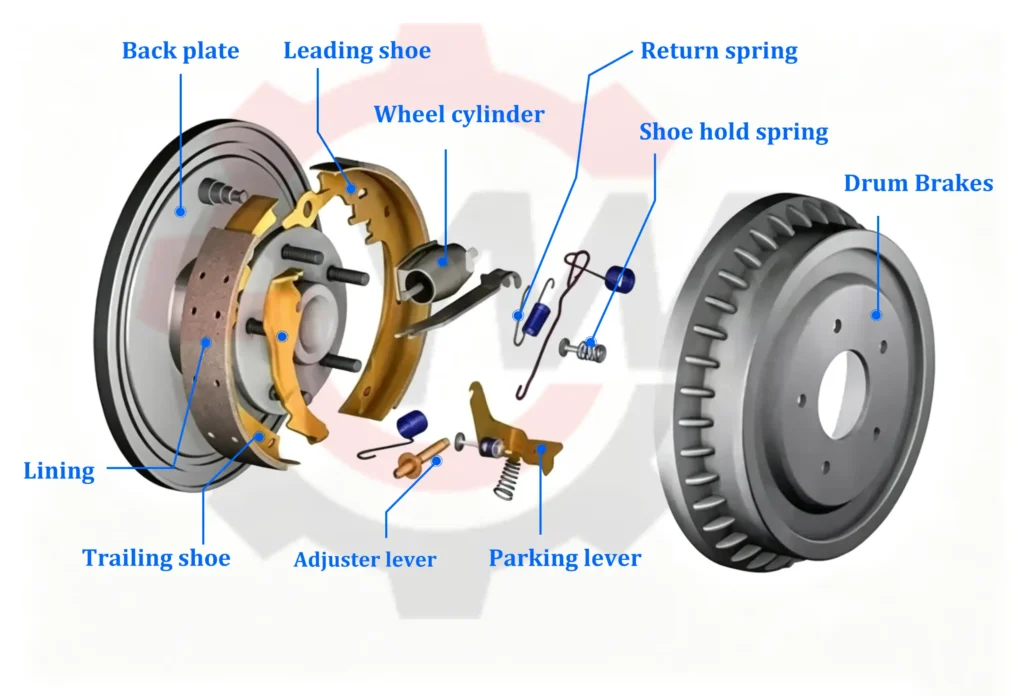
The design lends itself naturally to a mechanical parking brake. A cable pulls a small lever that pushes the shoes directly against the drum. The mechanism is simple, purely mechanical, and independent of the hydraulic circuit. Some vehicles with rear disc brakes still fit a small drum brake inside the disc hub just to serve as the parking brake.
05.
Durability under moderate loads
Drum brake shoes have a large friction surface and wear slowly when the braking load is light. In heavy vehicles such as trucks, buses, and trailers, where speeds are lower and durability matters more than outright stopping power, drum brakes on all four wheels remain a practical choice. The shoes last longer between replacements, and the enclosed design keeps the mechanism in working order through long periods of inactivity.
Disadvantages of Drum Brakes
01.
Poor heat dissipation and brake fade
The same enclosure that protects the parts also traps the heat. Under repeated or prolonged braking, the temperature inside the drum rises quickly. As the friction material overheats, its grip on the drum weakens, and the braking force drops. This condition, called brake fade, can be temporary, but if the surface glazes over from excessive heat, the loss of friction becomes more permanent.
02.
Thermal expansion of the drum
When the drum heats up, it expands and its diameter increases. The brake shoes then have to travel farther to reach the drum surface. The driver feels this as a longer, softer pedal stroke and a brake response that is less predictable than expected. The effect is especially noticeable on long downhill stretches where the brakes are used continuously.
03.
Inconsistent braking force
Drum brakes are sensitive to changes in the friction coefficient between the shoe and the drum. After driving through water, the braking grip drops noticeably until the drum dries out. Non-asbestos friction materials can absorb moisture from the air and, in some cases, grab suddenly when the brakes are first applied. These fluctuations make the braking force harder to control smoothly.
04.
More complex to service
A drum brake assembly contains many small parts: return springs, hold-down springs, pins, clips, an adjuster, and a parking brake linkage. Replacing the brake shoes means disassembling and reassembling this puzzle of springs, and the job is labor-intensive. The enclosed structure also means the drum must be removed to inspect the shoes or clean out accumulated dust.
05.
Brake dust accumulation
As the friction material wears, it produces fine dust. In a drum brake, that dust has nowhere to go. It builds up inside the drum, and if left uncleaned, it can reduce braking efficiency and contribute to noise and uneven wear. Periodic cleaning requires removing the drum entirely.
Why Drum Brakes Stay on the Rear Axle
When a car brakes, its weight shifts forward. The front axle bears roughly 70 to 80 percent of the braking load, while the rear axle’s normal force decreases. The rear wheels therefore have less grip and a naturally smaller braking demand.
This is the reason drum brakes still work on the rear axle of many cars. The rear brakes do not face the extreme heat and rapid-response demands that the front brakes do. They operate under lighter duty, so the drum brake’s disadvantages, particularly heat buildup and fade, rarely come into play. Meanwhile, its advantages, low cost, durability, and simple parking brake integration, make it a sensible choice for the rear.
In heavy vehicles where speeds are lower and durability is the priority, drum brakes are used on all four wheels. The large friction surface and enclosed protection suit the operating conditions of trucks, buses, and trailers well. In both cases, the advantages and disadvantages of drum brakes line up with the job: the drawbacks rarely matter, and the benefits matter every day.