
What Is a Brake Caliper?
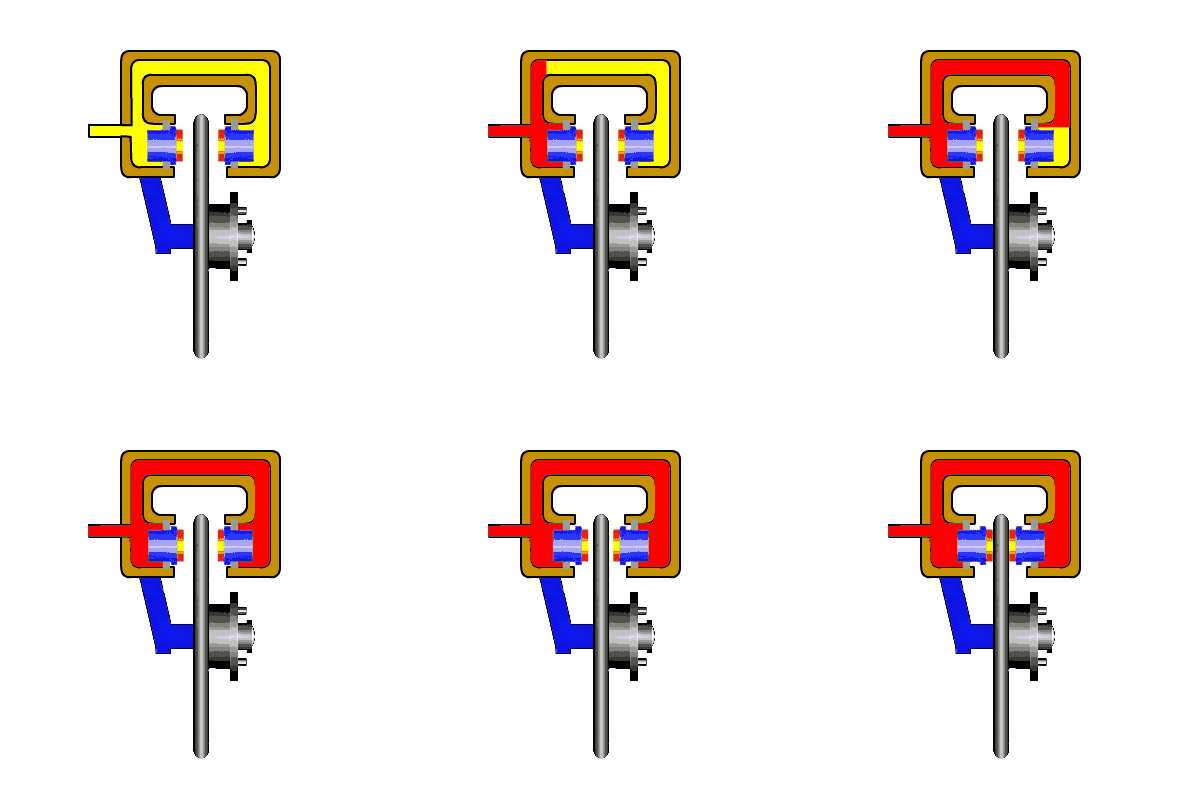
A brake caliper converts hydraulic pressure into the mechanical clamping force that stops the car. It sits over the metal brake disc, or rotor, with a piston and two brake pads inside. When you press the pedal, the piston pushes the pads against both sides of the spinning rotor. Friction converts the car’s motion into heat, and the wheel slows down.
The caliper bolts to the steering knuckle, the fixed part of the suspension, and straddles the rotor, which spins with the wheel.
What Are the Parts of a Brake Caliper?
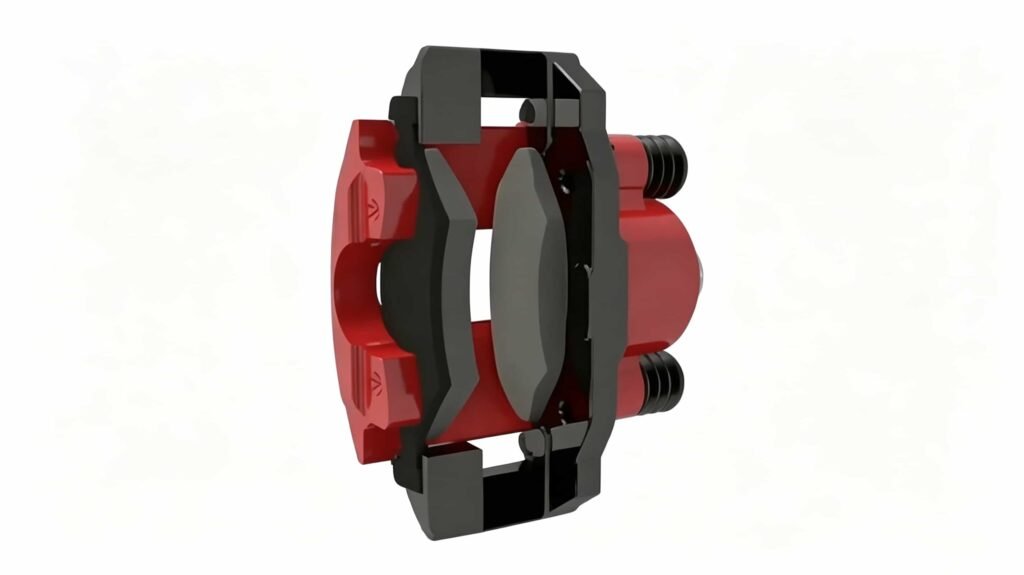
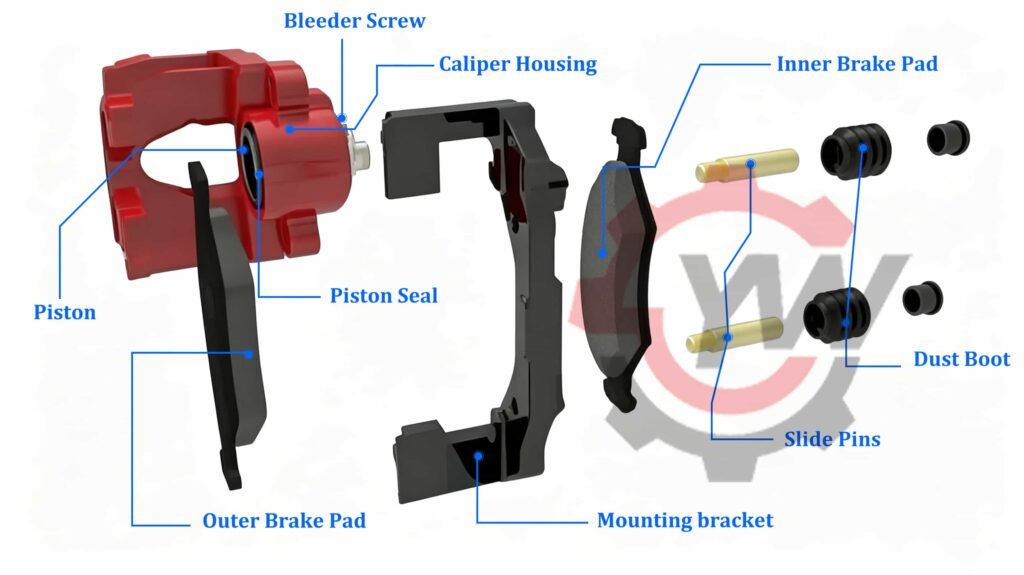
The first group is the body.
The second group is the hydraulic side.
The third group handles sliding and fastening, and it applies to floating calipers only.
The fourth group holds the fittings that support the brake pads and the fluid system.
| Part | Job |
|---|---|
| Caliper housing | Main casting; holds the piston and fluid passages |
| Mounting bracket | Fastens the caliper to the steering knuckle |
| Piston | Pushed outward by fluid to press the pad |
| Piston seal | Seals the fluid and pulls the piston back on release |
| Dust boot | Protects the piston and bore from dirt and water |
| Slide pins | Let the caliper body glide sideways |
| Locking bolts | Hold the caliper to the bracket |
| Bleeder screw | Opens to bleed air and excess fluid |
| Brake pads | Wear parts that grip the rotor |
| Brake pad clips (anti-rattle clips) | Hold the pads and cut vibration and noise |
How Does a Brake Caliper Work?
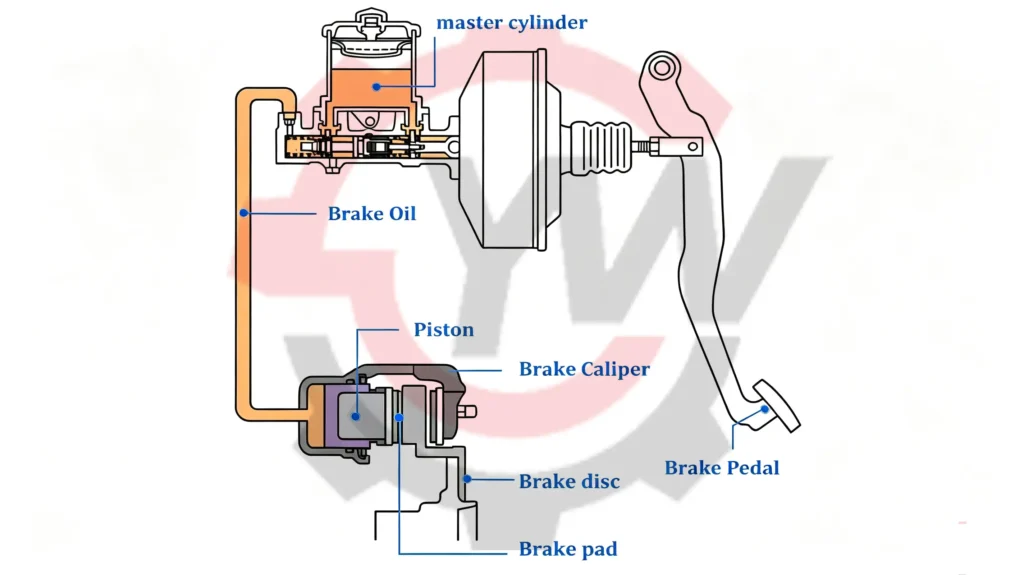
A caliper’s job is to turn a small push into a big squeeze, and it does it through brake fluid.
The full sequence is press the pedal, pressurize the fluid, move the piston, clamp the pads, stop the wheel. Releasing the pedal reverses it. The pressure drops, and the piston seal, which flexed under pressure, springs back to its original shape and draws the piston slightly away from the rotor. That small gap is restored automatically every time, so the pads never drag against the disc when you are not braking.
Floating vs Fixed Calipers: Two Ways to Clamp
Calipers come in two main designs, and the difference is how many pistons do the pushing.
A floating caliper, also called a sliding caliper, uses a piston on only one side. The piston presses the inner pad into the rotor, and the reaction slides the caliper body inward on its pins to pull the outer pad against the other face. Floating calipers are the most common type because they are simple, inexpensive, and easy to fit inside a wheel.
A fixed caliper uses pistons on both sides of the rotor. When the fluid pressurizes, the pistons on each side squeeze the pads inward together, and the caliper body does not move at all. Fixed calipers are stiffer and deliver more consistent, responsive braking, which is why higher-performance and luxury cars use them. They cost more and are harder to package.
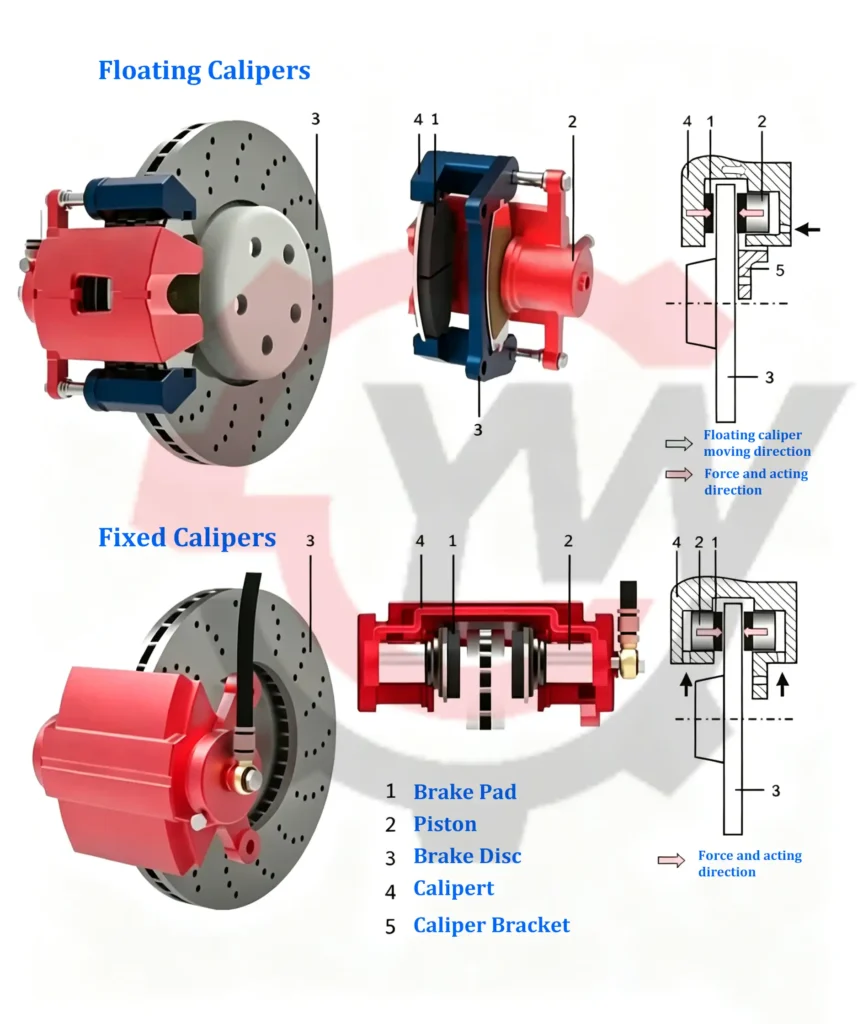
| Floating caliper | Fixed caliper | |
|---|---|---|
| Pistons | One side | Both sides |
| Caliper body | Slides on pins | Fixed in place |
| Cost | Lower | Higher |
| Typical use | Everyday cars | Performance and luxury cars |