
author:Mr.Zhao| Reading time: 10 minutes
Why Gearboxes Exist
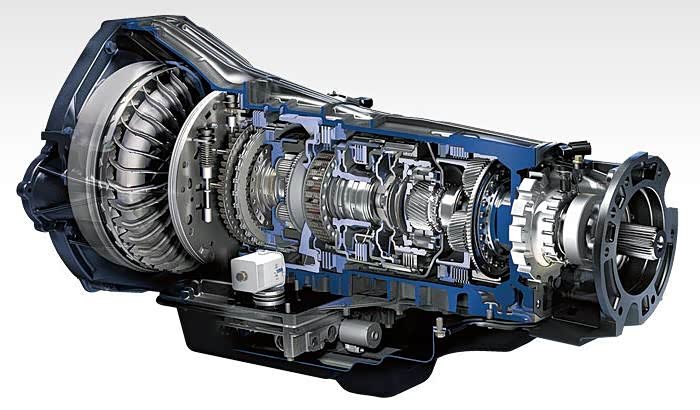
The gearbox is one of the most critical components in any internal combustion engine vehicle. Its job is straightforward: take the engine’s output — which operates efficiently only within a narrow RPM range — and convert it into the varying torque and speed the wheels need. Without a gearbox, an engine would stall the moment you tried to move from a standstill. Electric vehicles, by contrast, don’t need multi-speed gearboxes because electric motors produce consistent torque across a wide RPM range.
The more gears a transmission has, the wider its ratio spread. For example, an old 4-speed gearbox might cover a ratio range of 2.92 to 0.71, while a modern 6-speed can stretch from 4.15 to 0.79. More ratios mean the engine stays in its efficient zone more of the time.
1. Manual Transmission (MT)
How It Works
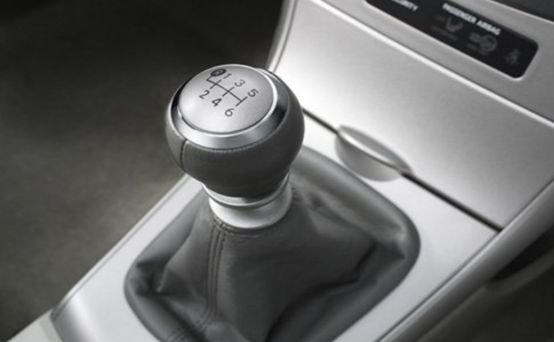
A manual transmission uses pairs of gears with different diameters — a smaller driving gear meshing with a larger driven gear produces torque multiplication (lower speed, higher torque), while the reverse produces overdrive (higher speed, lower torque). Each gear pair is constantly meshed. The driver selects which gear pair transfers power by moving the shift lever, which operates shift forks and synchros to engage the chosen gear to the output shaft. The clutch pedal mechanically disconnects the engine from the transmission during gear changes.
Key Characteristics
- Simple structure, low failure rate. Fewer components than any automatic type. Repairs are generally straightforward and less expensive.
- Full driver control. The driver decides when to shift, which means experienced operators can optimize for fuel economy or performance as conditions demand.
- Higher mechanical efficiency. No torque converter losses, no hydraulic pump constantly running. Power transfers directly through meshed gears.
- Widely used in commercial trucks. Most medium and heavy-duty trucks worldwide still use manual transmissions for their durability and repairability in remote areas.
2. Automatic Transmission (AT)
How It Works
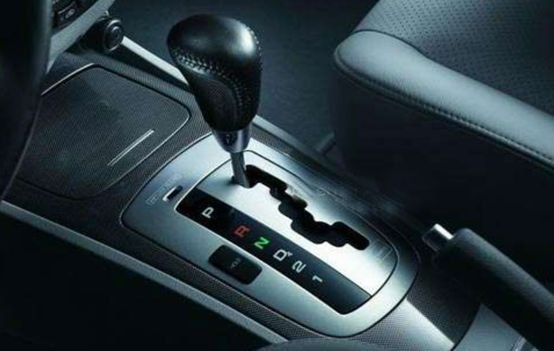
This is the “true” automatic — its design completely departs from the manual gearbox. The core components are a torque converter and a set of planetary gears. The torque converter replaces the clutch: it uses fluid coupling to transfer power from the engine to the transmission, while also multiplying torque during acceleration. The planetary gear sets — consisting of a sun gear, planet gears, and a ring gear — provide different ratios by holding or releasing specific elements via multi-plate clutches and brake bands. A hydraulic control unit (valve body) and electronic control module manage the entire process.
Key Characteristics
- Best overall refinement. The torque converter provides smooth, progressive power delivery. Modern ATs shift quickly and seamlessly.
- Wide ratio spread. Modern ATs have 8, 9, or even 10 speeds. The BMW 8-speed and Mercedes 9G-Tronic are industry benchmarks for smoothness and efficiency.
- “Manual mode” is simulated. When you use paddle shifters or the gear lever in an AT, you’re sending a shift request to the computer — it decides whether to execute it. You’re not directly controlling the transmission.
- Most expensive to repair. The complexity of the torque converter, planetary gear sets, valve body, and electronic controls means a major AT failure can be the costliest transmission repair of any type.
3. Continuously Variable Transmission (CVT)
How It Works
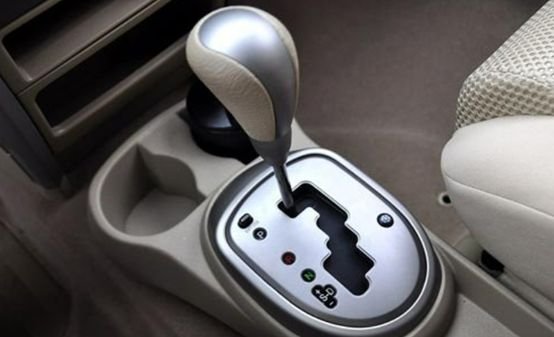
A CVT abandons gears entirely. Instead, it uses a steel belt or chain running between two variable-width pulleys (each pulley consists of two conical halves that move closer together or further apart). When the driving pulley’s halves squeeze together, the belt rides at a larger diameter (higher effective ratio). When they separate, the belt rides at a smaller diameter (lower effective ratio). The driven pulley does the opposite simultaneously. Because the pulley widths can change continuously — not in fixed steps — there are infinite effective ratios between the minimum and maximum.
Key Characteristics
- No shift shock. Since there are no fixed gear changes, power delivery is completely linear. This makes CVT the smoothest transmission type available.
- Always in the optimal ratio. The CVT can keep the engine at its most efficient RPM regardless of vehicle speed, contributing to good fuel economy.
- Cannot handle high torque. The belt/chain-and-pulley design has inherent torque limits. CVTs are not used in high-performance cars, heavy trucks, or racing applications.
- Common in Japanese vehicles. Brands like Toyota, Honda, and Nissan use CVTs extensively in their passenger car lineups. Toyota’s Direct Shift-CVT adds a physical launch gear to improve initial acceleration feel.
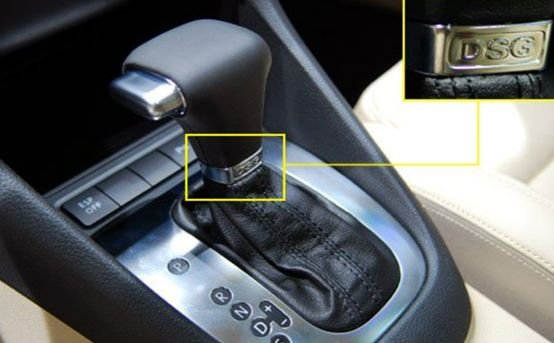
4. Dual Clutch Transmission (DCT / DSG)
How It Works
A DCT is structurally based on a manual transmission but contains two separate clutches and two input shafts. One clutch handles odd-numbered gears (1, 3, 5), the other handles even-numbered gears (2, 4, 6) — and reverse. When the vehicle is accelerating in 1st gear, the even-gear clutch has already pre-selected 2nd gear. The shift happens by disengaging one clutch while simultaneously engaging the other, resulting in extremely fast gear changes with minimal power interruption.
Dry Clutch vs. Wet Clutch
| Type | Cooling Method | Torque Capacity | Typical Use |
|---|---|---|---|
| Dry DCT | Air-cooled | Lower | Smaller-displacement passenger cars. More fuel-efficient but can overheat in stop-and-go traffic. |
| Wet DCT | Clutches immersed in oil | Higher | Higher-torque engines, performance cars. Better heat management, smoother engagement. |
Key Characteristics
- Fastest shift speeds. Gear changes can happen in milliseconds. This is why DCTs dominate in high-performance and motorsport applications.
- High mechanical efficiency. Like a manual, there’s no torque converter and no hydraulic pump constantly sapping power. Fuel economy is often better than a traditional AT.
- Controversial reliability history. Volkswagen’s DSG (Direct-Shift Gearbox) was the subject of widespread complaints and a high-profile recall in China over mechatronic unit failures. When functioning correctly, DCT shifts are smooth — the “jerky DCT” reputation largely comes from faulty units, not inherent design flaws.
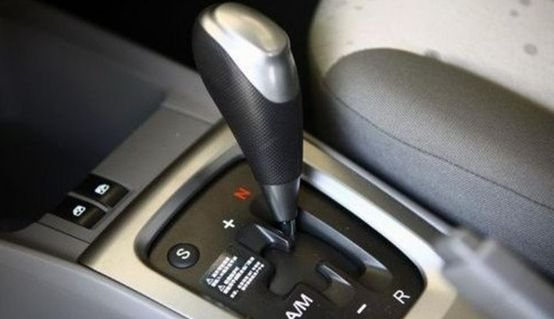
5. Automated Manual Transmission (AMT)
How It Works
An AMT is a manual gearbox with an add-on: a computer-controlled electro-hydraulic or electric actuator system that operates the clutch and shifts the gears. Think of it as a small robot sitting on top of a standard manual transmission, pressing the clutch and moving the shift forks for you. The underlying gearbox — gears, synchros, shafts — is identical to a manual transmission.
Key Characteristics
- Noticeable shift shock. The automated shift mechanism is slower than a human driver who knows what they’re doing. During a gear change, power is interrupted for a noticeable moment, creating a characteristic “nod” or jerk — especially under acceleration. This is the most commonly criticized aspect of AMTs.
- Low cost. Adding an actuator to an existing manual gearbox design is far cheaper than developing a DCT or AT from scratch. This makes AMTs attractive for budget-conscious vehicle segments.
- Common in commercial trucks. Many heavy-duty trucks use AMTs. They provide automated operation for driver comfort while retaining the durability and efficiency of a manual gearbox. In the trucking world, AMTs are often called “single-clutch automated manual transmissions.”
- Declining in passenger cars. Due to the refinement gap compared to ATs, CVTs, and DCTs, AMTs have largely disappeared from new passenger cars in most markets.
6. Sequential Manual Gearbox (SMG)
How It Works
The sequential gearbox is internally a manual transmission, but it uses a different shifting mechanism. Instead of an H-pattern gate, the gear lever moves only forward and backward — push forward to downshift, pull back to upshift. Gears must be selected in order: you cannot jump from 3rd to 5th. The clutch is only needed for starting and stopping; during driving, shifts are completed by briefly cutting ignition or fuel (a “flat shift”), allowing the dog clutches to engage the next gear under load.
Key Characteristics
- Racing and high-performance use. Sequential gearboxes are standard in rally cars, touring cars, and some high-performance road cars. The fast, positive shift action and the ability to shift without the clutch at full throttle make them ideal for motorsport.
- Straight-cut gears (typically). Unlike the helical gears in a standard manual (which are quieter but produce axial thrust), sequential gearboxes often use straight-cut gears. These are noisier — producing a characteristic whine — but stronger and more efficient because they don’t generate axial loads.
- Not for daily driving. The harsh engagement, noise, and sequential-only shifting pattern make SMGs impractical for everyday road use. They are purpose-built for performance.
At a Glance: All Six Types Compared
| Type | Core Mechanism | Shift Quality | Efficiency | Cost to Repair | Primary Use |
|---|---|---|---|---|---|
| MT | Gear pairs + synchros | Driver-dependent | Highest | Low | Passenger cars, commercial trucks |
| AT | Torque converter + planetary gears | Smoothest | Moderate | Highest | Passenger cars, SUVs, luxury vehicles |
| CVT | Variable pulleys + steel belt/chain | Seamless | High | Moderate | Economy cars, Japanese brands |
| DCT | Dual clutches + manual gearbox | Fastest shifts | High | Moderate–High | Performance cars, some passenger cars |
| AMT | Manual gearbox + robotized actuator | Jerky | High | Low–Moderate | Commercial trucks, budget cars |
| SMG | Manual gearbox + sequential shift | Aggressive | Very High | High | Motorsport, high-performance cars |
Important: There is no single “best” transmission type. Each design prioritizes different things — smoothness, efficiency, cost, durability, driver engagement — and the right choice depends entirely on the vehicle, the application, and the driver’s priorities. A CVT that works perfectly in a commuter car would fail immediately in a heavy truck. A DCT that shines on a racetrack may feel clunky in stop-and-go city traffic. Choose the transmission that matches your use case.
Gearbox Types in Commercial Vehicles
For commercial truck operators, the transmission landscape is more focused. The dominant types are:
- Manual Transmission (MT) — Still the most common in developing markets. Simple, durable, and repairable with basic tools and locally available parts. The 5-speed and 6-speed manual gearboxes in trucks like the Mitsubishi Fuso Fighter and Canter are examples of this category.
- Automated Manual Transmission (AMT) — Growing rapidly in long-haul trucking in developed markets. The AMT provides automated shifting for driver comfort while retaining the mechanical efficiency and durability of a manual gearbox. In trucks, the AMT is sometimes called a “single-clutch automated manual transmission.”
- Full Automatic (AT) — Used in some heavy-duty trucks and buses, particularly in the US market (Allison Transmission is the dominant player). The torque converter’s smooth power delivery is well-suited to stop-and-go urban duty cycles like refuse collection and city buses.