
author:Mr.Zhao| Reading time: 9 minutes
Why Resale Value Matters for a Commercial Truck
A Fuso Fighter is not a passenger car. It’s a revenue-generating asset. When you buy one, you’re not just buying transportation — you’re buying a machine that should earn money for years and then return a portion of your investment when you sell it.
The difference between a Fighter that holds its value and one that doesn’t can be $10,000 or more. That’s not pocket change — it’s a down payment on your next truck. Here’s what determines that number.
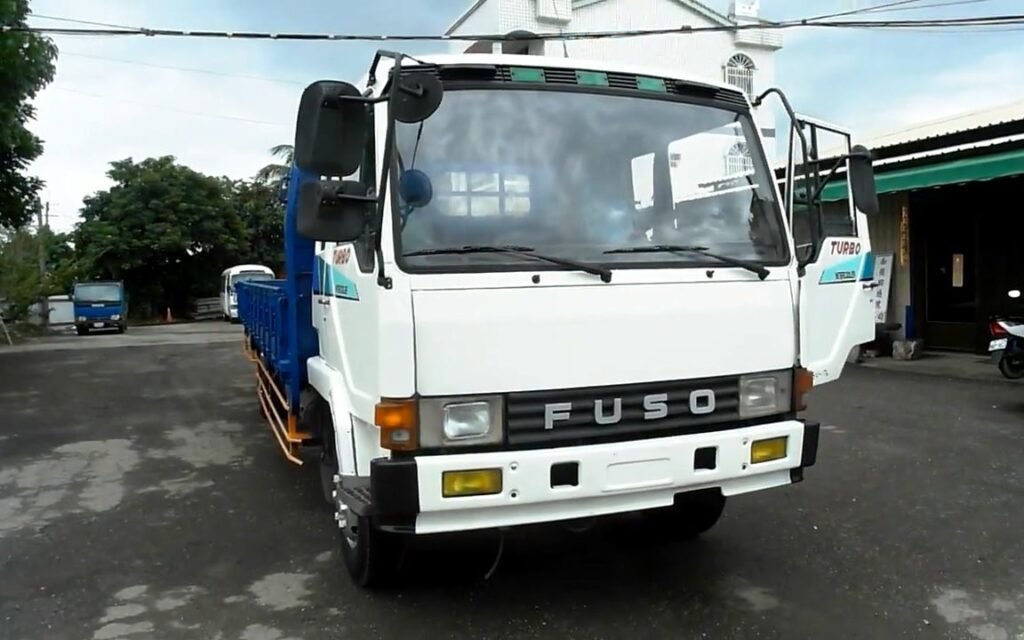
1. Model & Configuration: The Foundation of Value
Not all Fighters are created equal in the used market. The model code, engine, and configuration you choose at purchase will determine the size of your buyer pool years later.
FK vs. FM vs. FN: Which Holds Value Best?
| Model | GVW Range | Resale Demand | Why |
|---|---|---|---|
| FK | 8–11 tons | Highest | Largest buyer pool. Urban delivery, construction supply, general cargo — everyone needs an FK. Lower operating cost attracts smaller operators. |
| FM | 12–16 tons | Strong | Heavier payload commands premium pricing. Preferred by construction and long-haul operators. Slightly smaller buyer pool but higher per-unit value. |
| FN | 16–20 tons | Niche | Specialized applications only. Large construction companies, mining support, heavy equipment transport. Resale is slower but values are stable in the right market. |
Engine Choice: The 6D Advantage
In used truck markets across Africa, Southeast Asia, and the Middle East, the naturally aspirated 6D14 and 6D16 engines command a premium over their turbocharged 6M counterparts. The reason is simple: mechanical injection pumps, no turbo to fail, no intercooler to leak. Buyers in markets where parts availability and mechanic expertise are limited will pay more for an engine they understand and can fix with basic tools.
| Engine | Resale Appeal | Buyer Profile |
|---|---|---|
| 6D14 (N/A, 6.5L) | Highest in developing markets | Fleet owners who value simplicity and local repairability |
| 6D16 (N/A, 7.5L) | Very high — the “gold standard” | Operators needing more power without turbo complexity |
| 6D16T / 6M60 (Turbo) | Strong in urban markets | Buyers with access to qualified mechanics and fuel quality |
| 6M61 (Turbo, 8.2L) | Moderate — high power, higher maintenance | Heavy-haul specialists who need the torque |
Key insight: A 6D16-powered FK Fighter with a manual transmission and a standard cargo body will sell faster and for more money than any other configuration in most export markets. This is the configuration that buyers actively search for — and it’s the one you should prefer if resale value is a priority.
2. Age & Mileage: The Depreciation Curve
Commercial trucks depreciate differently from cars. The first owner takes the biggest hit, but the curve flattens dramatically after that. Here’s how Fighter values typically move:
| Age / Mileage Range | Typical Value Retention | What’s Happening |
|---|---|---|
| 0–3 years / 0–100,000 km | 65–75% of new price | Steepest depreciation. Buyers expect a near-new truck at a meaningful discount. Warranty status matters here. |
| 4–7 years / 100,000–250,000 km | 40–55% of new price | The “sweet spot” for buyers. Truck is proven, major components still have life, and the price is accessible. |
| 8–12 years / 250,000–400,000 km | 25–35% of new price | Value stabilizes. Depreciation slows. The truck’s condition matters more than its age at this point. |
| 12+ years / 400,000+ km | 15–25% of new price | Floor value. A running, working Fighter rarely drops below $8,000–$12,000 regardless of age, as long as it passes inspection and can carry a load. |
The critical point: mileage matters more than age for commercial trucks. A 10-year-old Fighter with 150,000 km will sell for more than a 5-year-old Fighter with 350,000 km. Buyers in this market calculate remaining service life, not calendar years.
3. Maintenance History: The Single Biggest Factor
If there’s one thing that separates a Fighter that sells for top dollar from one that sits on the lot for months, it’s documented maintenance history.
What Buyers Want to See
- Oil change records with dates and mileage. A logbook showing consistent 5,000–7,500 km oil changes tells a buyer this engine was cared for. A blank logbook tells them to assume the worst.
- Major component replacement receipts. A clutch replacement at 200,000 km is a selling point, not a negative. It means the buyer won’t have to do it. A receipt from a reputable shop is worth far more than a verbal claim.
- Inspection reports. If your market requires periodic vehicle inspections, keep every report. They create a paper trail of the truck’s condition over time.
- Parts invoices. Even if you do your own maintenance, keep the receipts for filters, oil, brake linings, and bearings. They prove the work was done.
The Documentation Premium
A Fighter with complete service records consistently sells for 10–20% more than an identical truck with no documentation. The buyer isn’t paying for the paper — they’re paying for the confidence that the truck won’t surprise them with a $3,000 repair two weeks after purchase.
4. Body & Chassis Condition: What the Eye Sees
Buyers judge a truck first by what they can see. A clean, straight body and a rust-free chassis signal that the owner cared. A truck that looks neglected usually was neglected.
- Frame rust. Surface rust is normal on a working truck. Deep rust, flaking metal, or rust-through on the frame rails is a dealbreaker or a massive price reduction. In coastal or humid markets, underbody rust is the first thing experienced buyers check.
- Cargo body condition. A dented, twisted cargo body with rotted wooden flooring tells the buyer the truck was overloaded and abused. A straight body with a solid floor suggests the owner respected the truck’s limits.
- Cab condition. Torn seats, cracked dashboards, and non-functional gauges don’t affect mechanical performance — but they affect price. A clean cab with working instruments can add $1,000–$2,000 to the sale price because it signals overall care.
- Paint. Original paint is best. A fresh paint job on a used truck always raises questions: what’s being hidden? If you repaint, keep photos of the before condition.
5. Regional Market Demand: Where You Sell Matters
The same Fighter can be worth $12,000 in one country and $18,000 in another. Understanding regional demand is essential if you’re willing to sell across borders.
| Region | Demand Level | Preferred Configuration | Price Range (Used FK, 8–12 yrs) |
|---|---|---|---|
| East Africa (Kenya, Tanzania, Uganda) | Very High | FK, 6D16, cargo body | $14,000–$22,000 |
| West Africa (Nigeria, Ghana) | High | FK/FM, any engine, tipper or cargo | $12,000–$20,000 |
| Southeast Asia (Philippines, Indonesia) | High | FK, 6D14/6D16, dropside or cargo | $10,000–$18,000 |
| Middle East (UAE, Saudi Arabia) | Moderate | FM/FN, turbo engines, flatbed | $15,000–$25,000 |
| South Asia (Sri Lanka, Bangladesh) | Moderate | FK, smaller engines, multi-purpose | $10,000–$16,000 |
| Latin America | Growing | FK, any configuration | $12,000–$20,000 |
Price ranges above are estimates. Actual values depend on condition, documentation, and current market conditions. Import duties, shipping costs, and currency exchange rates also affect cross-border pricing. Always check current local market listings before setting an asking price.
6. Modifications & Customizations: Help or Hurt?
Not all modifications add value. Some destroy it. Here’s the honest breakdown:
| Modification | Effect on Resale | Why |
|---|---|---|
| Quality tipper body (by a known fabricator) | +10–15% | Expands the buyer pool. Construction and aggregate haulers actively seek tippers. |
| Reinforced cargo body (for heavy loads) | +5–10% | Adds utility. Buyers see it as a cost they won’t have to incur. |
| Engine swap (non-original) | -20–30% | Massive red flag. Buyers assume the original engine was destroyed by neglect. Parts compatibility becomes a nightmare. Avoid unless you plan to keep the truck forever. |
| Aftermarket turbo on a naturally aspirated engine | -15–25% | Raises concerns about engine stress, head gasket integrity, and piston damage. Buyers prefer the engine as designed. |
| Custom paint / decals | Neutral to negative | Your company logo and color scheme means nothing to a buyer. They’ll factor in the cost of repainting. |
| Suspension lift / non-standard tires | -10–15% | Changes the truck’s handling, geometry, and parts requirements. Most commercial buyers want standard spec. |
The rule of thumb: utility modifications add value. Performance modifications destroy it. A buyer wants a truck that does a job. Make it better at that job, and you’ll get paid for it. Make it different from factory spec, and you’ll scare buyers away.
7. Accident & Repair History: The Trust Factor
A Fighter that has been in a serious accident will never sell for the same price as one that hasn’t — even if it’s been repaired professionally. The stigma is real, and it’s justified: frame damage, even when repaired, can affect alignment, tire wear, and long-term structural integrity.
What Buyers Look For
- Frame straightness. Experienced buyers will look down the frame rails from the front and rear. Any visible deviation, kink, or repair weld reduces the offer significantly — often by 20–30%.
- Panel gaps. Uneven gaps between cab panels, doors that don’t close cleanly, or mismatched paint on one side suggest accident repair.
- Welding on the chassis. Any welding on the frame outside of factory mounts is a concern. If it was done professionally with documentation (photos of the repair, alignment report), it’s less damaging to value — but it still hurts.
- Replacement cab. A cab swap is a major red flag. It usually means the original cab was destroyed in a rollover or collision. Full disclosure is essential; hiding it destroys trust when discovered.
Honesty is the best strategy. If your Fighter has been in an accident, disclose it. Provide the repair documentation, photos, and alignment report. A buyer who trusts you will still make an offer. A buyer who discovers hidden damage will walk away — and tell others.
8. Parts Availability: An Overlooked Factor
Buyers don’t just evaluate the truck — they evaluate how easy it will be to keep it running. A Fighter model with abundant parts availability in the buyer’s region will command a higher price than one with scarce parts.
- 6D14/6D16 engine parts are widely available in almost every market where Fighters operate. This broad availability supports higher resale values.
- 6M60/6M61 engine parts are less common and more expensive, which depresses resale values in markets without strong dealer support.
- Body panels and cab parts for older Fighters can be difficult to find. A truck with a clean, undamaged cab is worth more partly because replacing damaged panels is expensive and time-consuming.
- Brake drums, wheel hubs, and chassis components from quality aftermarket manufacturers fill the gap between expensive OEM and unreliable cheap parts. Buyers who know this will value a truck that uses recognizable, quality aftermarket components.
9. How to Maximize Your Fighter’s Resale Value
If you’re planning to sell in the next 2–3 years, start preparing now. The decisions you make today determine the price you’ll get tomorrow.
While You Own the Truck
- Keep every receipt. Oil filters, brake drums, clutch kits, bearings — every part you buy, every service you perform. Put them in a folder. Hand it to the buyer. This folder alone can be worth $2,000–$4,000 on a $15,000 truck.
- Follow the maintenance schedule. A truck with a known service history is a truck that sells. The buyer isn’t just buying metal — they’re buying the story of how the truck was treated.
- Use quality parts. When you eventually sell, the buyer will inspect the truck. They’ll see brand-name bearings, recognizable brake drums, and quality filters. Those details build confidence. Cheap no-name parts build suspicion.
- Fix small problems before they become big ones. A minor oil leak that you ignore for two years becomes a stained engine bay and a caked-on mess that screams “neglected.” A $50 seal becomes a $1,000 deduction at sale time.
When Preparing to Sell
- Clean the truck thoroughly. Wash the chassis, degrease the engine, clean the interior. A clean truck looks maintained. A dirty truck looks neglected. The psychology is simple but powerful.
- Fix obvious issues. Replace burned-out bulbs, fix non-functional gauges, repair torn seats. Each small issue the buyer finds reduces their confidence in the big things they can’t see.
- Get a pre-sale inspection. A third-party inspection report gives the buyer confidence and gives you a defense against lowball offers. “Here’s the inspection report — the truck is sound” is a powerful negotiating position.
- Take good photos. Chassis, engine, cab interior, cargo body, tire tread, odometer. Detailed photos attract serious buyers and filter out tire-kickers. A listing with 20 clear photos will sell faster than one with 5 blurry ones.
10. The Bottom Line
Your Fighter’s resale value is not determined on the day you sell it. It’s determined by every decision you made in the years before — the oil you chose, the parts you installed, the records you kept, and the way you treated the truck when no one was watching.
The Fighters that command the highest resale prices share three things: a desirable configuration, a documented maintenance history, and a clean condition. Get those three right, and the market will pay you for it.
Protect Your Fighter’s Value With Quality Parts
Whether you’re maintaining a truck for the long haul or preparing to sell, quality parts make the difference. We manufacture brake drums, wheel hubs, and chassis components for FK, FM, and FN Fighters — HT250 grey iron castings, 100% dynamic balance tested, at factory-direct pricing. Send us your chassis number for a quote within 48 hours.