
author: Mr.Zhao | Reading time: 6 minutes
The 500,000 km fighter is not a myth
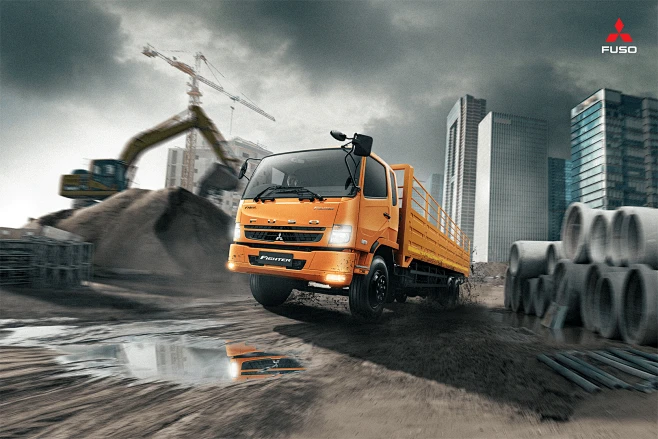
Fuso Fighters with odometers rolled over twice still haul loads daily across Africa, Southeast Asia, and the Middle East. The engines are known for their durability, and the chassis is overbuilt.
But half a million kilometers doesn’t happen by accident. It comes from right decisions about maintenance, parts, and driving habits, made over years of ownership.
Engine: the heart of a long life
The Fighter engines are mechanically simple. No complex electronics to fail. That simplicity is their greatest asset, but only if you respect it.
Oil changes
- Change engine oil every 5,000 to 7,500 km. Dust, heat, and heavy loads degrade oil faster. Don’t stretch it.
- Use 15W-40 diesel oil, API CI-4 minimum. Cheap oil leaves sludge that blocks passages and starves bearings.
- Change the oil filter with every oil change. A clogged filter bypasses. Unfiltered oil goes straight through your engine.
- Check oil level weekly. These engines burn oil as they age. Running a liter low for a month is bearing damage building up silently.
Fuel system
- Replace fuel filter every 10,000 km. Sooner if you buy fuel from roadside drums. Bad diesel kills injection pumps. A new pump costs more than a lifetime of filters.
- Drain the water separator weekly. Water destroys injectors.
- Use a pre-filter if fuel quality is questionable. A $50 inline pre-filter saves a $2,000 injection pump.
Cooling system
- Flush coolant every 2 years or 100,000 km. Old coolant turns acidic, eating through head gaskets and radiator cores.
- Replace thermostat at 200,000 km. Stuck closed cooks your engine in minutes. Stuck open causes incomplete combustion, fuel-diluted oil, and faster wear.
- Check fan clutch. If the fan spins freely by hand with the engine hot, the clutch is dead.
- Replace hoses at 150,000 km. Don’t wait for one to burst on the highway.
Valve adjustment
Valve clearances drift over time. Too tight burns valves. Too loose reduces power and wears the camshaft. Adjust every 40,000 to 50,000 km. Two hours of work prevents a multi-thousand-dollar top-end rebuild.
Drivetrain: transfer power, don’t waste it
Clutch
- Don’t ride the clutch. Foot on the pedal at traffic lights? Release bearing grinding. Slipping the clutch to hold on a hill? Disc burning. Both cut clutch life by 50%.
- Replace the complete kit. Pressure plate, disc, release bearing, pilot bearing. Saving $200 on parts costs $1,000 in labor when the leftover bearing fails.
- Adjust free play regularly. Too little means constant partial disengagement. Too much means grinding gears.
Gearbox and differential
- Change gearbox oil every 50,000 km. Use SAE 90 or 80W-90. The oil cools gears and carries away metal particles.
- Change differential oil on the same schedule. The diff works harder than the gearbox. Old oil loses its extreme-pressure additives. Without them, gear teeth wear fast.
- Check U-joints at every service. A $40 U-joint that fails vibrates through the transmission and differential, causing $2,000 in collateral damage.
Brakes and wheel ends
Brake system
- Replace drums before max wear diameter. Overspec drums can crack under hard braking.
- Use quality linings. Cheap linings fade sooner, generate more heat, and cascade damage to hubs and bearings.
- Drain air tanks daily. A 30-second habit that prevents system-wide corrosion and freeze-ups.
- Replace air dryer cartridge annually. A saturated cartridge stops working. You won’t notice until your brake valve freezes or rusts through.
Wheel bearings and hubs
- Repack bearings every 50,000 to 80,000 km. The most-skipped service, and the most expensive failure. A dry bearing seizes and spins on the spindle, destroying the hub.
- Replace hub seals every repack. A reused seal leaks. Grease out, water in. Both ruin bearings.
- Use correct bearing preload. Too tight overheats the bearing. Too loose hammers it to death. A few minutes with a torque wrench is the difference between bearings that last 300,000 km and ones that fail at 80,000.
Suspension and steering
- Grease all points every 5,000 km. King pins, tie rod ends, drag link, spring pins, U-joints. A $30 grease gun beats a $500 king pin replacement.
- Check king pin play at every brake service. Any detectable vertical movement means worn king pin and bushings. Replace as a kit.
- Replace spring pins and shackle bushings when they wear. Metal-on-metal contact ovals the spring eye. Once that happens, you’re replacing the spring pack, which costs far more than the bushings.
- Replace worn shocks. They affect braking distance, tire wear, and every suspension component. Shocks are affordable protection.
Driving habits that add kilometers
The driver’s right foot is the biggest variable in vehicle longevity.
- Warm up before loading. Two to three minutes idle, then ten minutes gentle driving. Loading a cold engine scores cylinder walls.
- Cool down after hard driving. Two to three minutes idle before shutdown. The turbo spins at over 100,000 RPM. Shutting down hot cooks the oil in the turbo bearing.
- Don’t overload. Two tons over GVW every day cuts brake life by 40% and spring life by 50%. The extra load revenue disappears into repair bills.
- Use engine braking on descents. The exhaust brake saves linings and prevents brake fade. Wrong gear down a mountain means heading for a brake fire.
- Shift smoothly. Forcing gears and dumping the clutch shortens transmission and driveline life.
The parts decision: where to spend, where to save
| Part | Quality Level | Why |
|---|---|---|
| Brake drums | Quality aftermarket (HT250) | OE-spec material, half the price |
| Wheel hubs | Quality aftermarket | Casting quality matters more than the stamp |
| Wheel bearings | Premium (Timken, NSK, Koyo) | Never cheap out. A failed bearing destroys the hub and spindle. |
| Clutch kit | OEM or premium (Exedy, Valeo) | High labor cost. Do it once. |
| King pin kit | Premium aftermarket | Labor-intensive. Do it once. |
| Brake linings | Quality aftermarket | Good linings protect drums. Cheap ones generate excess heat. |
| Filters | Premium (Fleetguard, Donaldson, Sakura) | Filters are cheap. The damage from a bad one is expensive. |
| Spring bushings | Aftermarket | Wear item. Polyurethane options last longer. |
Maintenance schedule cheat sheet
Print it, stick it on the wall, and follow it.
| Interval | Service |
|---|---|
| Daily | Check oil, coolant, drain air tanks, visual tire and light inspection |
| Every 5,000 km | Oil and filter change, grease all points, check belt tension |
| Every 10,000 km | Fuel filter, check brake lining thickness, inspect U-joints |
| Every 20,000 km | Air filter (sooner in dust), check brake adjustment |
| Every 40,000 km | Valve clearance, gearbox and differential oil change |
| Every 50,000 km | Wheel bearing repack and hub seals, check king pin play |
| Every 100,000 km | Coolant flush, thermostat, air dryer cartridge |
| Every 150,000 km | All coolant hoses and drive belts, spring pins and bushings |
| Every 200,000 km | Injector service or replacement, injection pump inspection |
One rule: In extreme heat, heavy dust, overloading, or city traffic, cut every interval by 30%. The real world is harder than any manual assumes.
The bottom line
A 500,000 km Fighter isn’t a truck that never broke down. It’s a truck where every breakdown was caught early, every repair was done right, and every interval was respected. The truck doesn’t know it’s supposed to last half a million kilometers. You decide that with every oil change, every grease job, and every part you install.
Need quality parts for your Fighter?
We manufacture brake drums, wheel hubs, and chassis components for all Fighter models. HT250 grey iron, 100% dynamic balance tested, factory-direct pricing with no middleman markup.
What to do: Send your chassis number. You’ll get a detailed quote within 48 hours. No obligation, just straight pricing.