
What Is a Brake Caliper?
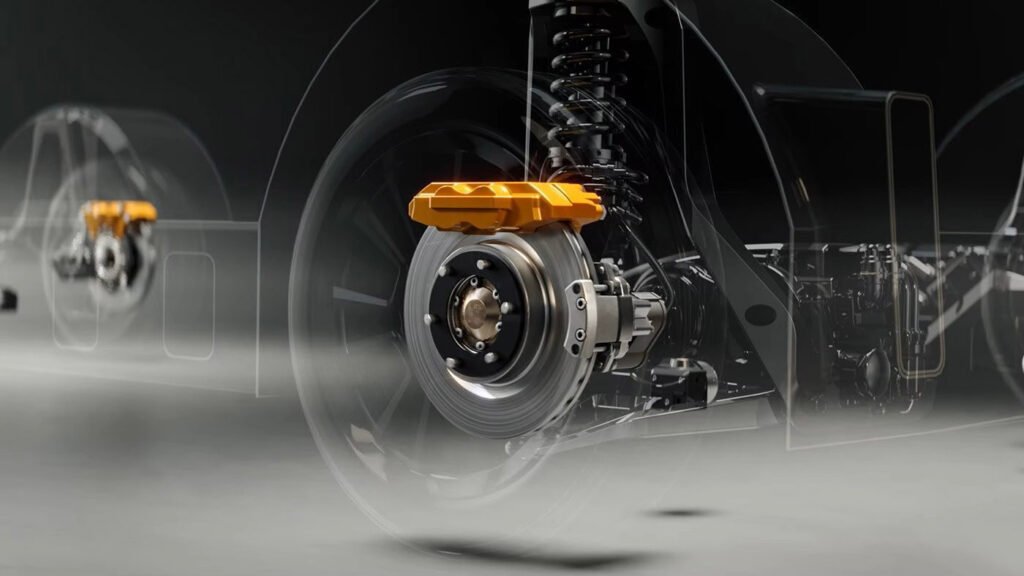
A brake caliper is a hydraulic component that sits over the brake rotor and houses the brake pads and pistons. It converts hydraulic pressure from the master cylinder into mechanical force. When you press the brake pedal, brake fluid pushes through the lines into the caliper, forcing the pistons to press the brake pads against the rotor. The friction slows the wheel and brings the vehicle to a stop.
Think of the caliper as a clamp. It squeezes the brake pads against a spinning disc to create stopping power. Modern vehicles use caliper brakes on the front axle at minimum, and most now use them on all four wheels.
How Does a Brake Caliper Work?
The sequence is straightforward:
- The driver presses the brake pedal.
- The master cylinder generates hydraulic pressure in the brake fluid.
- Brake fluid travels through the brake lines into the caliper.
- Hydraulic pressure acts on the pistons inside the caliper body.
- Pistons push the inner and outer brake pads against the brake rotor.
- Friction between the pads and rotor converts kinetic energy into heat.
- The vehicle slows down or stops.
- When the pedal is released, the square-cut seal inside the caliper retracts the piston slightly, creating a small running clearance between the pad and rotor.
The friction coefficient between a typical brake pad and rotor ranges from 0.35 to 0.55, depending on the pad compound. Organic pads sit at the lower end, while semi-metallic and ceramic compounds offer higher friction and better heat tolerance.
Types of Brake Calipers
There are two main types: fixed calipers and floating (sliding) calipers. Each suits different applications.
Fixed Brake Caliper
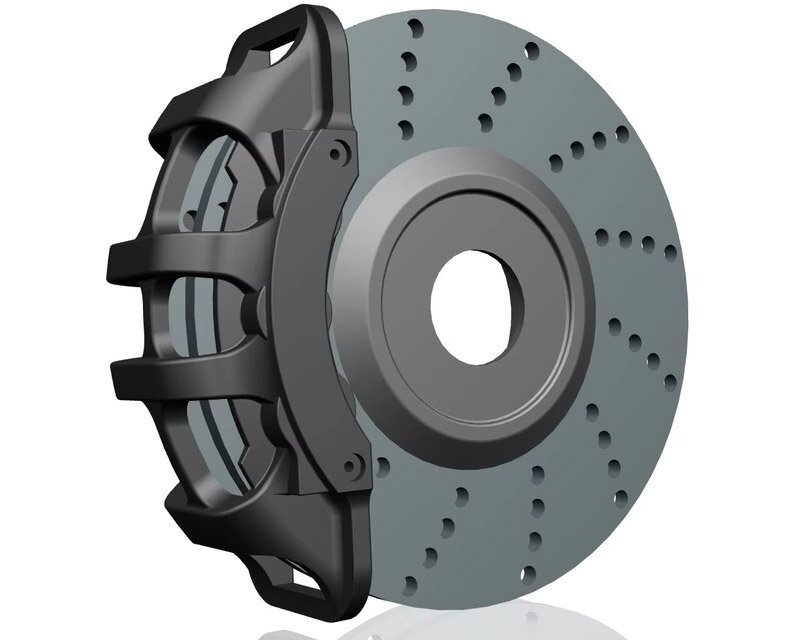
A fixed caliper is rigidly mounted to the steering knuckle or bracket and does not move. It has pistons on both sides of the rotor. When hydraulic pressure is applied, pistons on both sides push the brake pads inward simultaneously, creating even clamping force. Fixed calipers typically use 2, 4, 6, or even 8 pistons. They are common on performance vehicles, heavy-duty trucks, and industrial machinery because of their heat management and consistent pedal feel.
Floating (Sliding) Brake Caliper
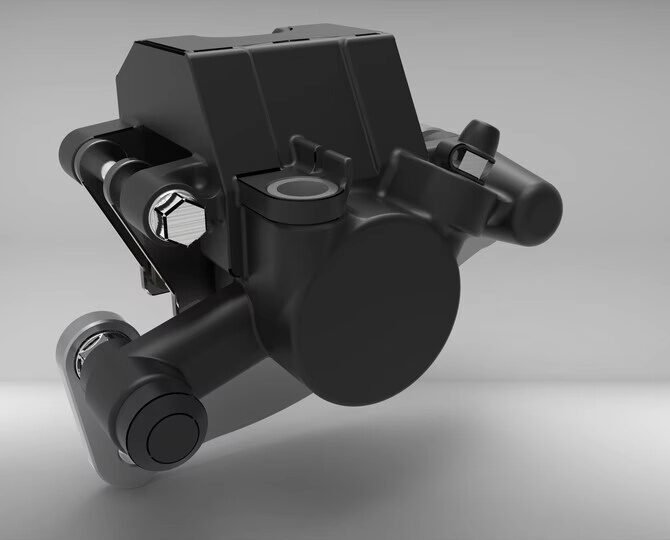
A floating caliper has pistons on only one side of the rotor. The caliper body slides on guide pins. When the piston pushes the inboard pad against the rotor, the caliper slides in the opposite direction, pulling the outboard pad into contact. This design is simpler, cheaper to manufacture, and dominates the passenger car market. Most everyday vehicles use a single-piston floating caliper on the front and rear axles.
Fixed vs Floating Caliper Comparison
| Feature | Fixed Caliper | Floating Caliper |
|---|---|---|
| Piston location | Both sides of rotor | One side of rotor |
| Sliding mechanism | No | Yes (guide pins) |
| Pedal feel | More consistent | Adequate for normal use |
| Heat management | Better in repeated braking | Good for standard driving |
| Manufacturing cost | Higher | Lower |
| Maintenance | More complex | Simpler |
| Typical applications | Performance, heavy-duty | Passenger vehicles |
Key Parts of a Brake Caliper
Knowing the components helps with diagnosis and replacement decisions:
- Caliper body – The main housing, typically cast iron or aluminum, that holds all internal components.
- Piston(s) – Cylindrical components that push the brake pads against the rotor. Diameters range from 38 mm to 60 mm on passenger cars.
- Brake pads – Friction material bonded to a steel backing plate. Replace when the friction material drops below 3 mm.
- Square-ring seal – An elastomer seal that prevents fluid leakage and provides piston retraction after brake release.
- Dust boot – Protects the piston and bore area from dirt, moisture, and debris.
- Guide pins – Used in floating calipers to allow the caliper to slide laterally.
- Bleeder screw – Allows air and excess fluid to be released during brake bleeding.
Brake Calipers vs Drum Brakes
Drum brakes are still used on some rear axles for cost reasons, but caliper disc brakes have clear advantages. An open disc rotor dissipates heat far more effectively than an enclosed drum, which means less brake fade during repeated stops. Caliper brakes self-adjust as pads wear, thanks to the square-ring seal geometry, and are easier to inspect and service. Drum brakes are cheaper to produce but trap heat and are more prone to fade under heavy use.
Signs of Brake Caliper Failure
Brake calipers typically last 75,000 to 100,000 miles, depending on driving conditions. Common warning signs include:
- Uneven brake pad wear – Worn more on one side, indicating a stuck piston or seized guide pins.
- Poor braking performance – Longer stopping distance or a soft pedal.
- Dragging brakes – The vehicle feels like it is pulling or resisting motion.
- Unusual noises – Grinding, squealing, or clunking from the wheel area.
- Vehicle pulling to one side – Uneven clamping force from a failing caliper.
- Brake fluid leaks – Visible fluid around the caliper or inside the wheel.
How to Choose the Right Brake Caliper
For standard passenger vehicles used in daily commuting, a floating caliper delivers reliable stopping performance at a lower cost with simpler maintenance. It is the practical choice for most fleet and aftermarket applications.
For performance vehicles, heavy trucks, or applications involving repeated high-speed braking, a fixed caliper offers better heat management, more consistent pedal response, and longer pad life under demanding conditions. The higher initial cost is justified when the operating environment requires it.
When sourcing brake calipers, verify fitment compatibility, piston area matching with the master cylinder, and wheel clearance. Quality manufacturing standards, including bore alignment, seal groove tolerance, and 100% leak testing, determine long-term reliability.
Conclusion
The brake caliper is a central component in every modern disc brake system. Understanding how it works, the differences between fixed and floating designs, and the key parts involved helps automotive professionals make informed decisions about maintenance, replacement, and sourcing. Matching the caliper type to the application is the most reliable path to safe, consistent braking performance.