
Drum brakes and disc brakes work differently and offer distinct advantages. This guide compares drum brakes vs disc brakes, including how they work, their key differences, pros and cons, and which is better for your vehicle.
Drum Brakes vs Disc Brakes
Disc brakes use a caliper to squeeze brake pads against a spinning rotor to stop the wheel, while drum brakes push brake shoes outward against the inside of a spinning drum. Both slow your car, but they differ in performance, cost, and maintenance.
Most cars use disc brakes on all four wheels, or disc brakes on the front axle with drum brakes on the rear.
What Are Drum Brakes? How They Work, Types, and Benefits
What Are Drum Brakes? Learn how they work, explore their key components and three main designs, and discover their advantages, disadvantages
Read More
How Drum Brakes and Disc Brakes Work
01.
How Do Disc brakes Work
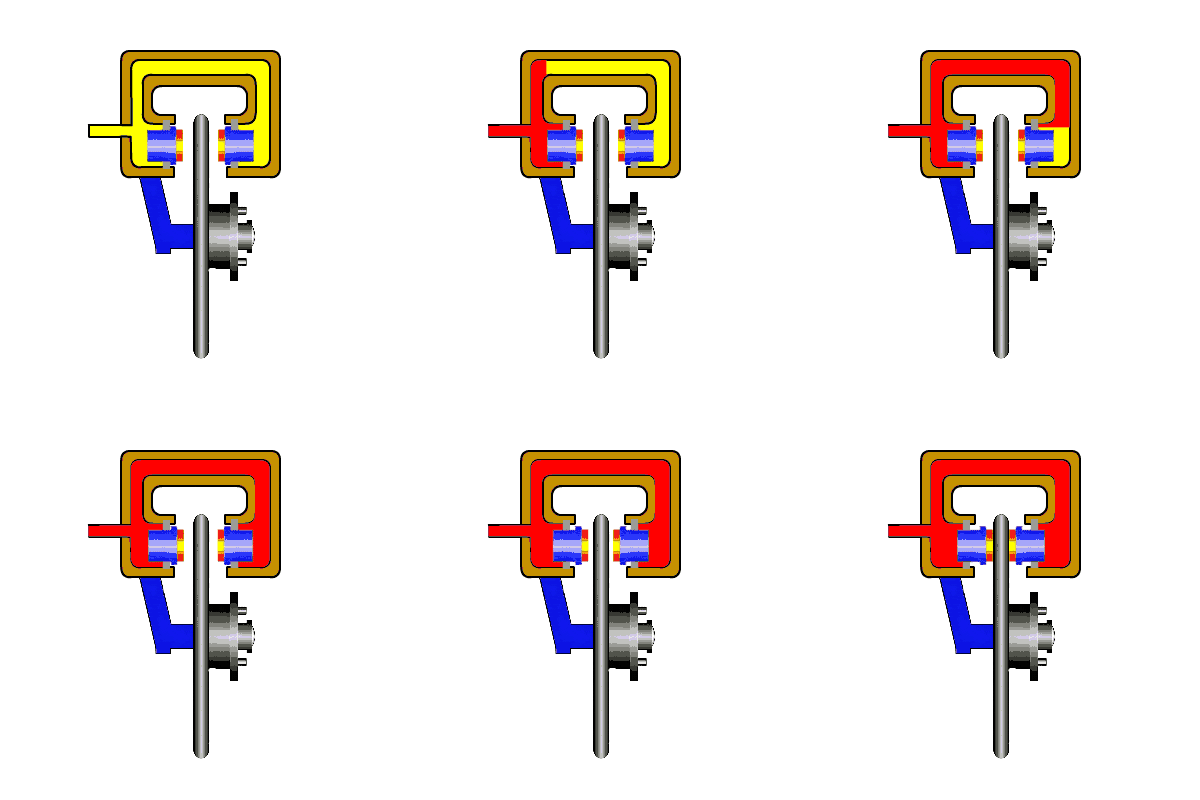
A caliper holds brake pads on both sides of a brake rotor. When you press the pedal, hydraulic pressure forces the caliper to clamp the pads against the spinning rotor. The friction stops the wheel.
02.
How Do Drum Brakes Work
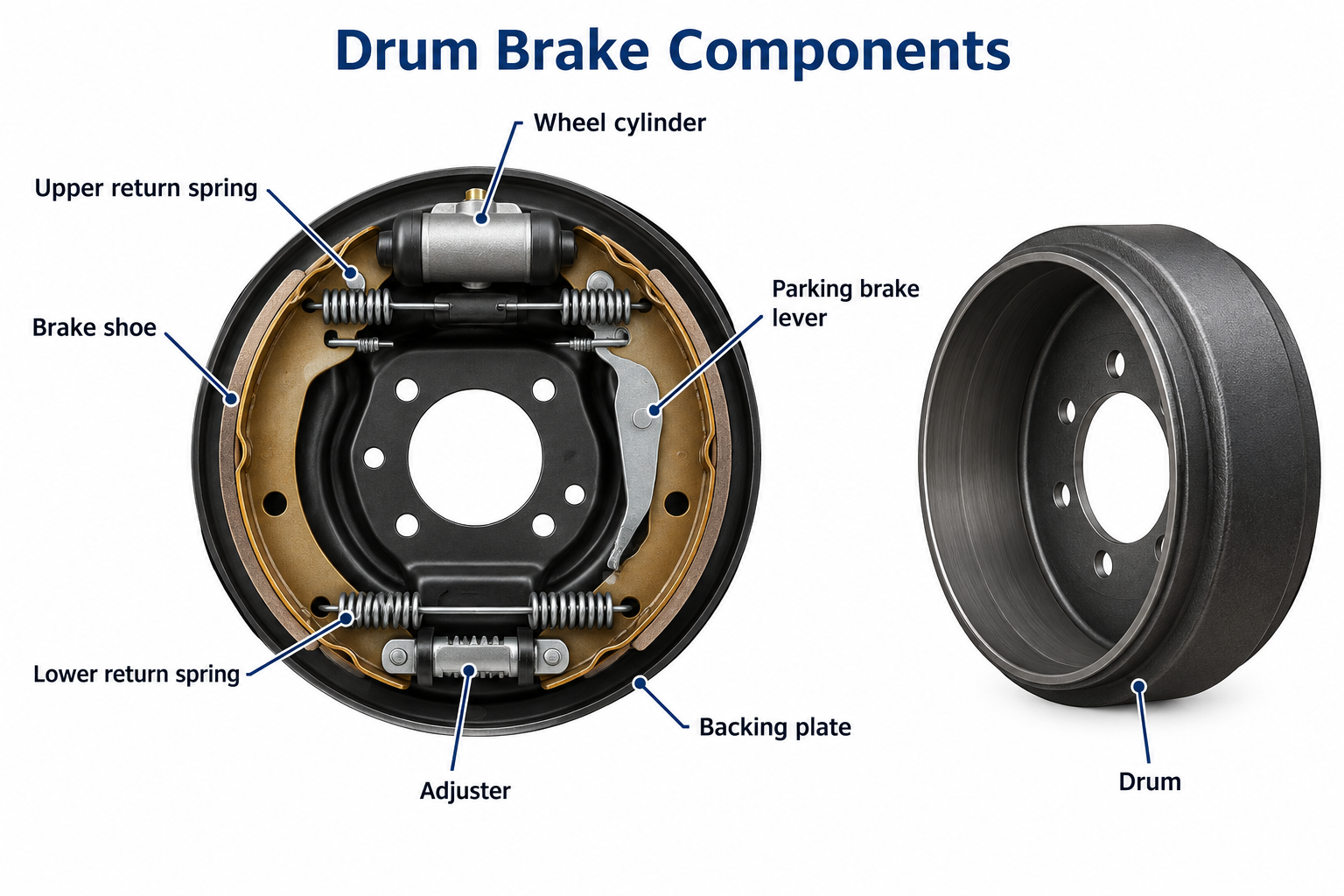
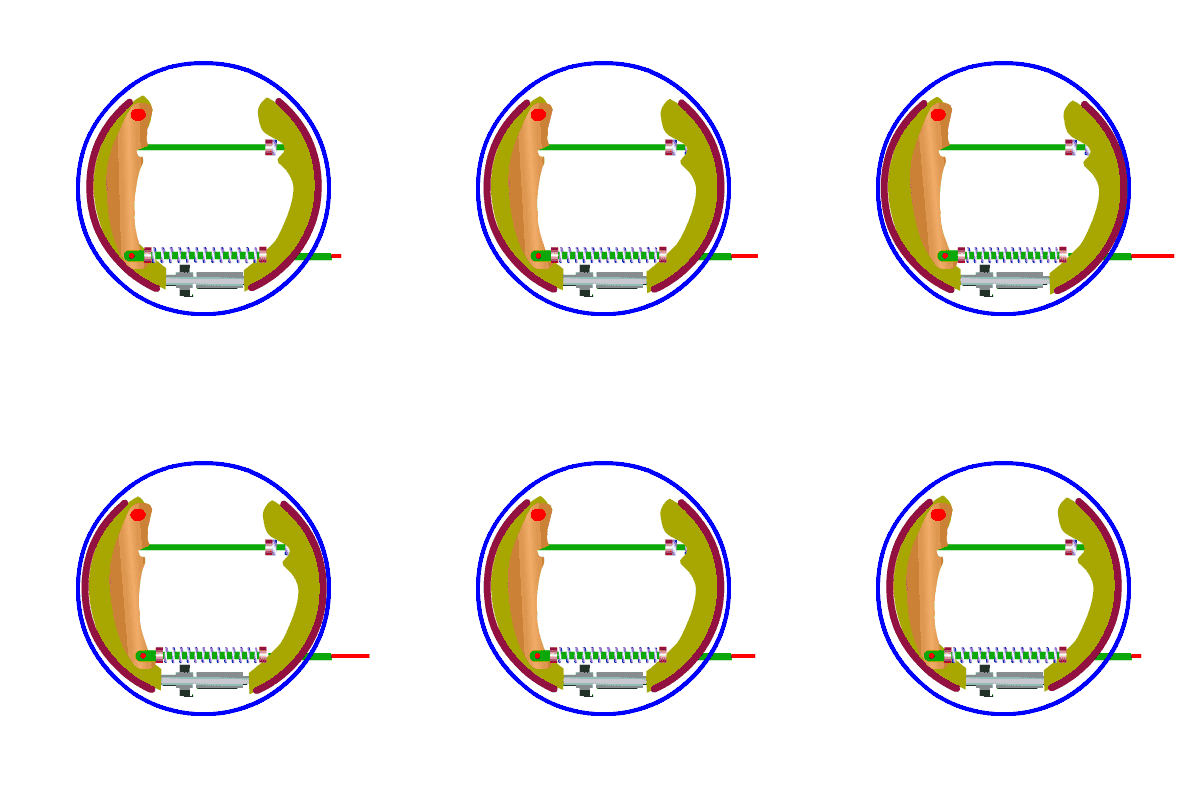
A brake drum is a hollow metal cylinder that spins with the wheel. Inside it sit brake shoes connected to a wheel cylinder. When you press the pedal, hydraulic pressure pushes the shoes outward against the drum’s inner surface, and the friction stops the wheel.
The basic difference: disc brakes clamp from the outside, drum brakes push from the inside.
Key Differences Between Drum and Disc Brakes
| Factor | Disc Brakes | Drum Brakes |
|---|---|---|
| Heat dissipation | Excellent; open design sheds heat fast | Poor; enclosed drum traps heat, risking brake fade |
| Braking power | Stronger, shorter stopping distances | Moderate; suited to lighter loads |
| Wet weather | Stronger; spinning rotor sheds water | Weaker; enclosed drum holds water |
| Longevity | Pads wear faster, need more frequent changes | Large friction surface lasts longer |
| Maintenance | Easier; fewer parts, simple pad changes | More complex; more parts, needs adjustment |
| Cost | Higher | Lower |
| Weight | Lighter | Heavier |
Why Many Cars Use Discs Up Front and Drums on the Rear
When you brake, the vehicle’s weight transfers to the front, so the front axle carries 70 to 80 percent of the braking force. Because the front does more work, it needs the stronger disc brakes. The rear axle carries less load, so manufacturers often fit cheaper drum brakes there. Rear drums also work well with the parking brake, which is why this combination is common on everyday cars.
Advantages and Disadvantages
Which Is Better for Your Car?
For most passenger cars, disc brakes win on performance, heat management, and service ease — which is why they are standard on all four wheels of most modern cars. Drum brakes remain a cost-effective choice on the rear axle, where the load is lighter and the parking brake is an added benefit. They are also common on trailers and heavy commercial vehicles, where their large friction surface and low cost are advantages.