
A brake shoe is a key component of a drum brake system. It typically consists of a curved metal body and a friction lining attached to it.
Brake shoes are commonly used in rear-wheel drum brakes on passenger cars, as well as in trailers and commercial vehicles. Compared with disc brakes, drum brakes generally have lower manufacturing costs and a relatively compact design. These advantages make them suitable for certain vehicles and applications, which is why drum brakes remain in use today.
How Do Brake Shoes Work
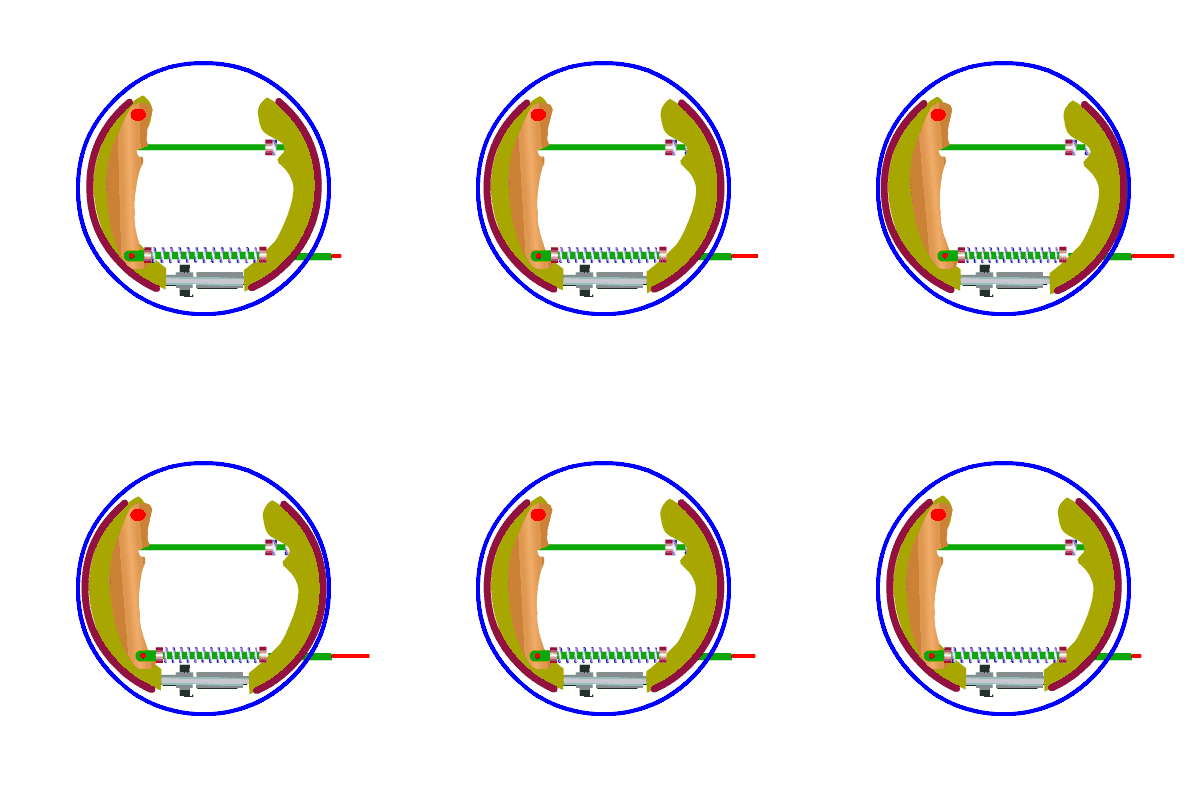
Brake shoes are installed inside the brake drum. When the brakes are applied, the actuating mechanism pushes the shoes outward, forcing the friction linings against the inner surface of the rotating drum. The resulting friction converts the vehicle’s kinetic energy into heat, slowing the vehicle down or bringing it to a stop.
Main Components of a Brake Shoe
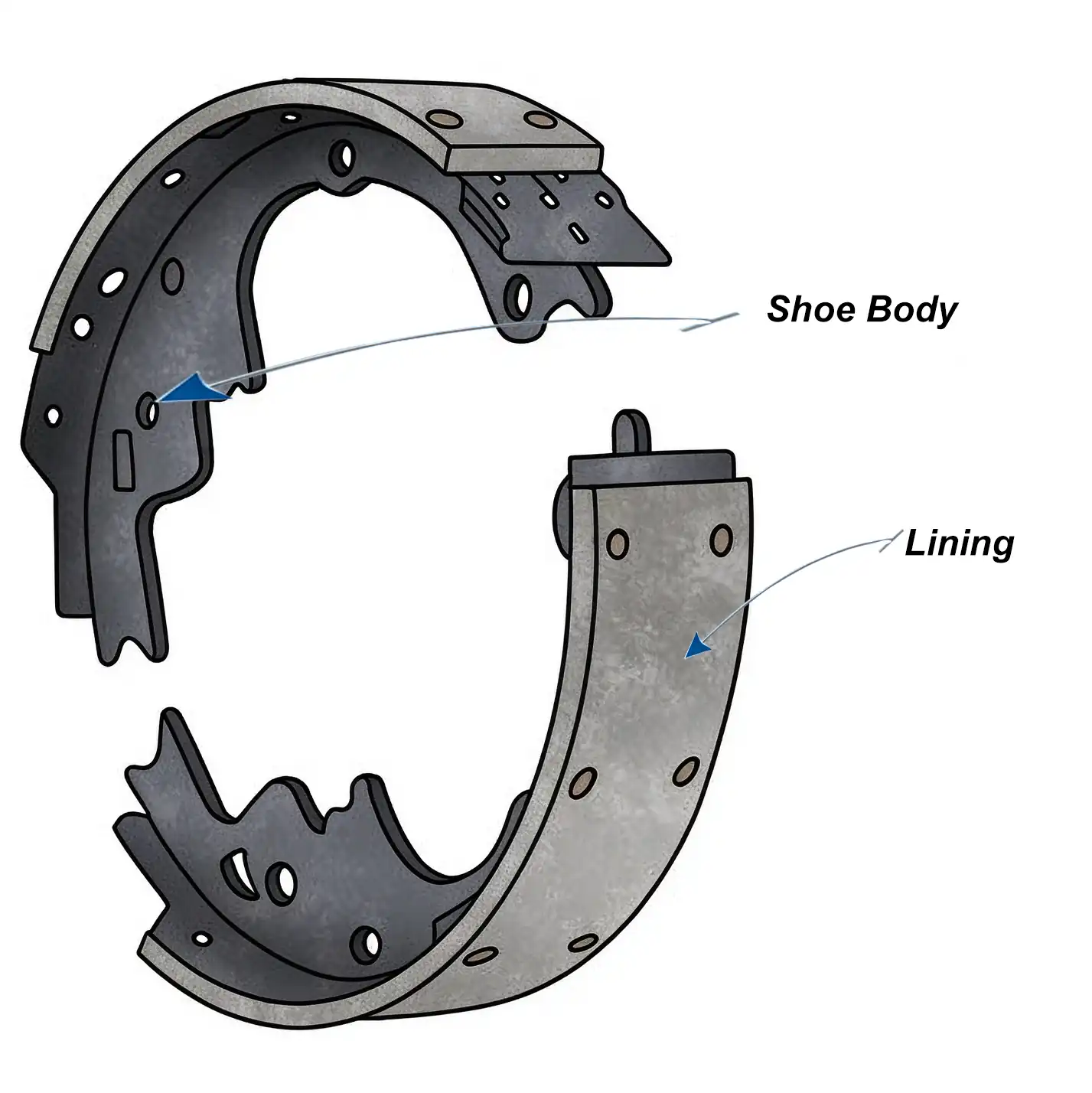
A brake shoe consists primarily of two components: a metal shoe body and a friction lining. The metal shoe body provides structural support and transmits the braking force, while the friction lining creates friction when pressed against the inner surface of the brake drum. The friction lining’s material composition affects braking performance, wear resistance, and service life.
Main Types of Brake Shoes
Brake shoes are an important component of drum brake systems. They can be classified into different types based on their structural design, frame construction, friction lining attachment method, and friction material. These classification criteria reflect different aspects of brake shoe design, construction, manufacturing, and material selection.
Brake Shoes by Design
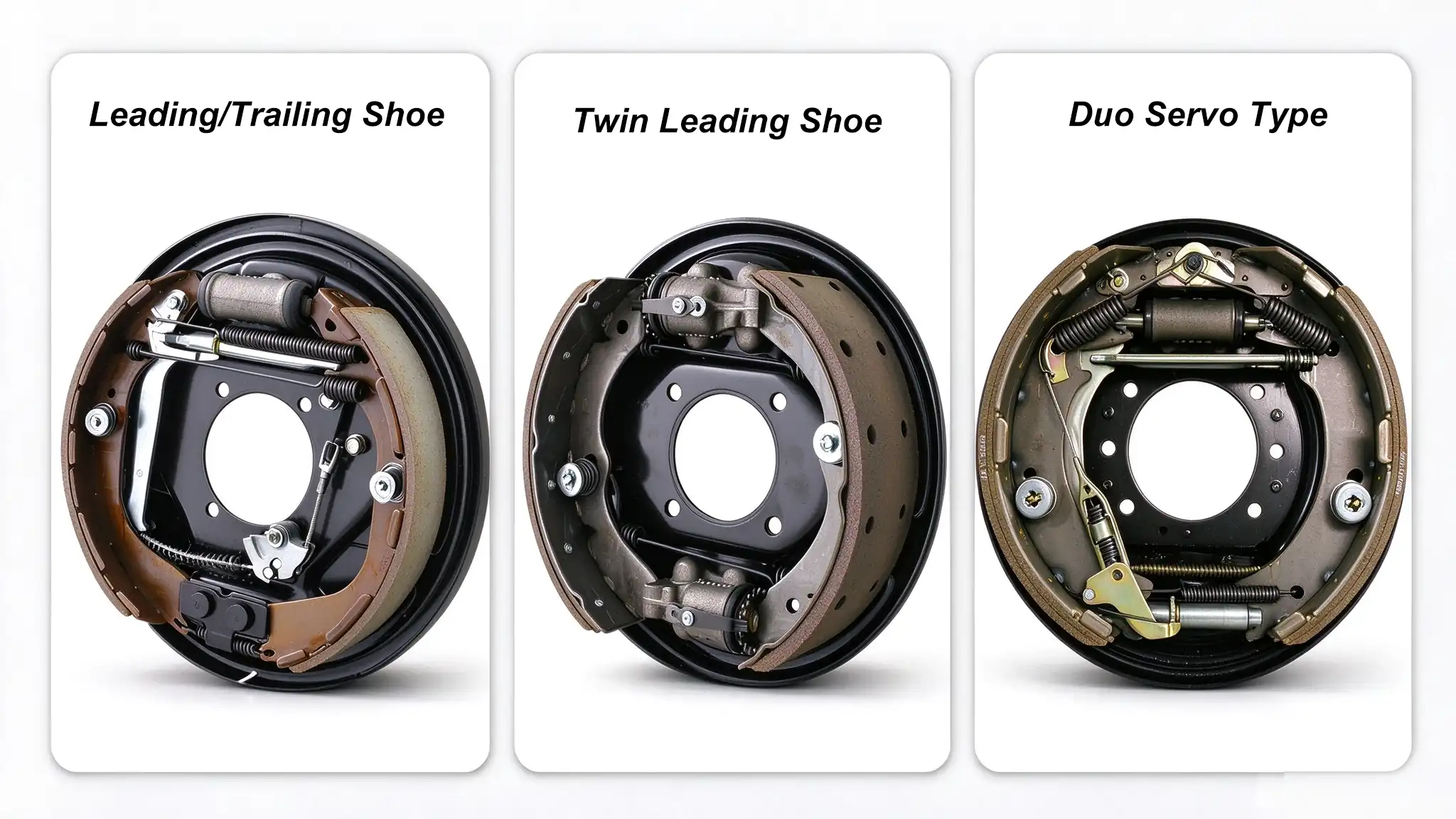
Brake shoes can be classified by design. The following are common types and configurations used in drum brake systems.
01.
Leading and Trailing Brake Shoes
Leading and Trailing Brake Shoes are a drum brake design in which the leading shoe is assisted by the rotation of the brake drum to increase braking force, while the trailing shoe experiences less self-energizing effect and provides more consistent braking performance.
02.
Twin-Leading Brake Shoes
Twin-Leading Brake Shoes are a drum brake design in which both brake shoes act as leading shoes in a specific direction of drum rotation, using frictional forces to increase braking force and provide stronger braking performance.
03.
Duo-Servo Brake Shoes
Duo-Servo Brake Shoes are used in a drum brake system where the force from one brake shoe is transferred to the other through an adjuster or connecting mechanism, creating a self-energizing effect that increases braking force and improves braking efficiency.
What Are Drum Brakes? How They Work, Types, and Benefits
What Are Drum Brakes? See how they work with a clear drum brake diagram, explore key components and three main types, and learn their pros and cons.
Read More
Brake Shoes by Web Construction
Brake shoes can be classified into two types based on the number and arrangement of webs in their structure.
01.
Single-Web Brake Shoes
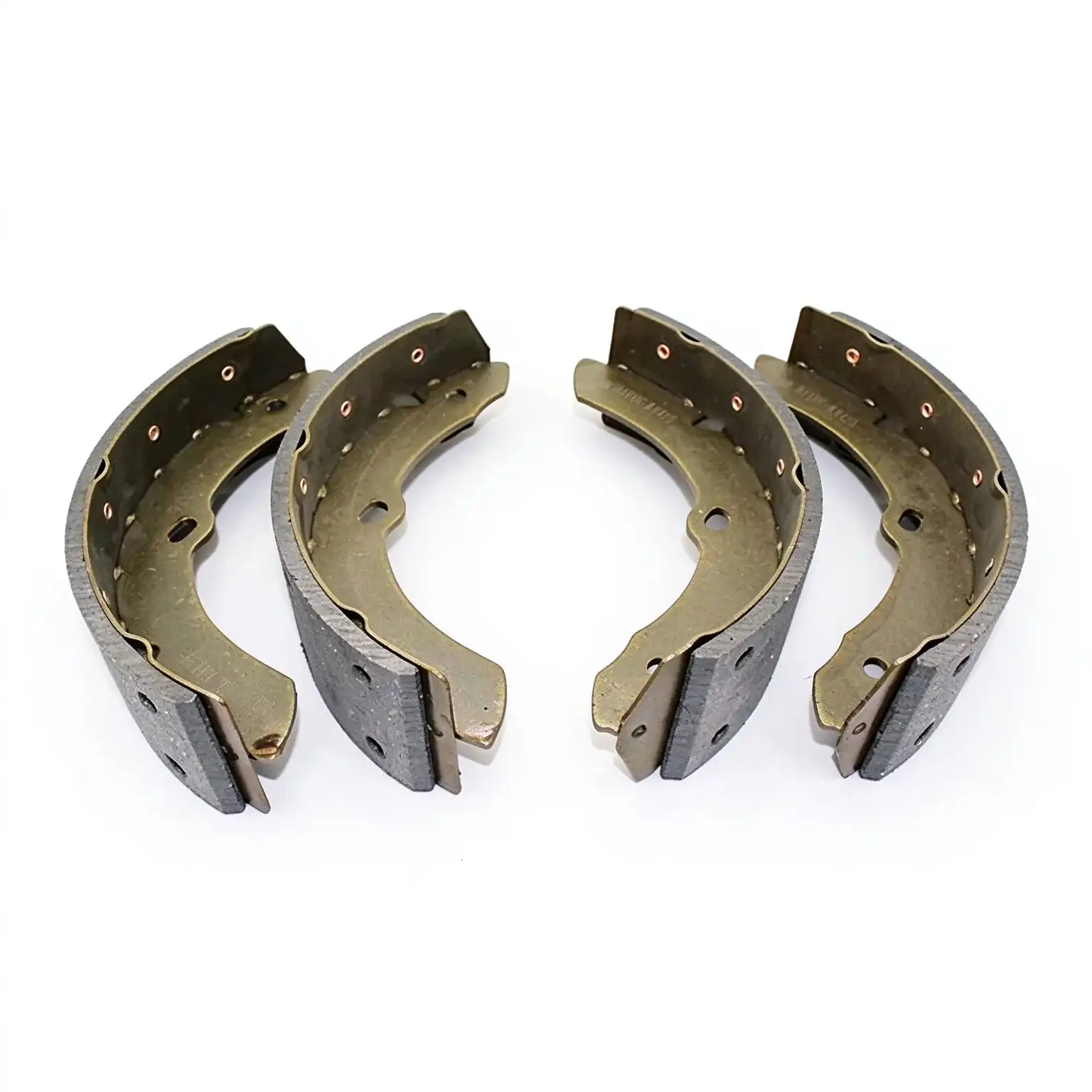
Single-web brake shoes use a single web as the main load-bearing element. They generally have a simple, lightweight design and can provide even support for the friction lining. However, they have lower overall structural rigidity and are typically used in drum brake assemblies for light- and medium-duty vehicles.
02.
Double-Web Brake Shoes
Double-web brake shoes use two webs as the main load-bearing elements. This design provides greater structural rigidity, higher load-bearing capacity, and improved stability during braking. These shoes are commonly used in drum brake assemblies for medium- and heavy-duty vehicles that require greater structural strength and durability.
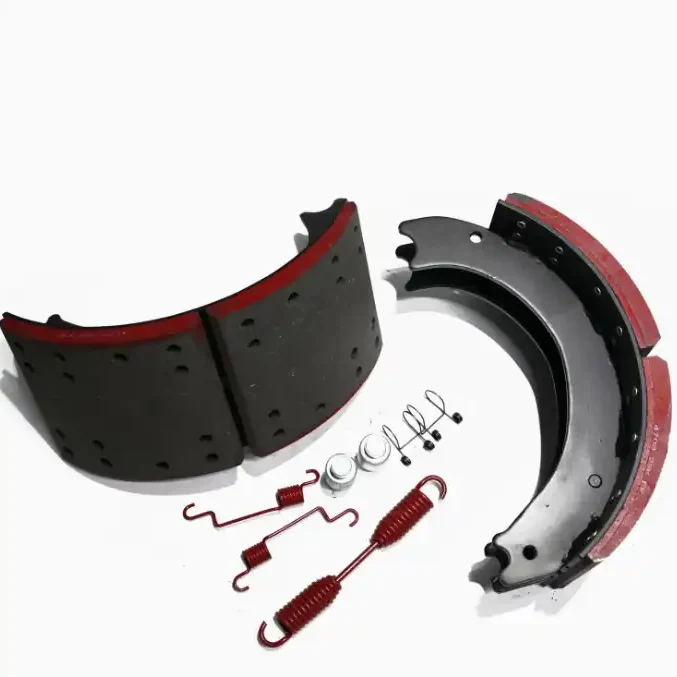
Brake Shoes by Lining Attachment Type
Brake shoes can be classified according to how the friction lining is attached to the shoe body. The two main types are riveted brake shoes and bonded brake shoes.
01.
Riveted Brake Shoes
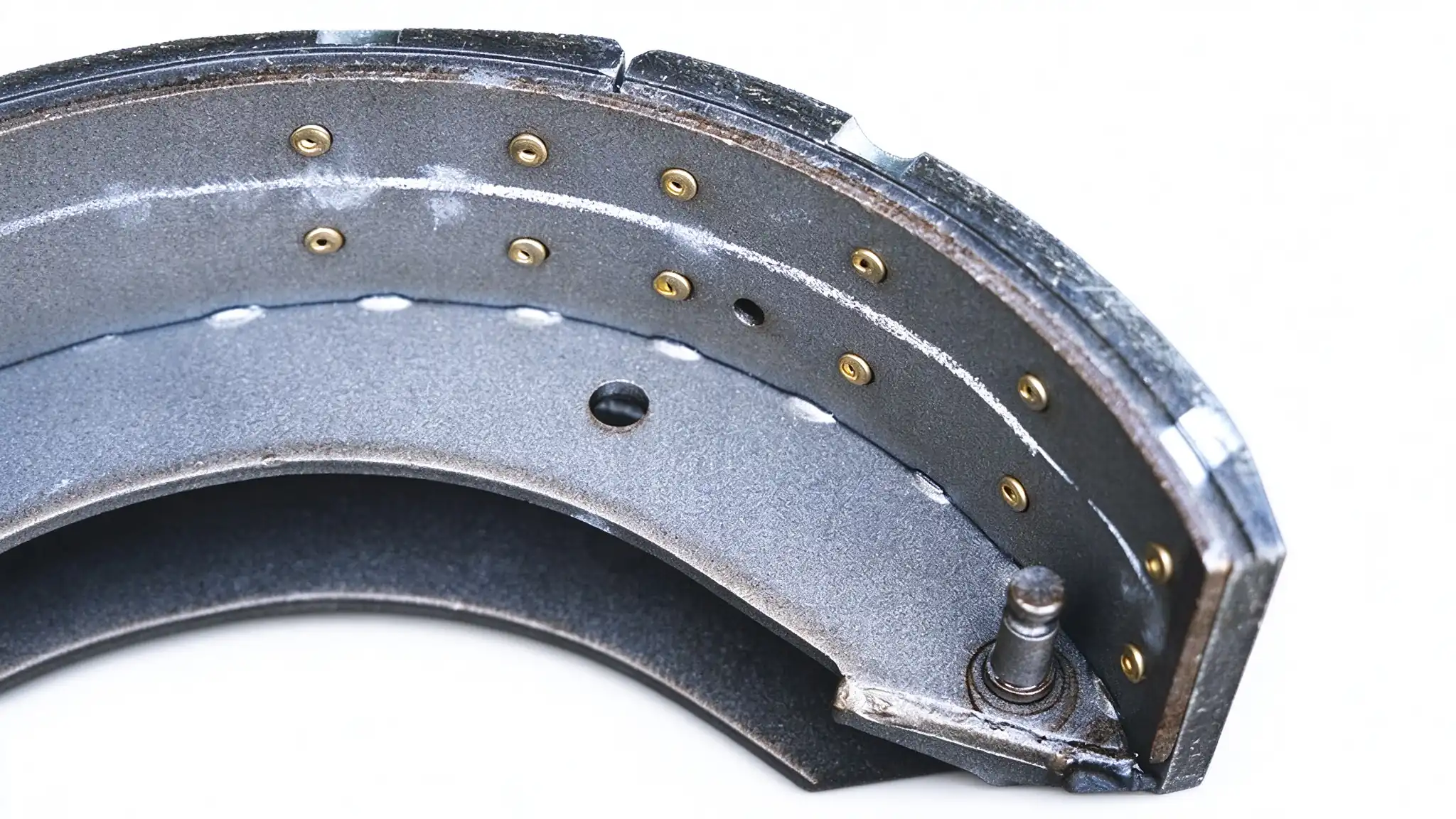
Riveted brake shoes use metal rivets to mechanically secure the friction lining to the shoe body. This method provides a secure mechanical connection and reduces the risk of lining separation. The worn friction lining can be replaced without replacing the entire shoe assembly, provided the shoe body remains serviceable. Riveted brake shoes are commonly used in heavy-duty applications, such as heavy trucks and trailers.
However, if the friction lining wears down to the rivets, the rivets may score the brake drum. Regular inspection of lining wear is therefore important.
02.
Bonded Brake Shoes
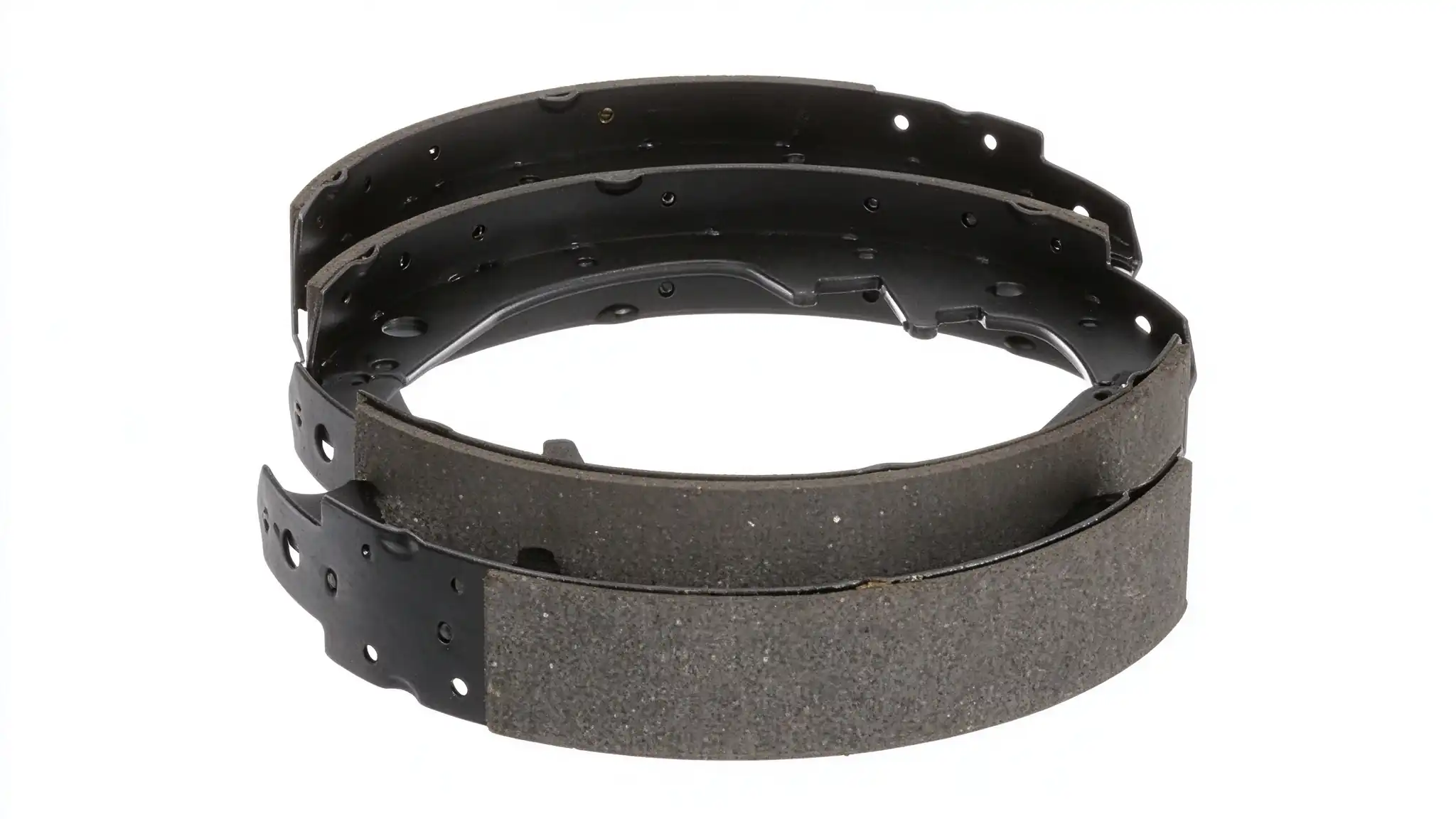
Bonded brake shoes use a specialized adhesive to attach the friction lining to the shoe body, eliminating the need for rivets. Without rivets, the lining surface is free of rivet heads, reducing the risk of damage to the brake drum caused by exposed rivets as the lining wears.
However, the performance of bonded brake shoes depends on the adhesive’s temperature resistance and the quality of the bonding process. They are used in a range of light- and medium-duty applications, depending on the product design and vehicle braking requirements.
Brake Shoes by Friction Material Type
Brake shoes can be classified into different types based on the composition of their friction linings.
01.
Non-Metallic Brake Shoes
Non-metallic brake shoes use friction linings made primarily from non-metallic materials, such as resins, rubber, and fibers. Depending on the formulation, these linings may offer low noise levels, consistent braking performance, and reduced wear on the brake drum. However, some formulations may have more limited heat resistance and load-bearing capacity, making them more suitable for light-duty applications.
02.
Semi-Metallic Brake Shoes
Semi-metallic brake shoes use friction linings made from a mixture of metal fibers, resins, friction modifiers, and other materials. They generally offer good heat resistance, high mechanical strength, and consistent braking performance. However, depending on the formulation and operating conditions, they may cause greater brake drum wear and produce more noise. They are commonly used in medium- and heavy-duty applications.
03.
Metallic Brake Shoes
Metallic brake shoes use friction linings composed primarily of metallic materials. These linings can offer high heat resistance, mechanical strength, and wear resistance, making them suitable for demanding applications that require reliable braking performance and durability. However, certain metallic friction formulations may cause greater brake drum wear and produce more noise. These brake shoes are commonly used in heavy-duty vehicles and construction equipment.
04.
Metallic Brake Shoes
Non-asbestos brake shoes use friction linings formulated without asbestos. These linings may contain resins, fibers, metallic ingredients, and other friction materials. Eliminating asbestos helps reduce the health risks associated with asbestos exposure. However, the overall environmental impact depends on the substitute materials and manufacturing processes used.
Non-asbestos brake shoes are classified by the absence of asbestos rather than by the proportion of metallic ingredients. As a result, they may overlap with non-metallic or semi-metallic material categories.
Brake Shoes Manufacturer for Global Automotive Markets
Looking for a reliable brake shoes manufacturer? Explore automotive brake shoes for various vehicle applications, with OEM/ODM customization, quality control and wholesale supply options.
Read More