
What Is an ABS Sensor
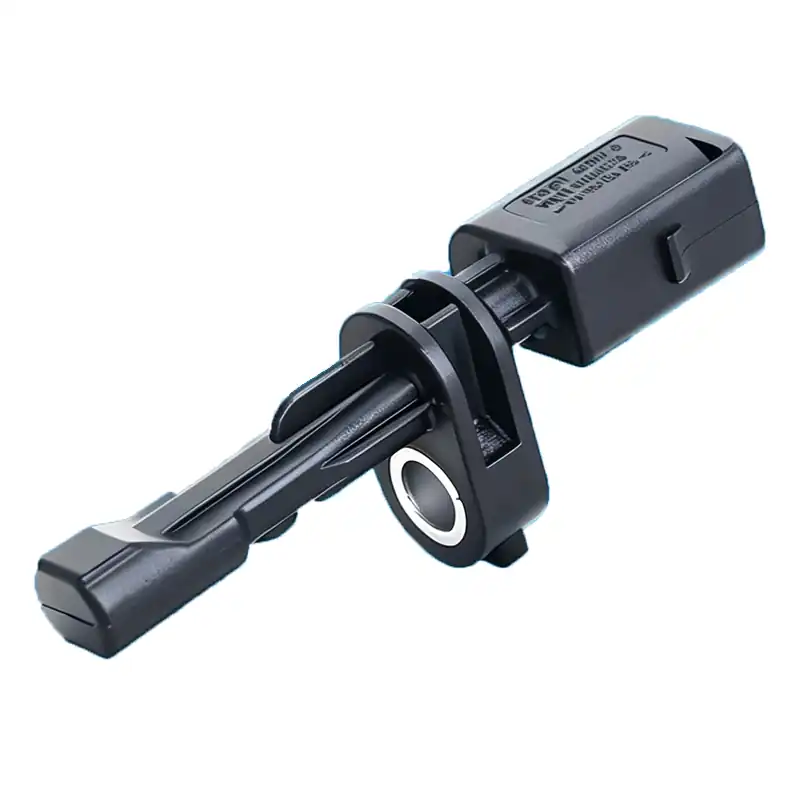
An ABS sensor, also called a wheel speed sensor, is a component of the anti-lock braking system that monitors the rotational speed of each wheel and sends that information to the ABS control module. The control module uses the data to prevent the brakes from locking during an emergency stop.
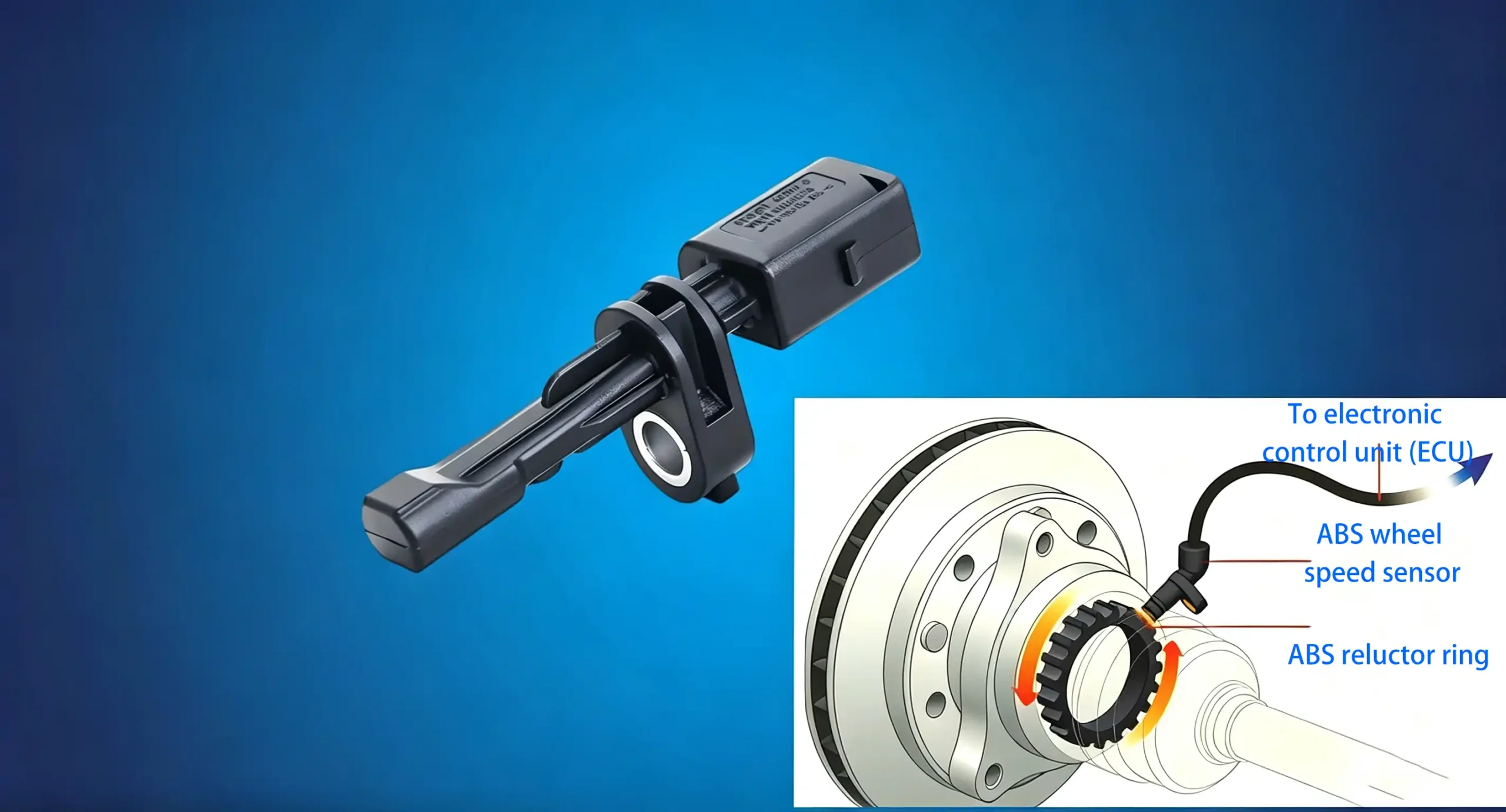
The sensor works with a pulse ring, also called a tone ring or reluctor wheel, which is attached to a part that rotates at the same speed as the wheel, such as the wheel hub, brake disc, or drive shaft.
How an ABS Sensor Works
An ABS sensor consists of two components: a reluctor wheel or tone ring positioned on the axle that rotates with the wheel, and a magnetic or Hall effect sensor that sends the data to the ABS control module.
As the wheel rotates, the teeth of the ring pass the sensor and cause a change in the magnetic field. This change generates a signal whose frequency corresponds to the wheel speed. The sensor converts this into a signal sent to the ABS control module, which uses the wheel speed data to determine when to activate the ABS and how much brake pressure to apply to stop the vehicle without locking up the brakes.
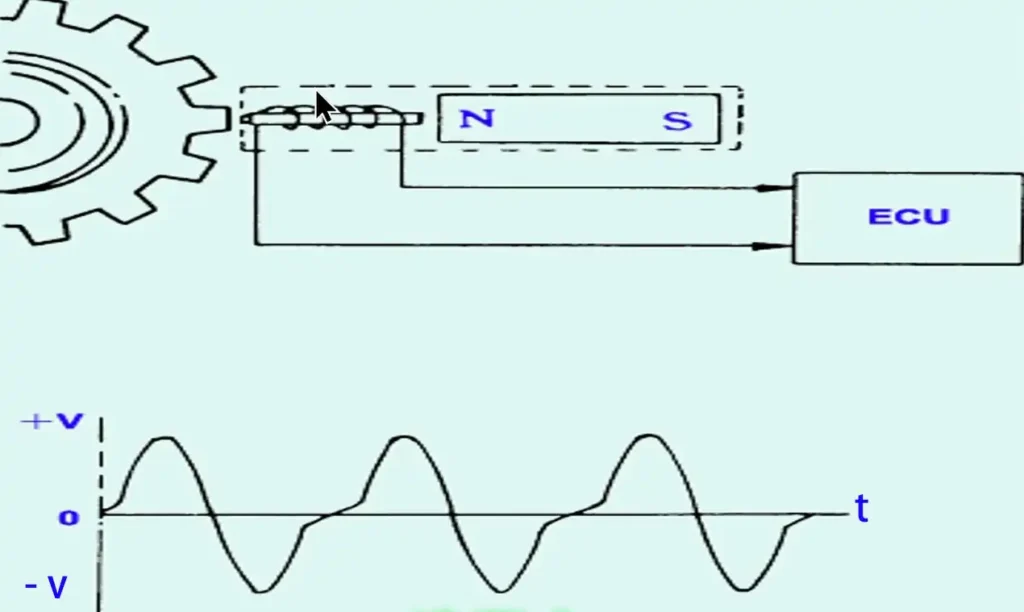
There are two main types of ABS sensors: