
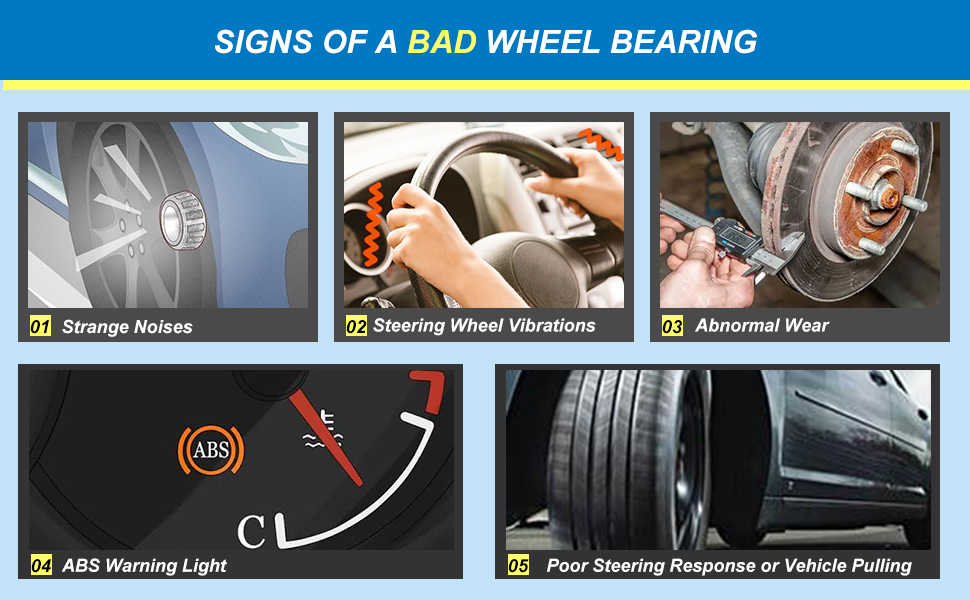
A constant humming or grinding noise coming from one of your wheels can be a sign of a bad wheel bearing. If a mechanic quotes you $500—or even $800—to replace it, you might be wondering whether that price is actually reasonable and what the typical cost to replace a wheel bearing should be.
The cost of wheel bearing replacement depends on several factors, including the vehicle, bearing type, parts cost, and labor rate. Wheel bearings may be small components, but they play a critical role in supporting the vehicle’s weight and allowing the wheels to rotate smoothly. When a wheel bearing becomes worn or damaged, it can cause unusual noise and vibration and, in severe cases, compromise vehicle safety. Delaying the repair can also allow the problem to worsen and lead to more extensive—and more expensive—repairs.
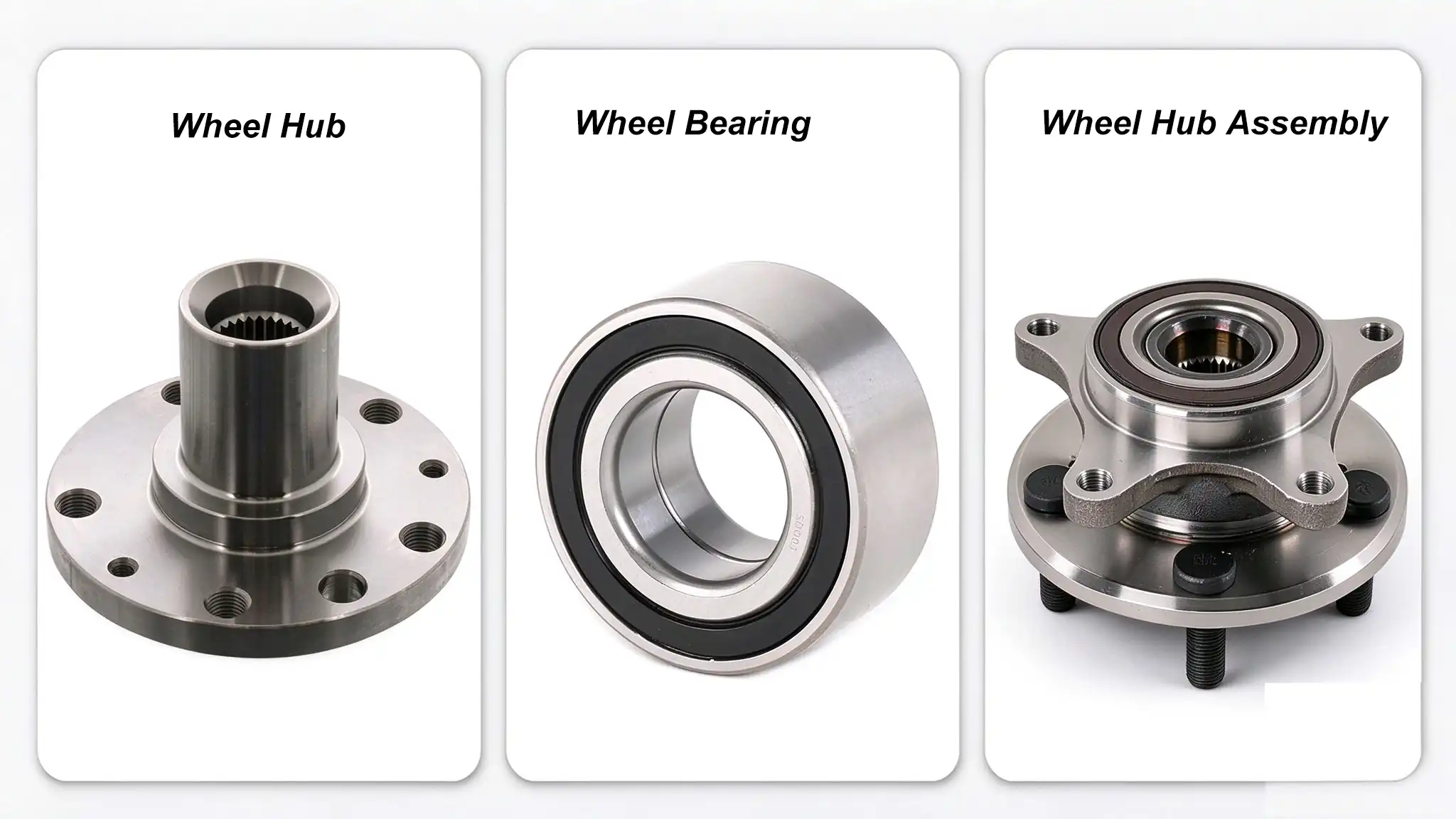
What Is a Wheel Hub?
What is a wheel hub? Learn what a wheel hub does, how it works, its main components and types, and how it differs from a wheel bearing and hub assembly.
Read More
What Makes Up the Cost to Replace a Wheel Bearing?
The total cost of replacing a wheel bearing typically includes the cost of parts, labor, and diagnostic services. The bearing design, installation method, and repair complexity can vary from one vehicle to another, so prices can differ significantly between repair shops even when they are addressing the same problem.
01.
Cost of the Replacement Parts
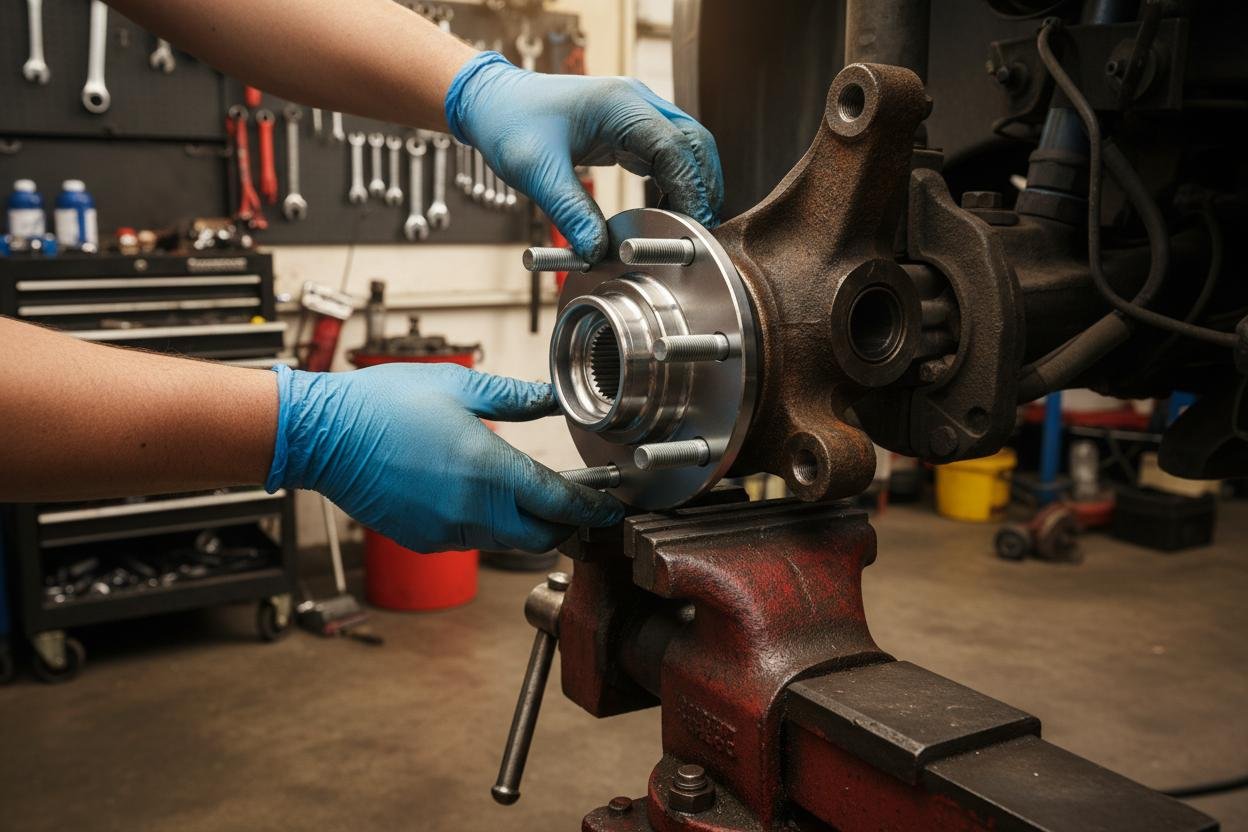
The cost of replacement parts depends on the type of wheel bearing, the vehicle, and the parts brand. Some vehicles use a serviceable wheel bearing that can be replaced separately, while others require replacement of the entire wheel hub assembly. OEM parts also typically cost more than aftermarket alternatives.
02.
Labor Costs for Wheel Bearing Replacement
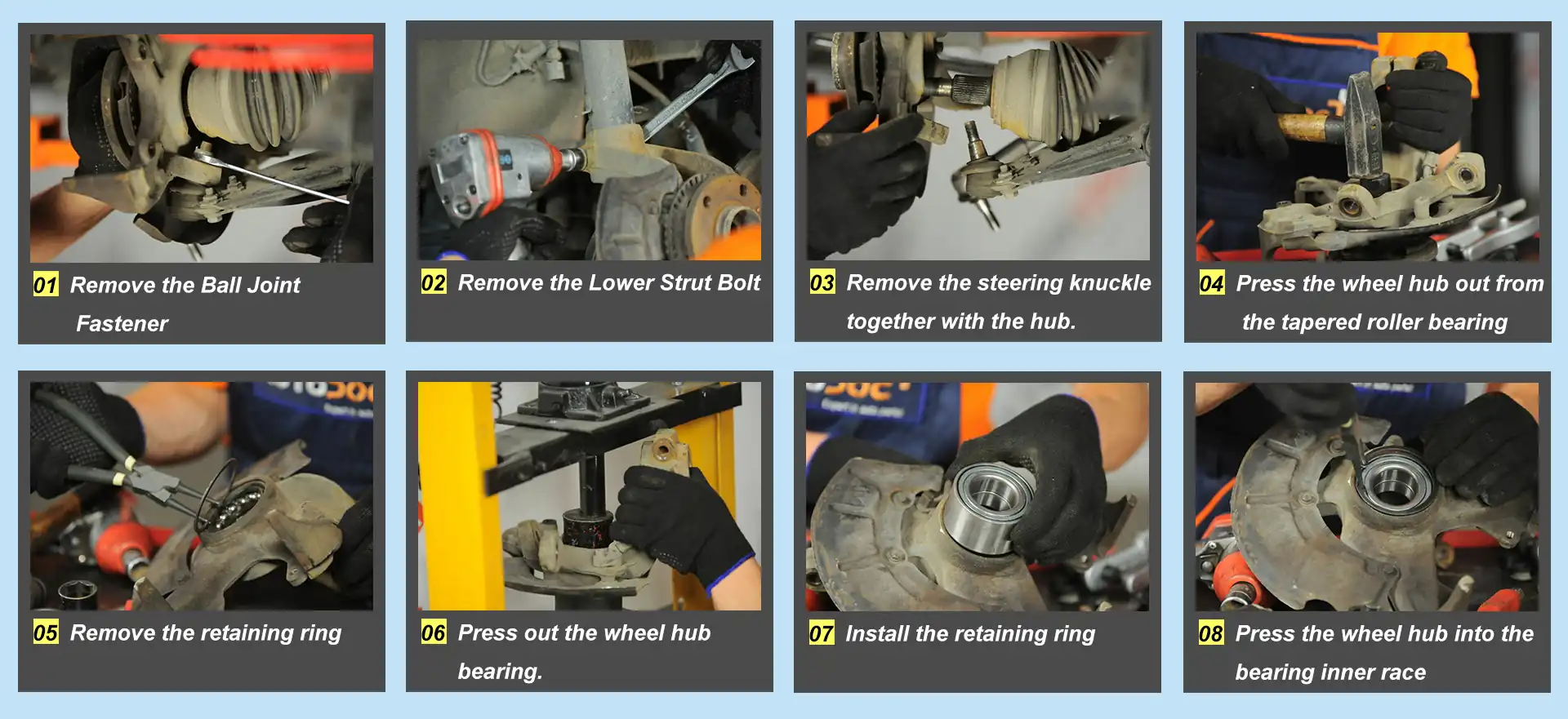
Labor costs depend largely on the bearing design and how difficult it is to access and replace. Some wheel bearings require removal of the wheel hub or steering knuckle, as well as specialized equipment to press out the old bearing and install the new one. More time-consuming repairs generally result in higher labor costs.
03.
Diagnostic Fees and Inspection Costs
Diagnostic fees cover the cost of inspecting issues such as unusual noises from the wheel, vibration, or excessive wheel play. Because worn tires, brake components, and other problems can cause similar symptoms, a technician may need to diagnose the vehicle first to confirm that the wheel bearing is the source of the problem. Some repair shops charge a separate diagnostic fee, while others may apply it toward the repair cost if you have the work done there.
How To Replace A Wheel Bearing?
Learn how to replace a wheel bearing step by step, including required tools, different bearing types, installation procedures, and maintenance tips.
Read More
Factors That Affect Wheel Bearing Replacement Costs
The cost of replacing a wheel bearing depends on several factors, including the type of bearing, vehicle design, choice of parts, and labor rates. Understanding these factors can help you determine whether a repair quote is reasonable and avoid overpaying for the repair.
01.
Front vs. Rear Wheel Bearings: Cost Differences
The cost of replacing a front or rear wheel bearing depends on the vehicle’s design, the type of bearing, and how difficult it is to remove and replace. Some rear wheel bearings require additional work around the suspension or drivetrain, while certain front wheel bearings require removing the steering knuckle and using specialized equipment to press out the old bearing and press in the new one. These factors can increase labor time and overall repair costs. As a result, there is no fixed rule that front or rear wheel bearing replacements will always cost more.
02.
Bearing Types: Hub Assemblies vs. Press-In Bearings
A bolt-on wheel hub assembly can usually be removed and replaced as a complete unit, making the job relatively straightforward, although the replacement part may cost more. Press-in wheel bearings typically have a lower parts cost, but replacing them may require removing additional components and using specialized equipment to press out the old bearing and install the new one, which can increase labor costs. Ultimately, which option costs more depends on the parts cost, labor time, and the specific vehicle design.
03.
Parts Options: OEM vs. Aftermarket
OEM parts generally offer proper fit and compatibility for the vehicle, but they can be more expensive. The price and quality of aftermarket parts can vary depending on the brand and product line. Well-known bearing manufacturers such as Timken, SKF, and NTN offer a range of aftermarket wheel bearings as alternatives to OEM parts. When choosing a replacement bearing, consider factors such as product quality, vehicle compatibility, brand reputation, and warranty coverage rather than focusing solely on price.
04.
Labor Costs: Regional Rates and Auto Repair Shop Pricing
Labor rates can vary significantly by location, as can a repair shop’s operating costs and pricing. Dealerships are typically more familiar with the vehicles they service, but their prices may be higher. Independent repair shops often offer more flexibility in parts selection and pricing, but the actual cost depends on the shop’s expertise, labor rates, and pricing. When comparing quotes, make sure each one includes the same services, parts specifications, and scope of work.
05.
Other Factors: Corrosion, Seized Components, and ABS Wheel Speed Sensors
Corrosion or seized bolts can make removing the wheel bearing or hub assembly more difficult, increasing labor time and costs. Some wheel hub assemblies also incorporate an ABS wheel speed sensor or magnetic encoder ring. If these components are damaged and require additional repair or replacement, they can further increase the total repair cost.
How to Tell if You’re Getting a Fair Wheel Bearing Repair Quote
To determine whether a wheel bearing replacement quote is fair, start by confirming the scope of the repair, checking the parts and labor costs, and reviewing any additional work or services, as well as the warranty coverage.
Confirm the Parts Being Replaced and the Scope of Work
First, confirm whether the quote covers replacing a single wheel bearing or the entire wheel hub assembly, and whether the repair involves one wheel or both sides of the same axle. The parts being replaced and the number of parts needed can significantly affect both parts and labor costs.
What a Written Repair Quote Should Include
A clear written repair quote should include the following details, making it easier to review and compare the costs:
01
Wheel Location
Clearly identify which wheel needs the repair, such as the left front or right rear wheel.
02
Parts Information
Specify whether the repair involves replacing a single wheel bearing or the entire wheel hub assembly, along with the parts brand and type.
03
Labor Costs
List the estimated labor hours, labor rate, and total labor cost.
04
Diagnostic Fee
State whether a diagnostic fee is included in the quote.
05
Wheel Alignment
If a wheel alignment is needed, the quote should explain why and list the associated cost.
06
Additional Repairs
List any additional repairs involving the ABS wheel speed sensor, brake system, CV axle, or suspension components, along with their associated costs.
07
Warranty Coverage
Clearly state the warranty period for both parts and labor, as well as what the warranty covers.
12 Questions to Ask Your Repair Shop Before the Work Begins
01
Which Wheel Is Affected? Which wheel has the failed wheel bearing?
02
How Was the Problem Diagnosed? What inspection or tests were used to confirm that the wheel bearing is faulty?
03
What Is Included in the Repair? Does the quote cover one wheel or multiple wheels?
04
What Part Will Be Replaced? Will the shop replace the wheel bearing itself or the entire wheel hub assembly?
05
What Brand of Parts Will Be Used? Are the replacement parts OEM or aftermarket, and what brand are they?
06
How Many Labor Hours Are Estimated? How many hours of labor are expected for the repair?
07
What Is the Labor Rate? How much does the shop charge per hour for labor?
08
Is the Diagnostic Fee Included? Does the quote include the diagnostic fee?
09
Is a Wheel Alignment Needed? If so, why is an alignment necessary?
10
Are There Any Additional Repairs? Does the quote include any work on the ABS wheel speed sensor, brake system, CV axle, or suspension components?
11
What Is Covered by the Warranty? What warranty coverage is provided for the parts and labor?
12
What If I Supply My Own Parts? Will using customer-supplied parts affect the repair or warranty coverage?