
The signs of a bad wheel bearing or failing wheel hub assembly can include unusual noises, steering wheel vibrations, uneven tire wear, poor handling, and ABS warning lights. Common causes of premature wear include rough road conditions, water and contaminants, improper installation, overloading, and tire imbalance. While basic checks can help identify potential problems, a professional inspection is necessary for an accurate diagnosis. If you notice any warning signs, have your vehicle inspected promptly to prevent further damage and reduce the risk of serious safety issues.
Signs of a bad wheel bearing or failing wheel hub assembly include unusual noises, steering wheel vibrations, uneven tire wear, poor handling, and ABS warning lights. Premature wear may result from rough roads, contamination, improper installation, overloading, or tire imbalance. Basic checks can help, but professional inspection is recommended for accurate diagnosis and to prevent further damage or safety risks.
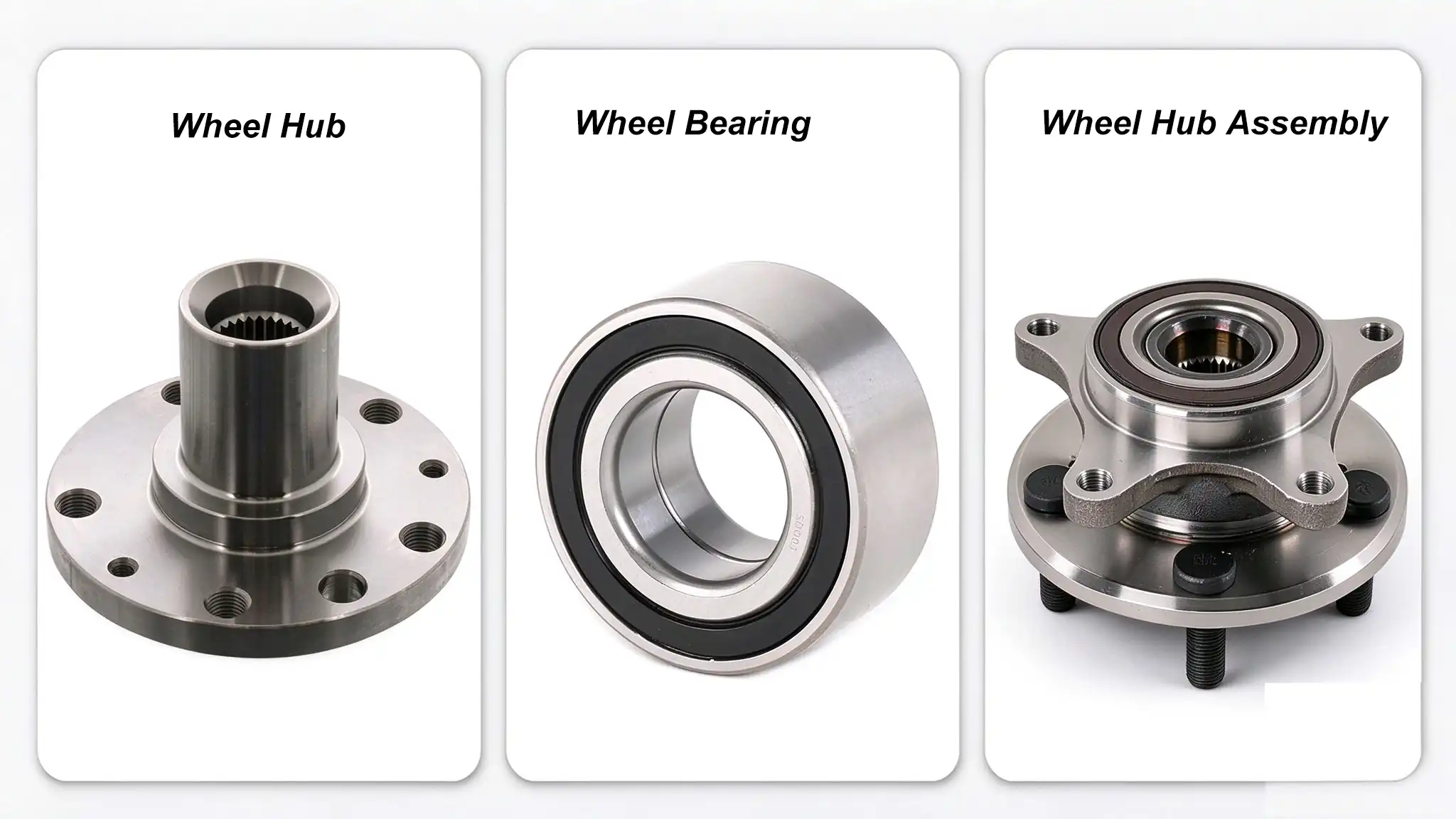
The wheel hub assembly is typically integrated with the wheel bearing and connects the wheel to the vehicle. It supports the vehicle’s weight and allows the wheel to rotate smoothly.
When the wheel hub assembly fails, the problem goes beyond repair costs—it can compromise driving safety and, in severe cases, even cause you to lose control of the vehicle. This article will help you recognize the common signs of a damaged wheel hub, understand what causes premature wear, and know when the problem needs to be addressed.
What Is a Wheel Hub?
What is a wheel hub? Learn what a wheel hub does, how it works, its main components and types, and how it differs from a wheel bearing and hub assembly.
Read More
Common Signs of a Bad Wheel Bearing
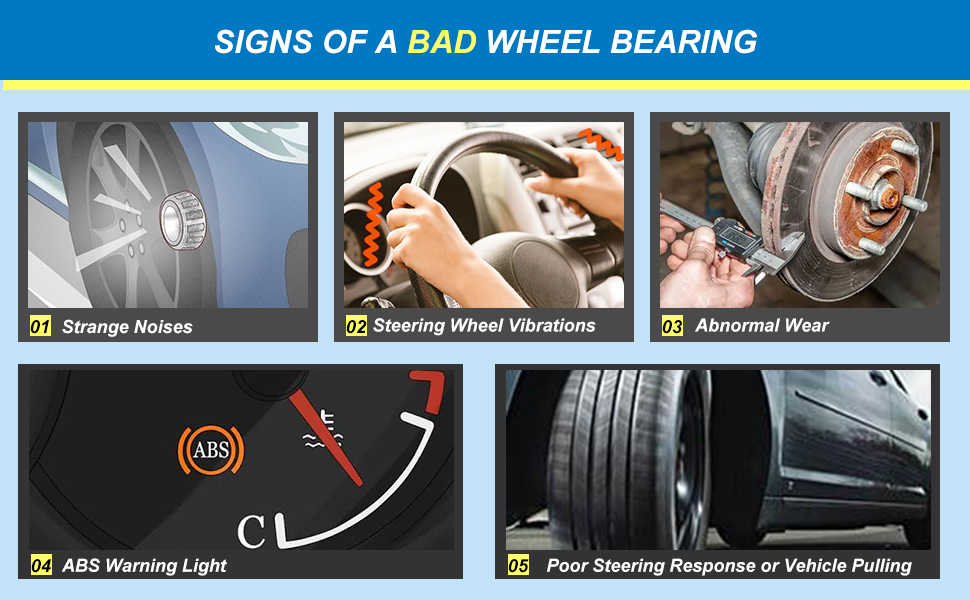
When the wheel hub or wheel bearing fails, common symptoms include unusual noises and vibrations. These vibrations may be transmitted to the driver through the steering wheel, vehicle body, or pedals. Since the bearing rotates continuously while the vehicle is moving, these noises and vibrations typically occur during driving. The common symptoms can generally be grouped into the following five categories.
01.
Strange Noises Coming from the Wheel
When the wheel hub or wheel bearing fails, it may produce humming, roaring, or grinding noises. You may also hear unusual clicking or clunking sounds when turning. These noises are typically caused by a damaged bearing inside the wheel hub.
02.
Steering Wheel Vibrations
As the bearing wears, the internal clearance increases, causing looseness at the wheel hub connection. The wheel may also wobble and transmit vibrations to the steering wheel. These vibrations are especially noticeable at high speeds or when turning.
03.
Abnormal Tire and Brake Disc Wear
When a wheel bearing becomes severely loose or develops excessive play, it can affect the wheel’s alignment, resulting in abnormal tire wear. This may appear as one side of the tire wearing significantly faster than the others. At the same time, if the wheel hub becomes loose or deformed, it can cause the brake disc or drum mounted on it to develop runout, which may lead to uneven brake component wear and noticeable pulsation or vibration during braking.
04.
Poor Steering Response or Vehicle Pulling
When a wheel bearing develops excessive play, the steering may become less responsive and precise, and the steering wheel may feel loose. This instability is especially noticeable when turning. If the vehicle continues to pull to one side even when the brakes are not applied, a faulty wheel hub may be the cause.
05.
ABS Warning Light
On many vehicles, the ABS wheel speed sensor and reluctor ring are integrated into the wheel hub assembly. If the wheel bearing becomes loose, the sensor may not be able to accurately detect the wheel speed, causing the ABS warning light to come on. In some cases, the traction control warning light may also illuminate.
In addition to the symptoms above, a severely damaged wheel bearing can create excessive friction, causing the wheel to become hot and potentially producing the smell of burning grease or rubber. If one wheel is noticeably hotter than the others after driving, it should be inspected further. Take care to avoid burns when checking the temperature.
NOTE
It’s important to note that other issues can cause symptoms similar to those of a failing wheel bearing, including uneven tire wear, tire imbalance, brake problems, and worn suspension components. Improper wheel alignment can also cause the steering to feel loose or the vehicle to pull to one side. By comparison, a noise that persists and increases with vehicle speed is more likely to be related to a faulty wheel bearing. A professional inspection is still recommended to accurately identify the cause.
Common Causes of Premature Wheel Hub Failure
Understanding these causes can help with routine maintenance and reduce unnecessary wear. In addition to normal wear and aging, the following factors can accelerate wear on the wheel hub assembly:
Rough Road Conditions
Frequently driving on potholes, uneven roads, or unpaved
Water and Contaminants
Water and dirt entering the assembly can contaminate the bearing grease and accelerate bearing wear.
Overloading
Exceeding the vehicle’s load capacity increases the load on the wheel bearings and accelerates wear.
Improper Installation or Poor-Quality Parts:
Failing to follow the manufacturer’s installation specifications or using low-quality parts can cause the assembly to fail prematurely.
Tire Imbalance
Unbalanced tires can place additional load on the wheel bearings, which may accelerate wear over time.
Proper maintenance and careful driving can help minimize the impact of these factors on the wheel hub assembly and extend its service life.
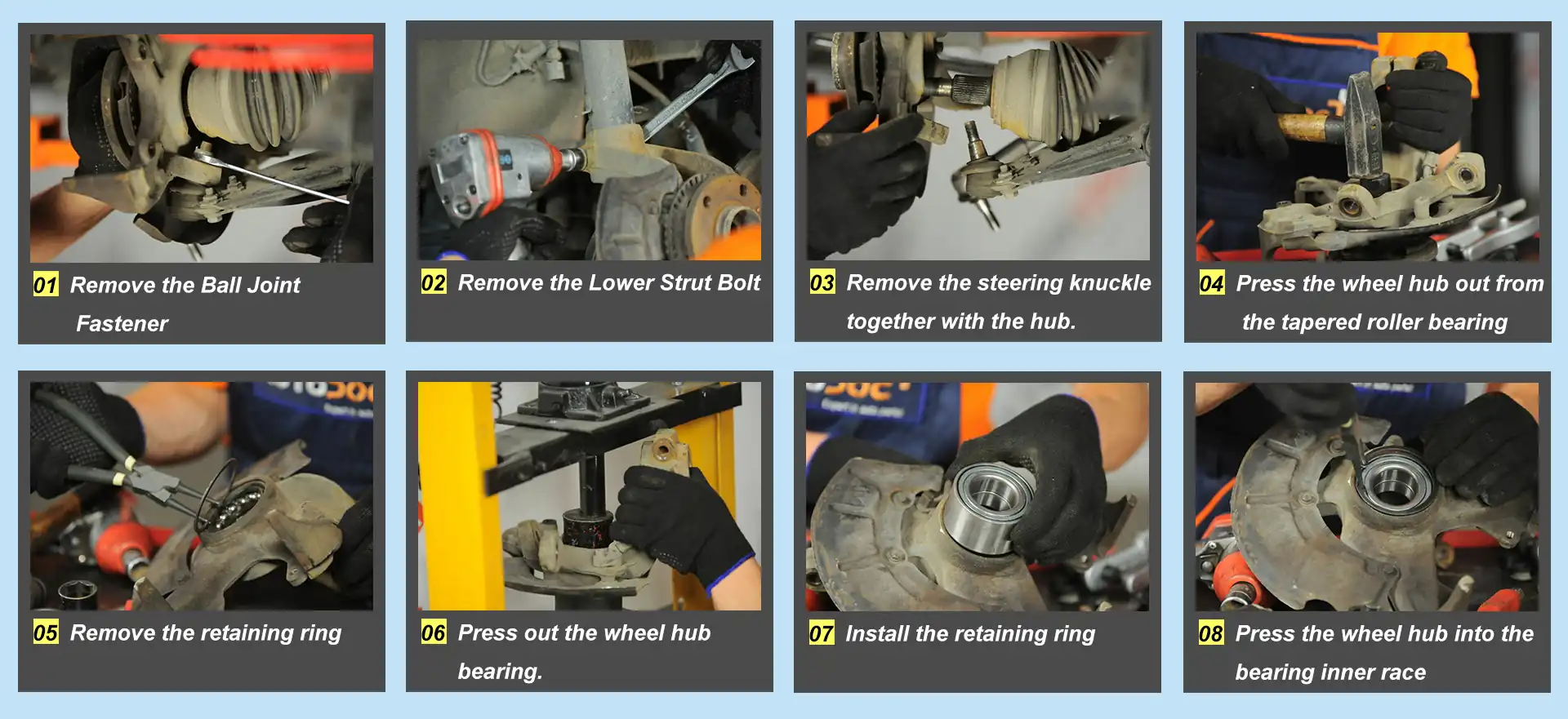
How To Replace A Wheel Bearing?
Learn how to replace a wheel bearing step by step, including required tools, different bearing types, installation procedures, and maintenance tips.
Read More
How to Check the Wheel Hub
You can perform several simple checks for an initial assessment of the wheel hub assembly condition. Follow these steps to detect obvious issues: inspect wheel rotation, listen for abnormal noises, check for play, and examine the overall condition.

01.
Safely Raise the Wheel
Use a jack to safely lift the vehicle. If possible, inspect both wheels on the same axle, such as both front or both rear wheels, for comparison.
02.
Strange Noises Coming from the Wheel
Spin the wheel and listen for any unusual grinding noises. If one wheel shows noticeable wobbling, slows down abnormally, or stops sooner than the other, it may indicate a bearing problem.
03.
Check for Play
Place your hands at the 12 and 6 o’clock positions on the tire and push and pull the wheel to check for looseness. There should be no noticeable movement under normal conditions. If the wheel feels loose or has excessive play, the bearing may be damaged.
04.
Inspect the Wheel Hub
Check the wheel hub assembly for cracks, rust, or other visible damage. Also look for abnormal wear on one side of the tire.
These basic checks can help narrow down the cause. However, diagnosing the exact issue and replacing the wheel hub assembly typically requires specialized tools and expertise. If you cannot determine the cause or suspect another component, such as the suspension, is responsible, it is best to have an experienced technician perform a further inspection to determine whether the problem is with the wheel hub assembly, the bearing, or another related component.
The Importance of Replacing a Worn Wheel Hub Assembly
Although the wheel hub assembly may seem like a relatively small component, it plays a critical role in your safety every time you drive. Unusual noises, steering wheel vibrations, abnormal tire wear, and an illuminated ABS warning light can all be signs that something is wrong. Early detection, diagnosis, and repair can help prevent costly secondary damage and, more importantly, reduce the risk of serious incidents such as wheel detachment or loss of vehicle control. If you notice any of these warning signs, schedule a professional inspection as soon as possible to prevent a minor bearing issue from developing into a more serious problem.