
Wheel hubs, wheel bearings, and wheel hub assemblies are often confused with one another. Although these components work closely together, they serve different purposes. The wheel hub mounts the wheel to the vehicle, while the wheel bearing supports the wheel and allows it to rotate smoothly. On many modern vehicles, the wheel hub and wheel bearing are integrated into a single wheel hub assembly.This article covers what a wheel hub is, what it does, how it works, and the most common types.
What Is a Wheel Hub?
A wheel hub is the metal component at the center of a wheel that mounts and secures the wheel to the vehicle. It connects to components such as the brake rotor or brake drum and is supported by a wheel bearing mounted in the steering knuckle or other wheel-end components. This allows the wheel to rotate smoothly while the hub supports the vehicle’s weight and the loads generated during driving, braking, and steering. On driven wheels, the hub also connects to the drive axle or half shaft to transfer power to the wheel.
On many modern vehicles, the wheel hub and wheel bearing are integrated into a wheel hub assembly. As a result, these terms are sometimes used interchangeably in everyday repair work and parts sales, even though they refer to different components or configurations.
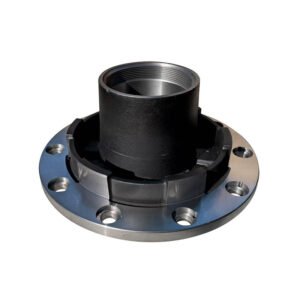
What does the wheel hub connect to?
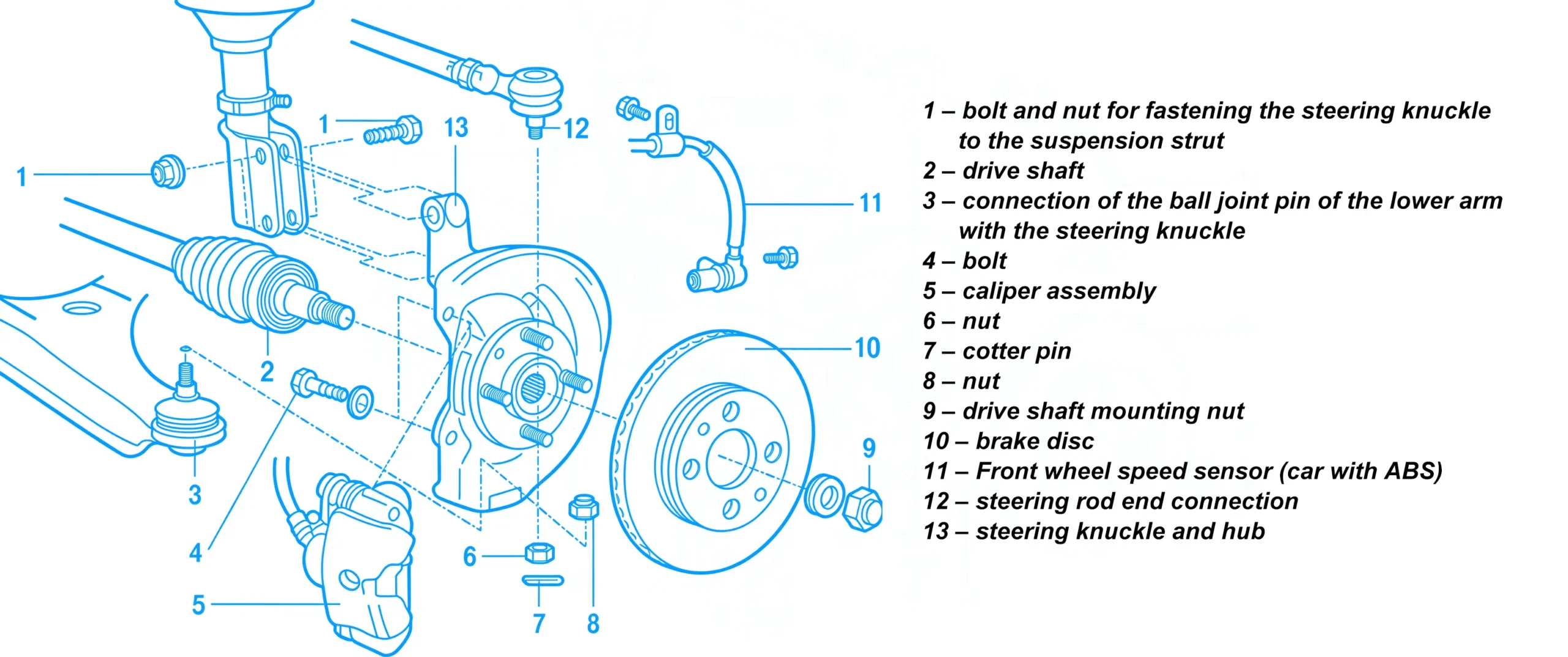
A wheel hub is located at the center of the wheel and connects the wheel to the vehicle’s braking and suspension components. The wheel mounts to the hub flange, while the brake rotor or drum is typically mounted to the hub as well. The hub is supported by a wheel bearing, which allows it to rotate relative to the steering knuckle or other suspension components.
On driven wheels, the hub is also connected to the axle shaft or half shaft to transfer power to the wheel. From the wheel inward, you will generally find the wheel hub and wheel bearing, along with the steering knuckle and other suspension components. The exact arrangement varies depending on the vehicle’s drivetrain and suspension design
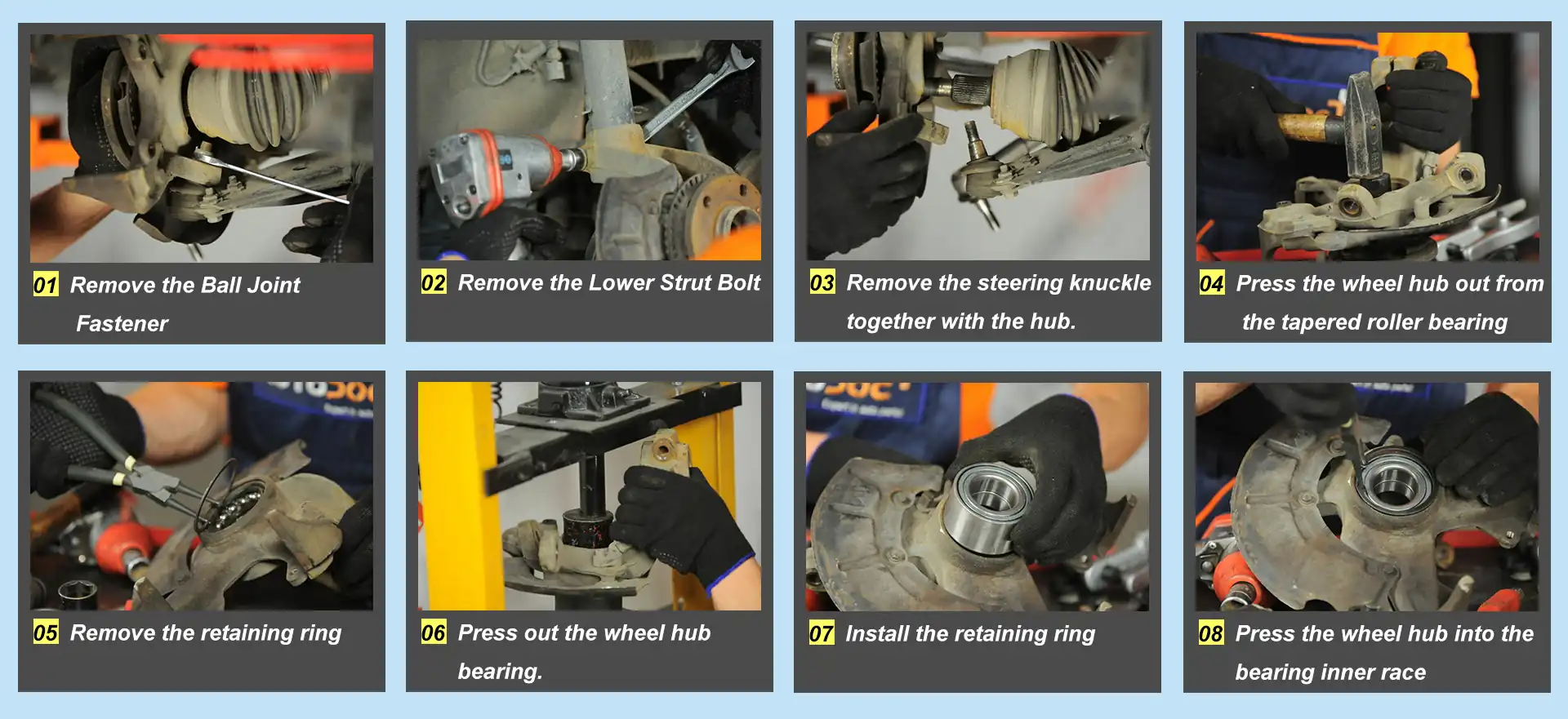
How To Replace A Wheel Bearing?
Learn how to replace a wheel bearing step by step, including required tools, different bearing types, installation procedures, and maintenance tips.
Read More
Wheel Hub vs. Wheel Bearing vs. Wheel Hub Assembly
Wheel hubs, wheel bearings, and wheel hub assemblies are often confused because they are closely related and, on many modern vehicles, are integrated into a single unit. However, they are not the same component. The wheel hub mounts and connects the wheel to the vehicle, while the wheel bearing supports the hub and allows the wheel to rotate smoothly. A wheel hub assembly is a preassembled unit that combines the hub, bearing, and, depending on the vehicle, other components such as seals, an ABS wheel speed sensor, or a magnetic encoder.
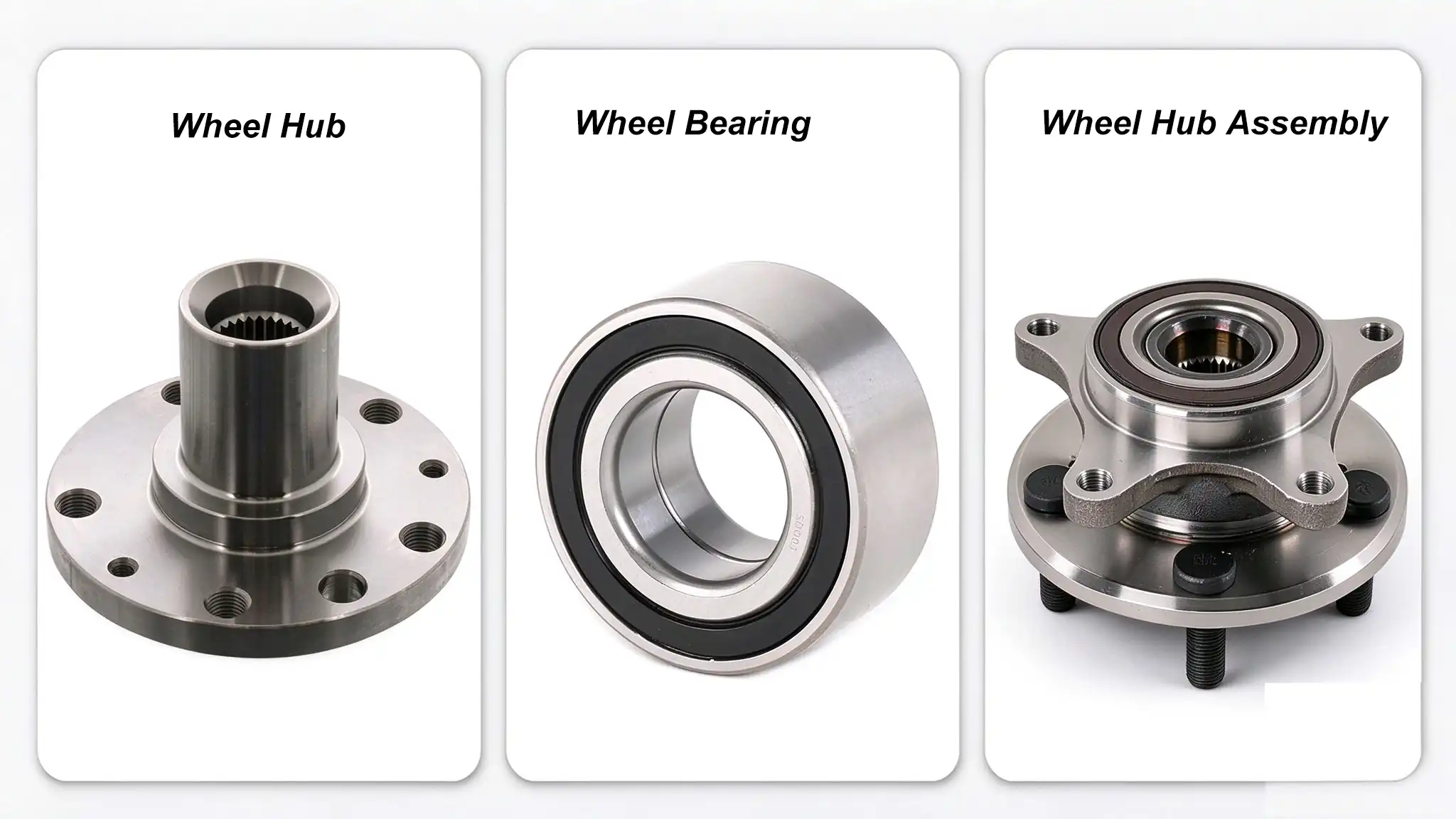
In simple terms, the wheel hub provides the mounting and connection point for the wheel, the wheel bearing allows the wheel to rotate smoothly, and the wheel hub assembly brings these related components together into a single unit. Although they are closely related, they differ in their construction, function, and how they are serviced or replaced.
What does a wheel hub do?
A wheel hub is located at the center of the wheel and primarily serves as the mounting point for the wheel. It also transfers loads, driving torque, and braking forces between the wheel and the vehicle. Working together with the wheel bearing, braking system, and suspension components, the hub helps keep the wheel securely mounted and rotating smoothly.
01.
Mounts and secures the wheel
The hub provides the mounting surface for the wheel, which is securely fastened to the vehicle using wheel studs or wheel bolts.
02.
Supports and transfers vehicle loads
Together with the wheel bearing and suspension components, the hub supports the vehicle’s weight and withstands the forces generated during driving, cornering, and braking.
03.
Transfers driving and braking forces
On driven wheels, the hub connects to the axle shaft or half shaft and transfers driving torque to the wheel. During braking, it also transfers braking forces to the wheel.
04.
Mounts the brake rotor or drum
The brake rotor or drum is typically mounted to the hub flange and rotates with the hub and wheel.
05.
May integrate ABS wheel speed sensing components
On some modern vehicles, the wheel hub assembly incorporates an ABS wheel speed sensor or magnetic encoder to detect wheel speed and provide wheel speed signals to the vehicle’s control systems.
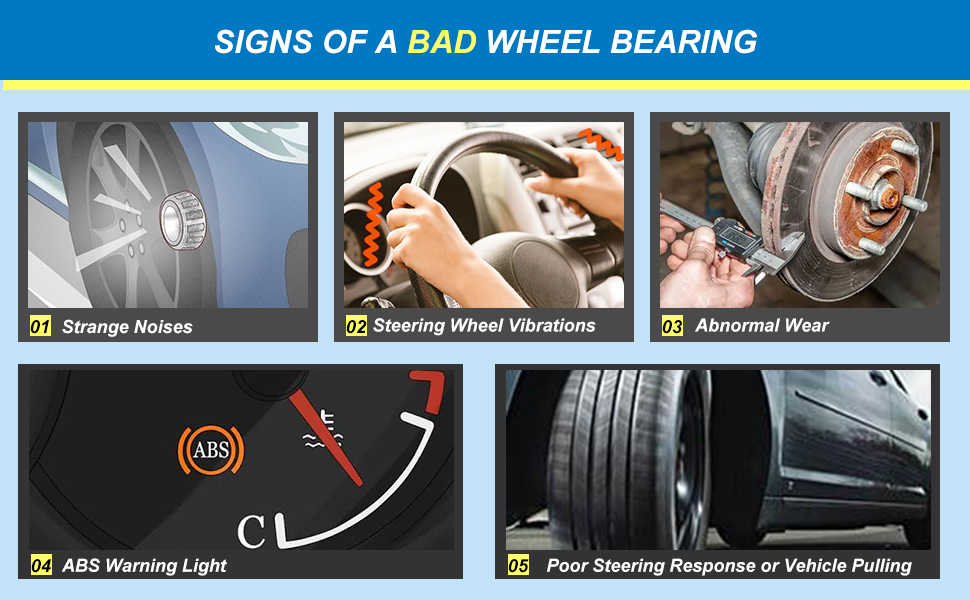
What are the signs of a bad wheel bearing?
Learn the common signs of a bad wheel bearing, including unusual noises, steering wheel vibrations, uneven tire wear, poor handling, and ABS warning lights.
Read More
What Are the Parts of a Wheel Hub and Wheel Hub Assembly?
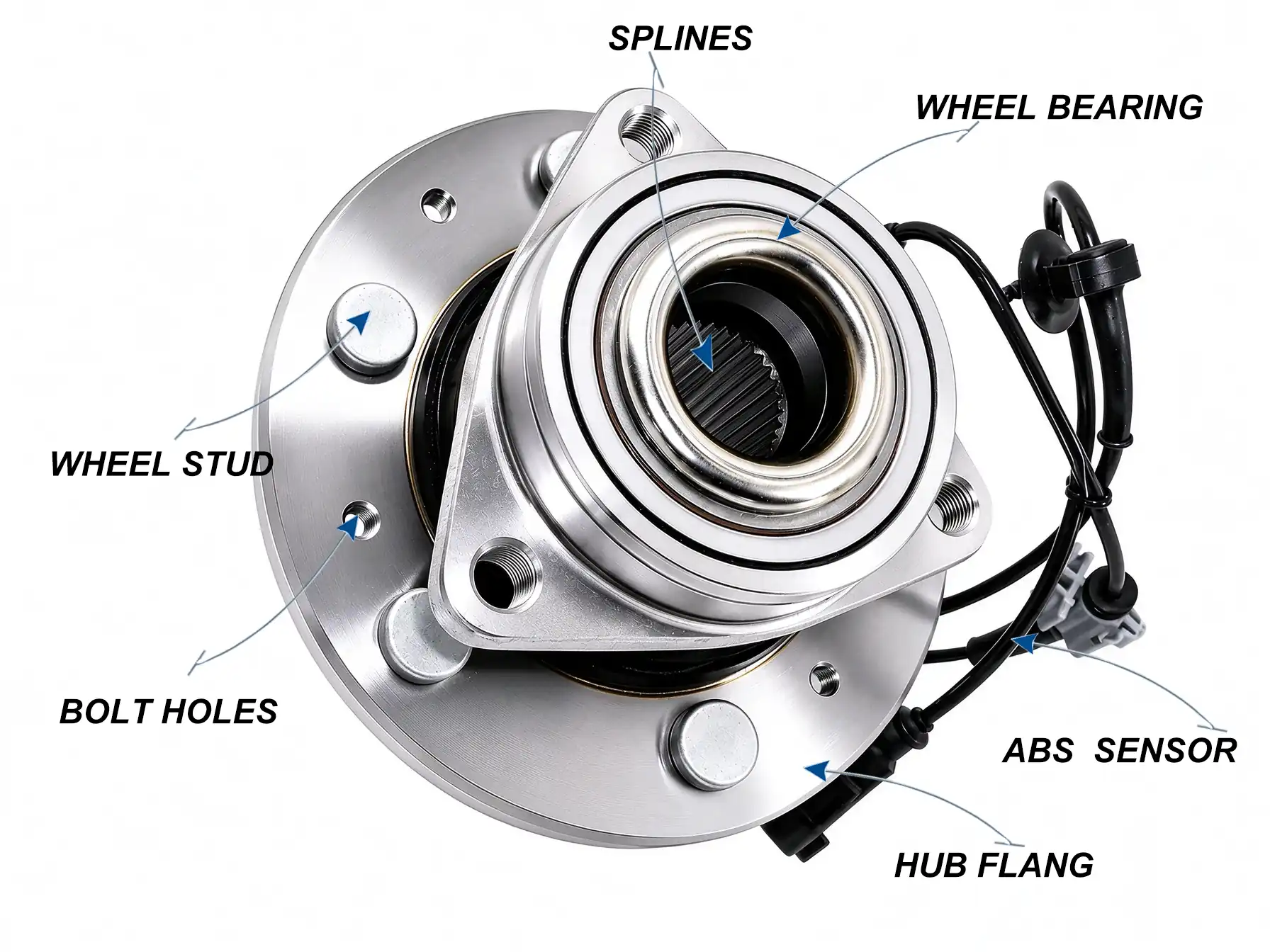
Strictly speaking, the wheel hub itself mainly includes the features used to mount the wheel and brake components and transfer torque. These may include the hub flange, wheel studs or wheel bolt holes, and splines. Components such as the wheel bearing, ABS wheel speed sensor, and magnetic encoder are typically integrated into the wheel hub assembly rather than being part of the hub itself. The following are some of the common components and features found in a wheel hub or wheel hub assembly.
01.
Hub Flange
The main mounting surface of the hub where the wheel and, in many applications, the brake rotor or drum are mounted. The wheel is typically secured to the flange with wheel studs and lug nuts or with wheel bolts.
02.
Wheel Studs / Wheel Bolt Holes
These are used to secure the wheel to the hub. On vehicles with wheel studs, the wheel is secured with lug nuts. On vehicles that use wheel bolts, the bolts pass through the wheel and thread directly into the hub.
03.
Splines
Some hubs on driven wheels have splines at the center that engage with the axle shaft or half shaft to transfer driving torque to the hub and wheel. Not all wheel hubs have splines.
04.
Wheel Bearing
Integrated into the Wheel Hub Assembly: The wheel bearing is located between the hub and the steering knuckle or other suspension components. It supports the hub and allows the wheel to rotate smoothly. On many modern vehicles, the bearing is preassembled with the hub into a wheel hub assembly.
05.
ABS Wheel Speed Sensor / Magnetic Encoder
Integrated into Some Wheel Hub Assemblies: Some modern wheel hub assemblies incorporate an ABS wheel speed sensor or magnetic encoder to detect wheel speed and provide wheel speed signals to the ABS, traction control, and other vehicle control systems.
Types of Wheel Hubs
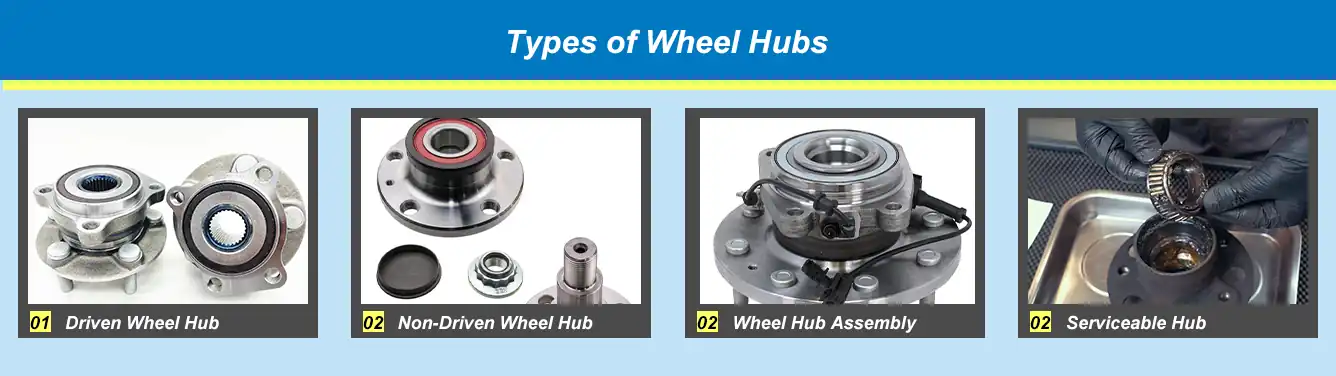
Wheel hubs can be classified in two ways: by whether they transmit driving torque and by their design and serviceability. Based on their role in the drivetrain, they can be classified as driven hubs and non-driven hubs. Based on their construction and how they are serviced, they can be classified as integrated wheel hub assemblies and serviceable hubs. These classification methods are not mutually exclusive. For example, a driven hub can also be part of an integrated wheel hub assembly.
Wheel Hubs by Drivetrain Configuration
01.
Driven Wheel Hub
Used on driven wheels, a driven hub connects to the axle shaft or half shaft, typically through splines, and transfers driving torque to the wheel.
02.
Non-Driven Wheel Hub
Used on non-driven wheels, a non-driven hub does not directly transmit driving torque. It primarily mounts the wheel and connects to the steering knuckle, axle, or other wheel-end components through the wheel bearing.
Wheel Hub Types by Design and Serviceability
01.
Integrated Wheel Hub Assembly
The wheel hub, wheel bearing, and other related components are preassembled into a single unit. These assemblies are typically sealed and pre-lubricated, with the bearing clearance or preload set during manufacturing, so they normally require no routine lubrication or adjustment. When a failure occurs, the entire assembly is usually replaced. This design is common on modern passenger
02.
Serviceable Hub
The wheel hub and bearings can be removed and serviced separately. A common design uses inner and outer tapered roller bearings. During service, the bearings can be inspected, cleaned, and repacked with grease, and the bearing clearance or preload can be adjusted according to the vehicle manufacturer’s specifications. This type of hub is commonly found on some older vehicles and trailers.
What’s the Difference Between a Wheel Hub, Wheel Bearing, and Wheel Hub Assembly?
The wheel hub, wheel bearing, and wheel hub assembly work closely together around the wheel, but they are not the same component. They differ in their design, function, and how they are serviced or replaced.
Wheel Hub vs. Wheel Bearing
| Feature | Wheel Hub | Wheel Bearing |
|---|---|---|
| Main Function | Mounts and secures the wheel to the vehicle and transfers loads and braking forces. | Supports the wheel hub and reduces friction, allowing the hub and wheel to rotate smoothly. |
| Torque Transfer | On driven wheels, transfers driving torque to the wheel. | Primarily supports the hub and reduces friction rather than mounting the wheel. |
| Typical Location | Located at the wheel end and provides a mounting point for the wheel and related brake components. | Typically located between the wheel hub and the steering knuckle, axle, or other wheel-end components. |
| Serviceability | Depends on the hub design and whether the bearing is integrated into the hub. | Serviceable bearings can be removed, cleaned, repacked with grease, and adjusted. Sealed bearings generally cannot be disassembled for service. |
| Replacement | If the bearing is integrated into the hub assembly, a bearing failure typically requires replacement of the entire assembly. | Standalone bearings can usually be replaced separately, while integrated bearings are generally replaced as part of the hub assembly. |
Wheel Hub vs. Wheel Hub Assembly
| Feature | Wheel Hub | Wheel Hub Assembly |
|---|---|---|
| Definition | A separate structural component used to mount and secure the wheel. | A preassembled unit that combines the wheel hub, wheel bearing, and related components. |
| Components | Primarily consists of the hub itself and its wheel-mounting features. | Typically includes the wheel hub and bearing, and may also incorporate seals, an ABS wheel speed sensor, or a magnetic encoder. |
| Bearing | May work with a separate wheel bearing, depending on the vehicle design. | The wheel bearing is integrated into the assembly. |
| Installation | Designs with separate bearings may require the bearing to be installed and adjusted independently. | Supplied as a preassembled unit, generally making installation and replacement more convenient. |
| Maintenance | Maintenance requirements depend on the type of bearing used with the hub. | Typically sealed and pre-lubricated, so routine bearing lubrication or adjustment is generally not required. |
| Replacement | The hub or bearing may be replaced separately when the design allows. | Usually replaced as a complete assembly when the integrated bearing or other non-serviceable component fails. |
How Much Does It Cost to Replace a Wheel Bearing?
Learn the cost to replace a wheel bearing, including parts and labor, key factors that affect the price, and how to tell if a repair quote is fair.
Read More
Why Are Wheel Hub, Wheel Bearing, and Wheel Hub Assembly Often Used Interchangeably?
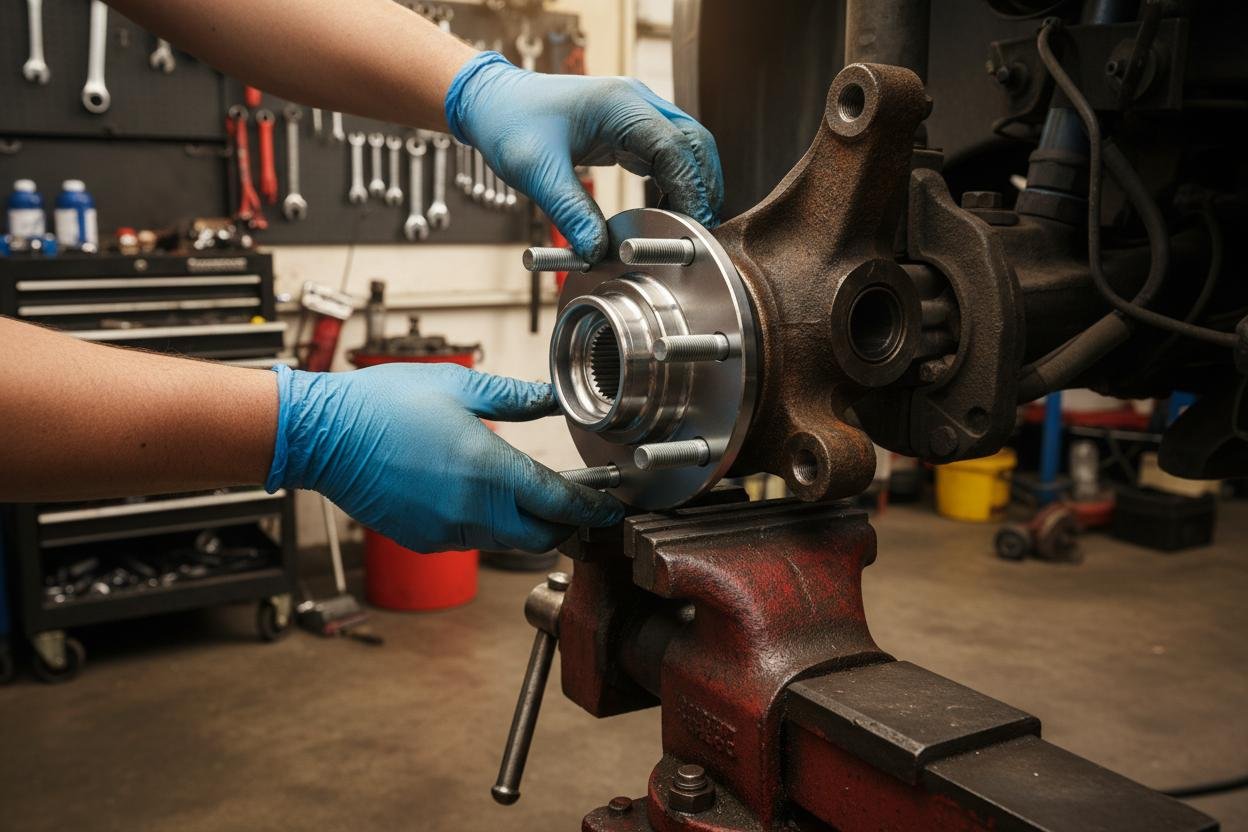
One reason these terms are often used interchangeably is that modern vehicles frequently integrate the wheel hub and wheel bearing into a single wheel hub assembly. In automotive repair, parts sales, and everyday conversation, people may use terms such as “wheel hub,” “wheel bearing,” or “hub assembly” to refer to related wheel-end components. As a result, these terms are sometimes used interchangeably.
In simple terms, the wheel hub mounts and connects the wheel to the vehicle, the wheel bearing supports the hub and allows it to rotate smoothly, and the wheel hub assembly combines the hub, bearing, and other related components into a single unit.