
Rusty Drum Brakes : Should You Worry?
Spotted rust on your drum brakes? Don’t panic. A little rust is not just normal. It’s a sign your drums are made of cast iron, the best material for the job. The question isn’t “is there rust?” It’s “how much is too much?”
Think of a kitchen knife. A good carbon steel blade develops surface rust if you leave it wet. That doesn’t mean the knife is ruined. It means it’s made of the right stuff. Same deal with your drum brakes. Here’s what’s normal, what’s fixable, and what’s dangerous.
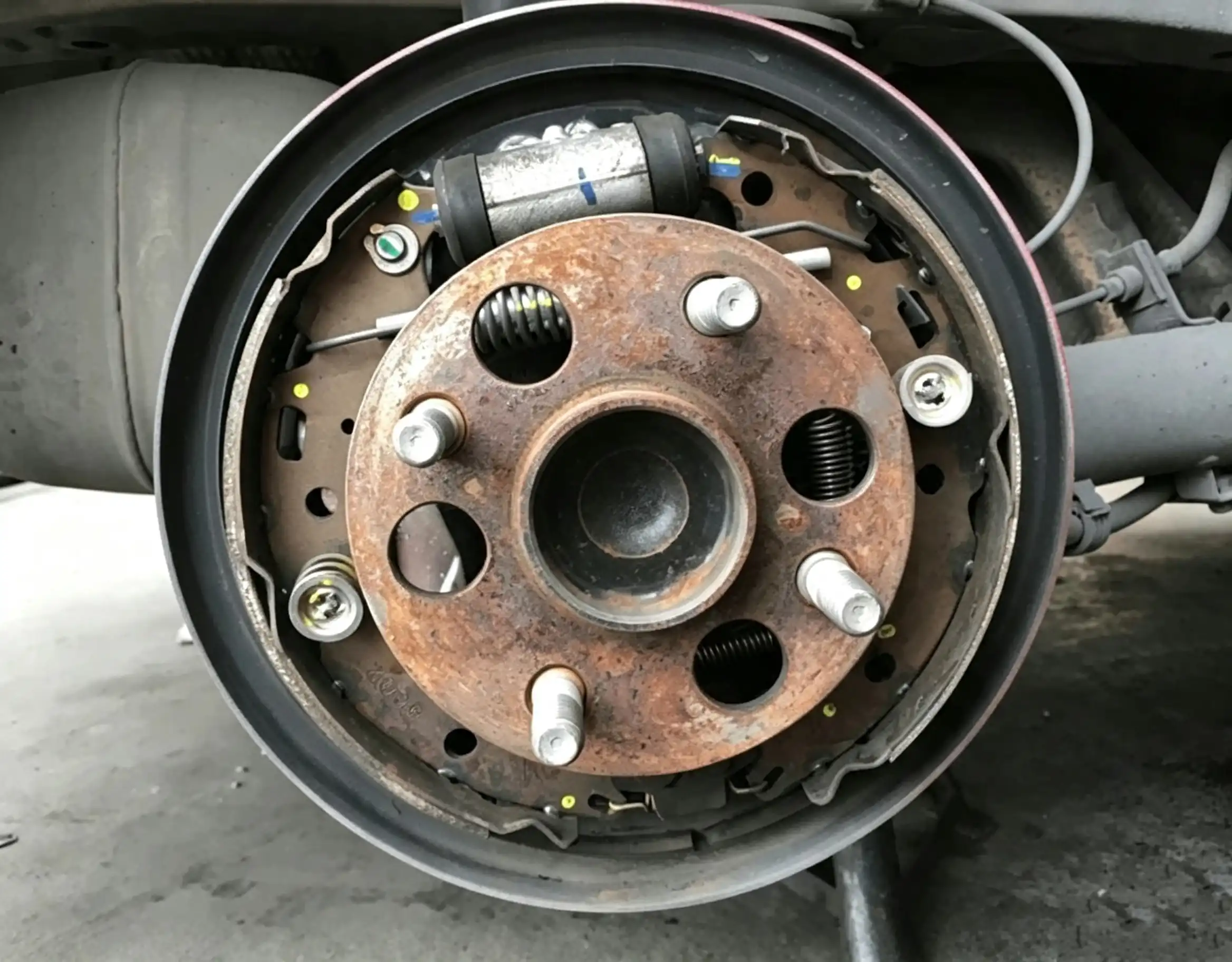
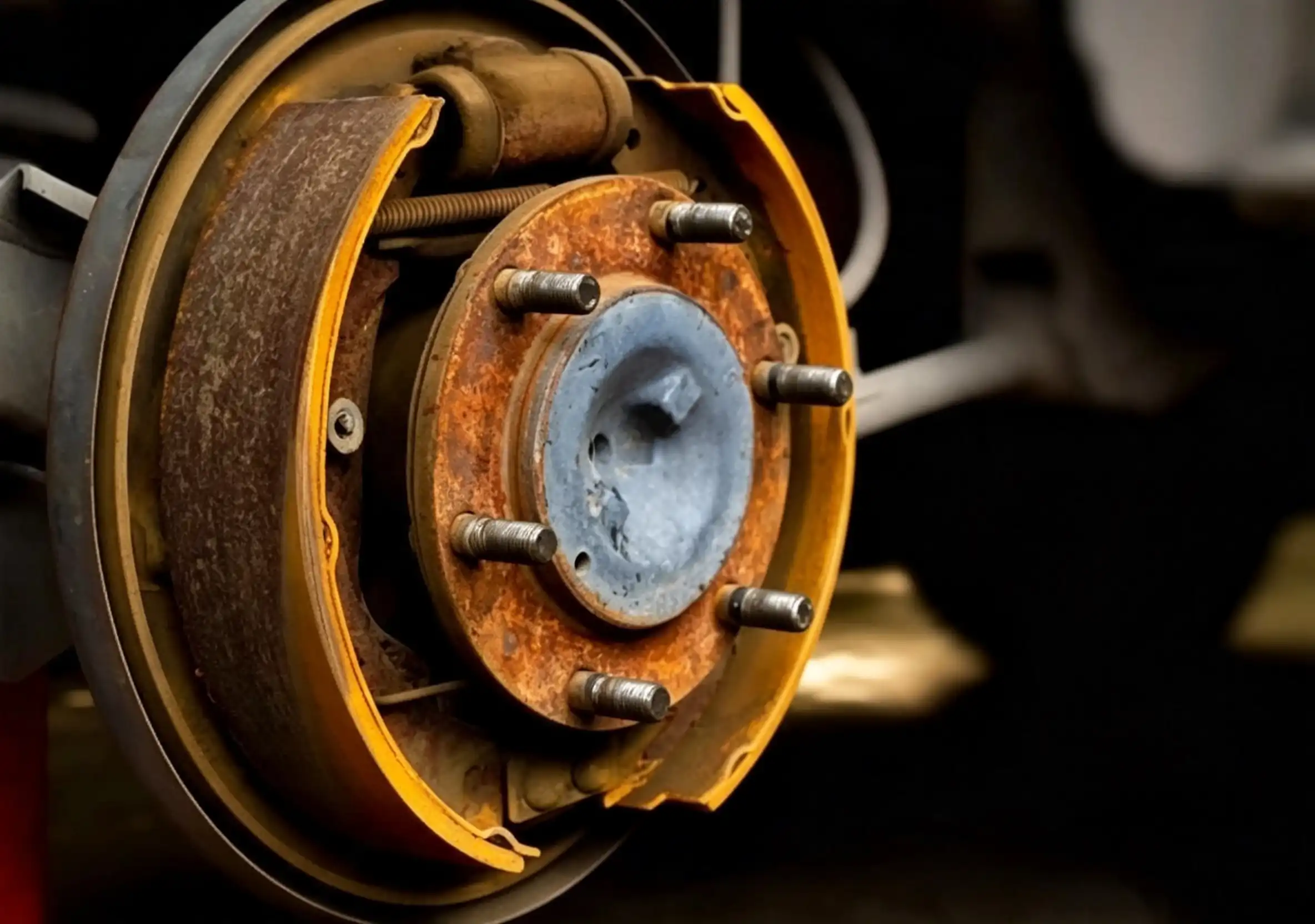
Why Do Drum Brakes Rust In The First Place?
Drum brakes use a cast iron drum that spins with the wheel. Brake shoes push outward against it to create friction and slow you down. Cast iron handles heat beautifully. Its one weakness? It rusts when moisture hits it.
Four things speed up the process:
Moisture
Rain, snow, puddles. Water finds its way into the drum every time you drive through it.
Road salt
Salt is a rust accelerator. If your roads get salted in winter, the risk doubles.
Humidity
Even parked in a garage, high humidity triggers surface rust.
Inactivity
This is the biggest factor. A car that sits for days gives rust all the time it needs.
One thing to keep in mind: drum brakes trap moisture more than disc brakes because of their enclosed design. Water gets in but doesn’t evaporate easily. It’s like putting a wet knife in a drawer instead of a drying rack. The drawer holds the moisture in.
How Long Do Drum Brakes Last?
Learn how long do drum brakes last, how long brake shoes and drums typically last, and the warning signs of worn or damaged drum brakes.
Read More
How Much Rust Is Too Much Rust?
| Rust Level | What It Looks Like | What Happens When You Brake | What to Do |
|---|---|---|---|
| Light | Thin orange film on the surface | Disappears after a few stops | Nothing. Drive normally |
| Moderate | Visible rust spots, surface is still smooth | Mild grinding noise for the first few stops | Clean it |
| Severe | Pitting, deep grooves, flaking metal | Vibration in the pedal, longer stopping distance | Replace the drum |
Back to the knife: light rust is the yellow tint on a blade you haven’t used in a week. A few cuts and it’s gone. Moderate rust needs a scrub. Severe rust means the blade has pits. No amount of cleaning fixes that.
How To Prevent Rusty Drum Brakes
Prevention is way easier than cleaning. Five things that cost almost nothing:
Drive regularly
Even a 10-minute trip scrubs surface rust off. This is the single most effective thing you can do.
Park dry
A garage or car cover keeps moisture off.
Wash your wheels
Spray into the wheel wells to rinse away road salt and grime.
Dry your brakes after water
After a deep puddle or heavy rain, tap the brake pedal lightly a few times to generate heat and evaporate moisture.
Choose quality drums
Aftermarket drums with anti-corrosion coatings cost a bit more but save headaches later.
Like drying your knife after washing. Five seconds of effort now prevents a rust problem later.
How To Clean Rusty Drum Brakes
If prevention didn’t happen, you have three options, from easiest to most involved.
Method 1.
Clean without removing the drum
For light surface rust, just drive. Find a quiet street, accelerate to about 30 mph, and brake gently but firmly. Repeat five or six times. The friction scrapes the rust right off. No tools, no cost, no sweat.
How to Use Brake Cleaner Without Removing the Tire
Learn how to use brake cleaner without removing the tire. Quick method to clean disc brakes and calipers through wheel openings without disassembly.
Read More
Method 2.
Let the brakes clean themselves
Clean without removing the drum
Loosen the lug nuts, jack up the car, remove the wheel
Spray brake cleaner generously onto the drum and brake assembly
Wipe down with a clean microfiber cloth
Reinstall the wheel
About 15 minutes per wheel. No need to remove the drum itself.
Method 3.
Remove the drum for a deep clean
For stubborn rust, take the drum off. Safety first: gloves, safety glasses, and always use jack stands. Never rely on a jack alone.
Drain about half the brake fluid from the master cylinder
Remove the wheel
Turn the adjuster screw (through the access hole on the backing plate) to retract the brake shoes
Pull the drum off. A rubber mallet tap frees it if stuck
Spray brake cleaner, then scrub with a wire brush in circular motions
Lubricate metal-to-metal contact points where the shoes slide
Reassemble in reverse order
This is the equivalent of taking your knife to a whetstone. More work, but worth it when surface cleaning isn’t enough.
When Should You Replace Rusty Drum Brakes?
Cleaning has its limits. Three signs it’s time to replace:
- Pitting. Small craters in the drum surface mean rust has eaten through the smooth friction layer. It can’t be cleaned back to usable condition.
- Pedal vibration. A pulsing brake pedal under your foot signals the drum is warped or unevenly worn.
- Deep grooves. Run your finger along the inside of the drum. If you feel ridges, it’s past its service life.
A simple rule of thumb: drive for 10 minutes, using the brakes normally. If rust is still visible, the drum is done.
Key Takeaways
- Light rust is normal. A thin orange film disappears after a few minutes of driving. Don’t panic.
- Prevention beats cleaning. Drive regularly, park dry, wash your wheels, dry your brakes after water.
- Three cleaning levels. Light → just drive. Moderate → spray brake cleaner. Stubborn → remove the drum and scrub.
- Replace when you see pitting, feel vibration, or find grooves. If 10 minutes of driving doesn’t clear the rust, the drum is done.