
ODM stands for Original Design Manufacturer. An ODM is a company that both designs and manufactures a product, which another brand then sells under its own name. The buyer provides its brand and sells the finished product; the manufacturer handles the design and production.
Put simply, with an ODM the factory owns the design. A brand can adopt the product as it is, request small changes, or work with the manufacturer on a shared design.
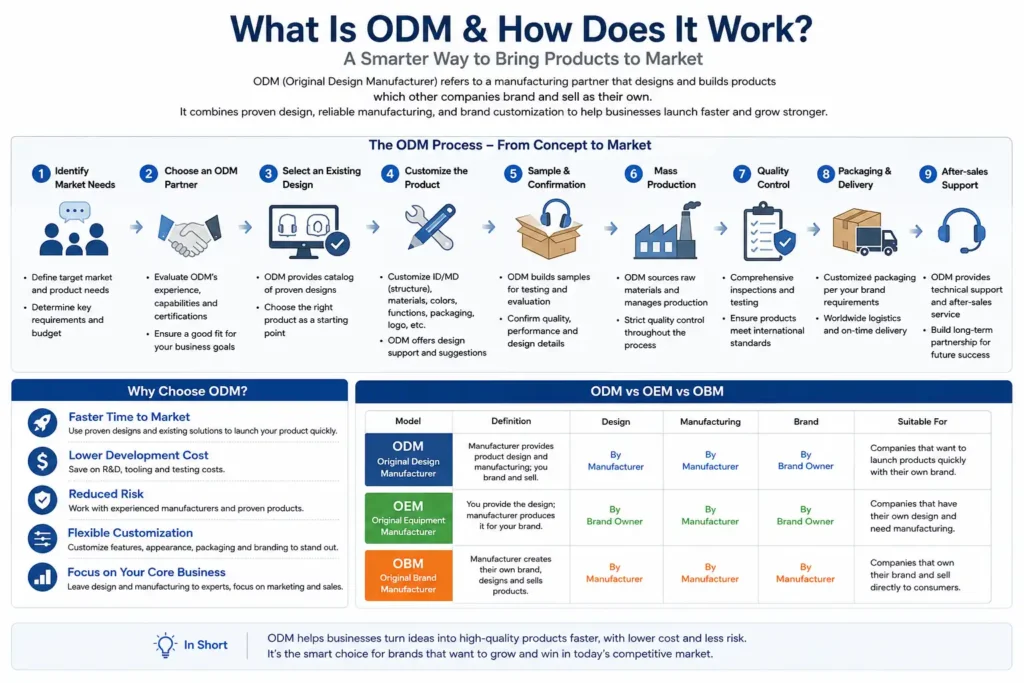
How ODM Works in Practice
The key feature of an ODM is that the manufacturer has the design, not the buyer. A brand purchases a finished or near-finished product from the factory and focuses on branding, distribution, and marketing.
The buyer is usually able to customize limited details, such as the materials, appearance, colors, printing, or software. Because the factory already has a working design, the product can be branded and brought to market quickly, with no engineering or mold costs for the buyer.
Advantages and Benefits of ODM Manufacturing
No design, development, or intellectual property costs for the buyer
Fast time to market
Low risk, since the manufacturer has already proven the design
No need to manage a complex supplier or engineering team
A good fit for startups and small brands
The product is not exclusive; competitors may sell a similar item
The brand has limited control over the design
A factory or rival could bypass the brand once sales grow
The buyer depends on the manufacturer’s expertise for design decisions
Industries and Use Cases for ODM
ODM is most common in consumer electronics and hardware, including smartphones, tablets, laptops, smart home devices, wearables, home appliances, and medical devices. Many well-known brands source their products from ODMs located in manufacturing hubs such as China.
ODM suits standardized products with high volume and a need for fast market entry. It is a poor fit for products that require differentiation or unique proprietary technology.
When to Choose ODM over OEM
Brands work with an ODM mainly to save money and time. Working with an ODM removes the cost of research, development, and tooling, shortens the time to launch, and lowers the risk of failure. It also lets a brand focus on marketing and its sales channels instead of running its own factory or supporting a large engineering team. This makes ODM especially attractive to companies with limited budgets or an asset-light business model.