
OEM DEFINITION
OEM stands for Original Equipment Manufacturer — the company that supplies the parts fitted to a product when it is built new at the factory. An OEM part matches the fit and specifications of the factory component, is often sold under the car maker’s name, and is installed by dealerships during service.
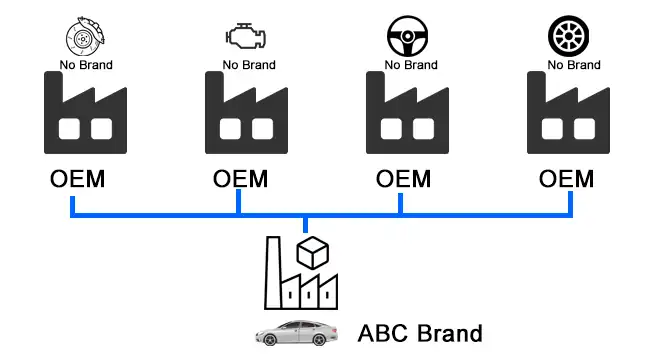
What Does OEM Mean in Detail?
OEM has two closely related meanings.
The vehicle maker. In the automotive industry, the OEM usually refers to the manufacturer of the complete vehicle, such as Ford, GM, or Toyota. This company defines the technical requirements, integrates the components, and sells the finished product.
The OE supplier. The term also describes the supplier that builds a specific part to the vehicle maker’s specifications — the original equipment installed on the vehicle when it was new. A supplier that makes a brake system or headlight for a car brand produces that vehicle’s original equipment.
OE / OEM / ODM: Not the Same Thing
OE parts. OE stands for Original Equipment. An OE part comes from the same OE supplier that made the part for the original build, but it is sold under the supplier’s own brand instead of the car maker’s. The replacement is technically identical to the factory part, but the name on the box is different.
ODM (Original Design Manufacturer). An ODM builds a product from its own design, which the buyer then brands and sells. The difference is ownership: with goods made on a customer’s design, the buyer is OEM; with goods designed by the builder, the buyer is buying ODM.
Where Is OEM Used?
Car makers source engines, transmissions, brake systems, and safety equipment such as airbags and ABS from suppliers who meet strict quality standards. “OEM brake drum” or “OEM sensor” means a part that matches what the factory installed.
Laptop brands like Dell and HP buy the motherboard, graphics card, or display from suppliers such as Intel or AMD, built to their specifications.
Microsoft sells Windows to PC makers as an OEM product; the license is tied to that specific machine.
OEM numbers, also called OE numbers, identify components. These references help you find the correct replacement and compare alternatives — systems like TecDoc let you search by the factory number.