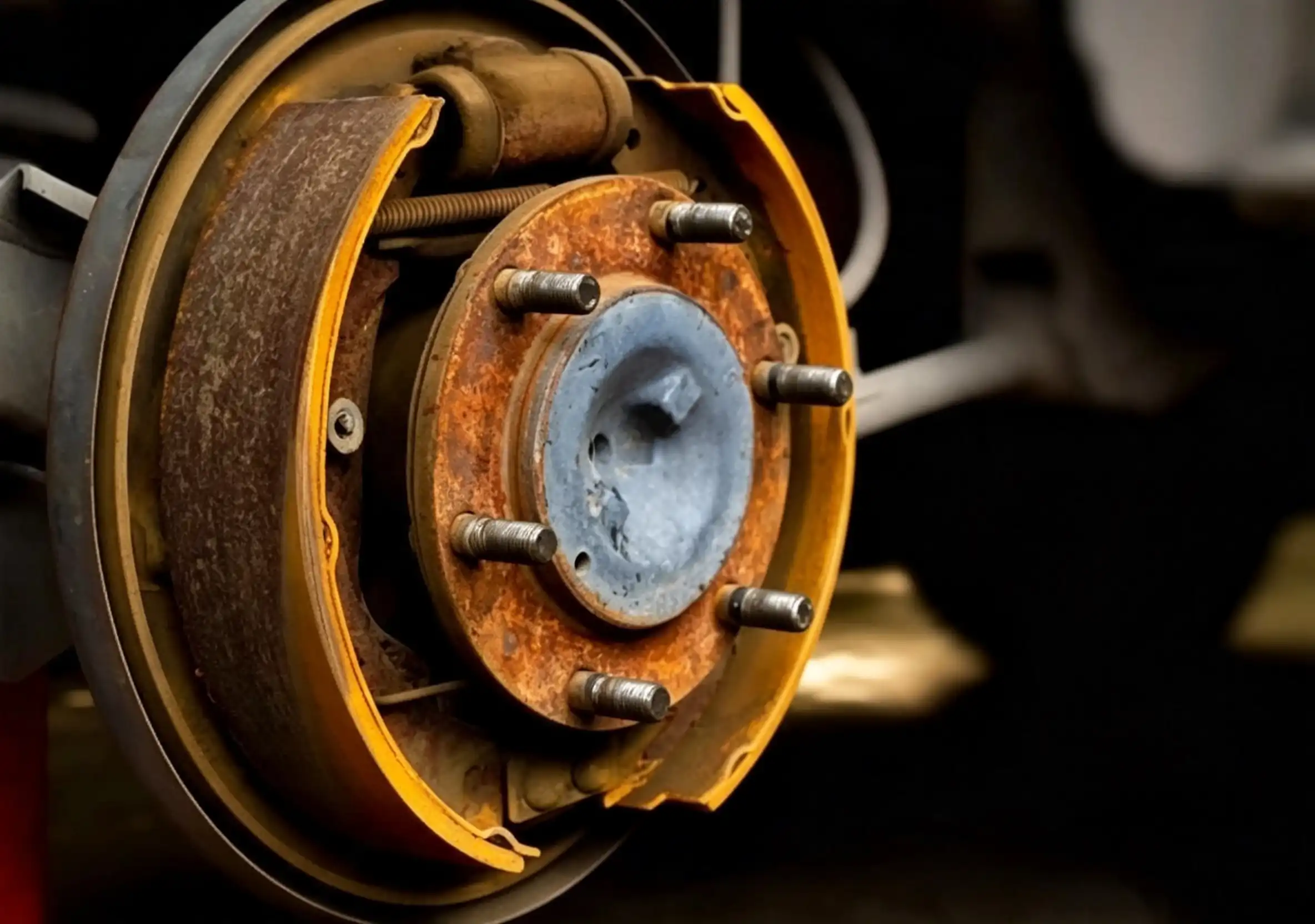
What Are Drum Brakes? Drum brakes are a common braking system used on cars, trucks, trailers, and other vehicles. This guide explains how they work, covers their key components and three main designs, and explores their advantages, disadvantages,
What Are Drum Brakes
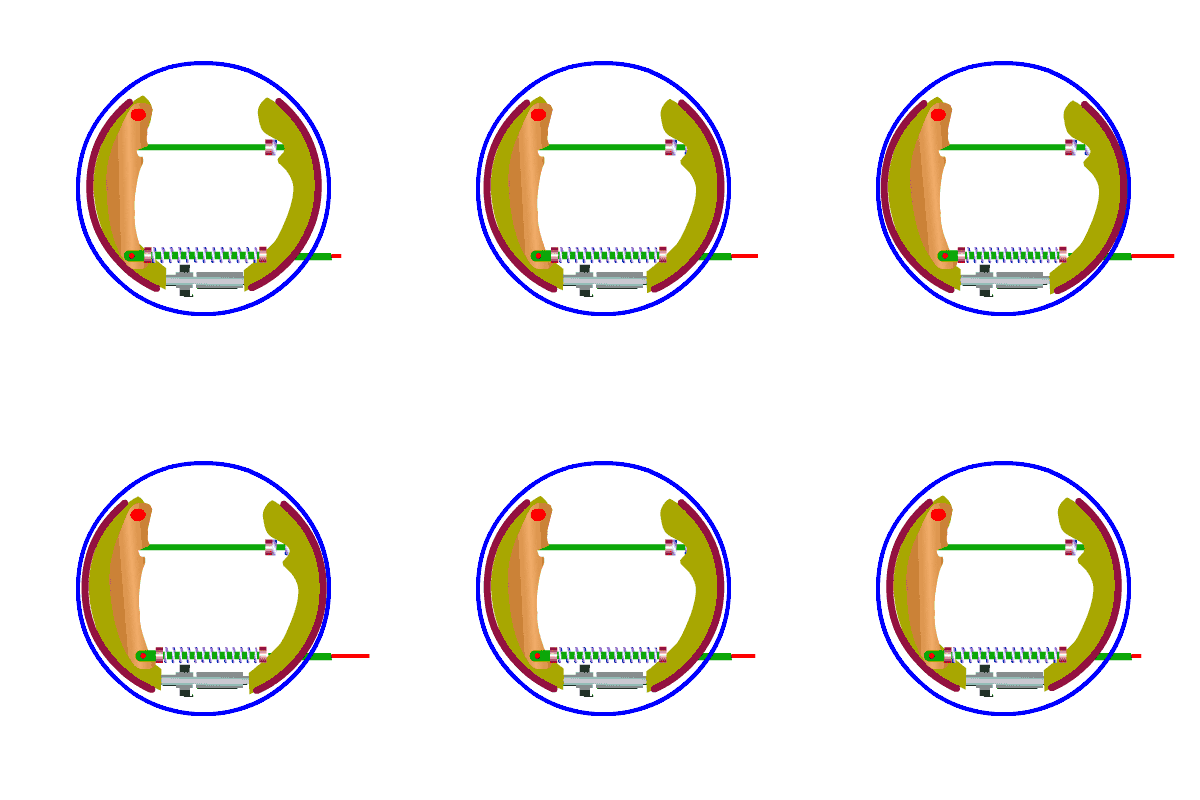
Drum brakes rely on friction to slow and stop the vehicle. When the brakes are applied, the two curved brake shoes move outward and press against the inner surface of the brake drum, which rotates with the wheel. The friction between the brake shoes and the brake drum generates braking torque, converting the vehicle’s kinetic energy into heat and gradually reducing the wheel speed until the vehicle comes to a stop.
Some drum brakes use a leading-and-trailing shoe configuration, in which friction between the brake shoes and the brake drum creates a self-energizing effect that increases braking force. The brake drum is one of the key components of a drum brake. Its inner surface serves as the friction surface for the brake shoes, withstands the frictional loads generated during braking, and absorbs and dissipates the heat produced by friction.
NOTE
Braking torque is the torque that opposes wheel rotation during braking. It is primarily determined by the friction force between the brake shoes and the brake drum and the effective friction radius. In simplified form, it can be expressed as:M = F × R where M is the braking torque, F is the friction force, and R is the effective friction radius.
In a leading-and-trailing shoe configuration, as the brake drum rotates, friction between the drum and the brake shoes causes the shoes to press more firmly against the drum. This produces a self-energizing (servo) effect, allowing the brake to generate greater braking torque under the same input conditions.
Semi Truck Brake Drums: What Every Owner and Fleet Manager Needs to Know
Learn about semi truck brake drums, including semi brake drum weight, cost, warning signs, replacement steps, and DOT regulations. A complete guide for truck owners and fleet managers.
Read More

History of Drum Brakes
The development of drum brakes dates back to the early days of the automobile. In 1899–1900, Wilhelm Maybach began experimenting with drum-type braking designs. In 1902, Louis Renault was granted a patent for a drum brake and applied the design to automobiles.
From the 1960s onward, as disc brakes became increasingly common, drum brakes gradually became less common on passenger cars. However, their effective braking performance, durability, and relatively low manufacturing cost have allowed them to remain widely used on heavy-duty vehicles. Their relatively low drag losses have also led to renewed use on the rear axles of some new energy vehicles.
Drum Brake Components
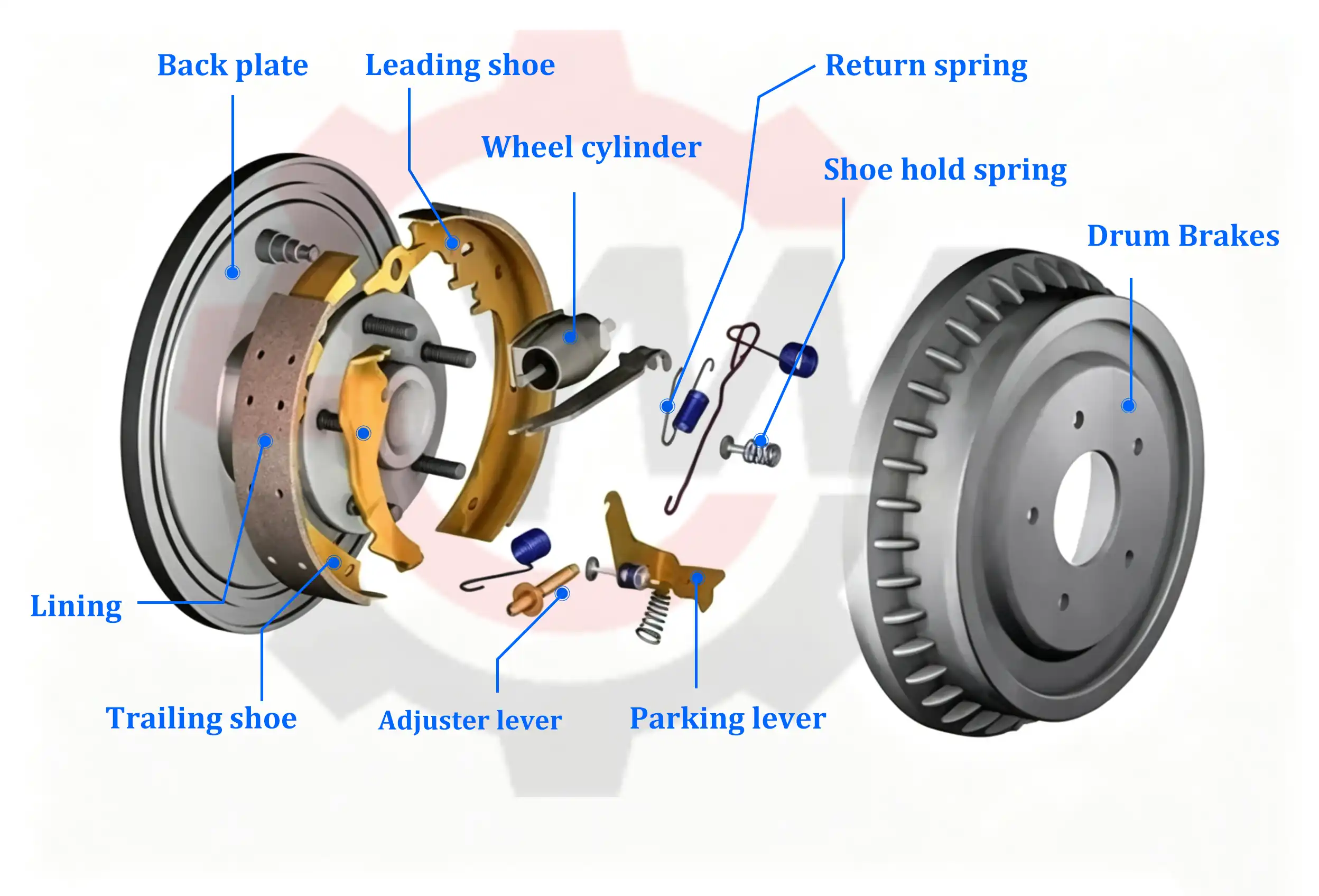
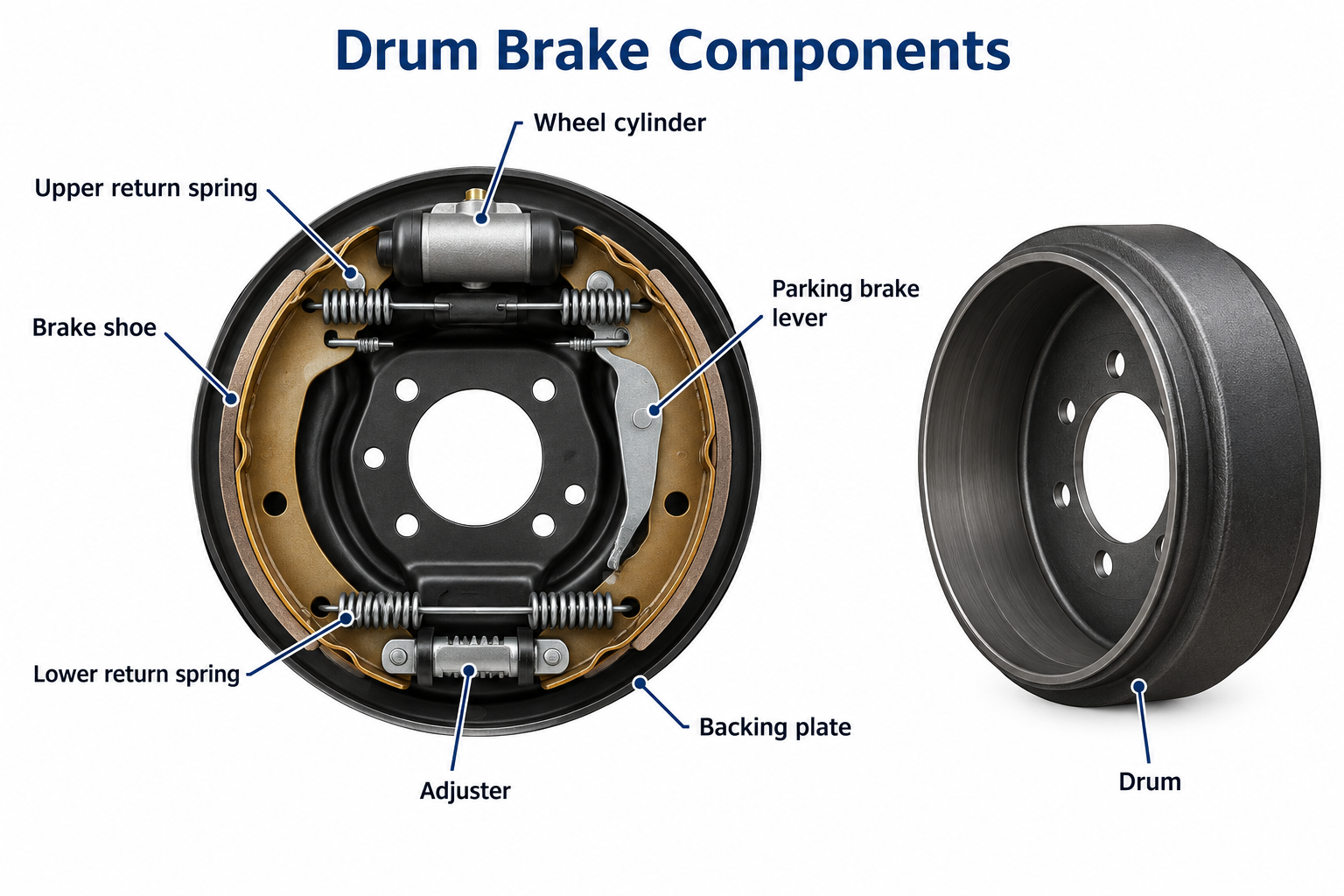
A drum brake consists of several key components, including the brake shoes, friction linings, return springs, wheel cylinder, adjuster mechanism, anchor pin, backing plate, and brake drum. When the brakes are applied, the wheel cylinder pushes the brake shoes outward, forcing the friction linings against the inner surface of the brake drum to generate friction. When the brake pedal is released, the return springs retract the brake shoes to their original positions. The adjuster mechanism compensates for the increased clearance caused by friction lining wear, helping ensure that the brake maintains the proper operating clearance.
01.
Brake Drum
The brake drum is a cylindrical component that rotates with the wheel and is typically made of cast iron. Its inner surface serves as the friction surface for the brake shoes. When the brakes are applied, the friction linings press against the inner surface of the brake drum, generating friction that produces braking torque.
Over time, repeated braking gradually wears the inner surface of the brake drum, increasing its inside diameter. For this reason, manufacturers specify a maximum allowable inside diameter for the drum. If the drum exceeds this limit, it must be replaced.
02.
Brake Shoes & Linings
Brake shoes are curved metal components mounted inside the brake drum, with friction linings attached to their outer surfaces. When the brakes are applied, the brake shoes move outward, pressing the friction linings against the inner surface of the brake drum and creating friction that generates braking force. The friction linings are wear components that gradually become thinner with use and must be replaced once they reach the manufacturer’s specified wear limit.
03.
Wheel Cylinder
The wheel cylinder is the hydraulic actuator of a drum brake and is typically mounted near the top between the two brake shoes. When the brake pedal is pressed, pressurized brake fluid enters the wheel cylinder and pushes the internal pistons outward, forcing the brake shoes apart and pressing them against the brake drum.
04.
Return Springs
Return springs are attached to the brake shoes and pull them back to their original positions when the brake pedal is released. This allows the friction linings to maintain proper clearance from the brake drum, preventing continuous contact and unwanted drag.
05.
Anchor Pin
The anchor pin supports and positions the brake shoes, allowing them to pivot around the support point during braking while withstanding part of the braking force.
06.
Adjuster
The adjuster mechanism compensates for the increased clearance caused by friction lining wear, maintaining the proper operating clearance between the brake shoes and the brake drum. This helps maintain proper braking performance and pedal travel. Some drum brakes use an automatic adjuster that automatically maintains the proper operating clearance as the friction linings wear.
07.
Backing Plate
The backing plate is located behind the brake drum and serves as the mounting base for the drum brake components. It supports and secures the wheel cylinder, brake shoes, return springs, adjuster mechanism, and other components. It also withstands part of the reaction forces generated during braking, providing stable support for the entire brake assembly.
How Drum Brakes Work
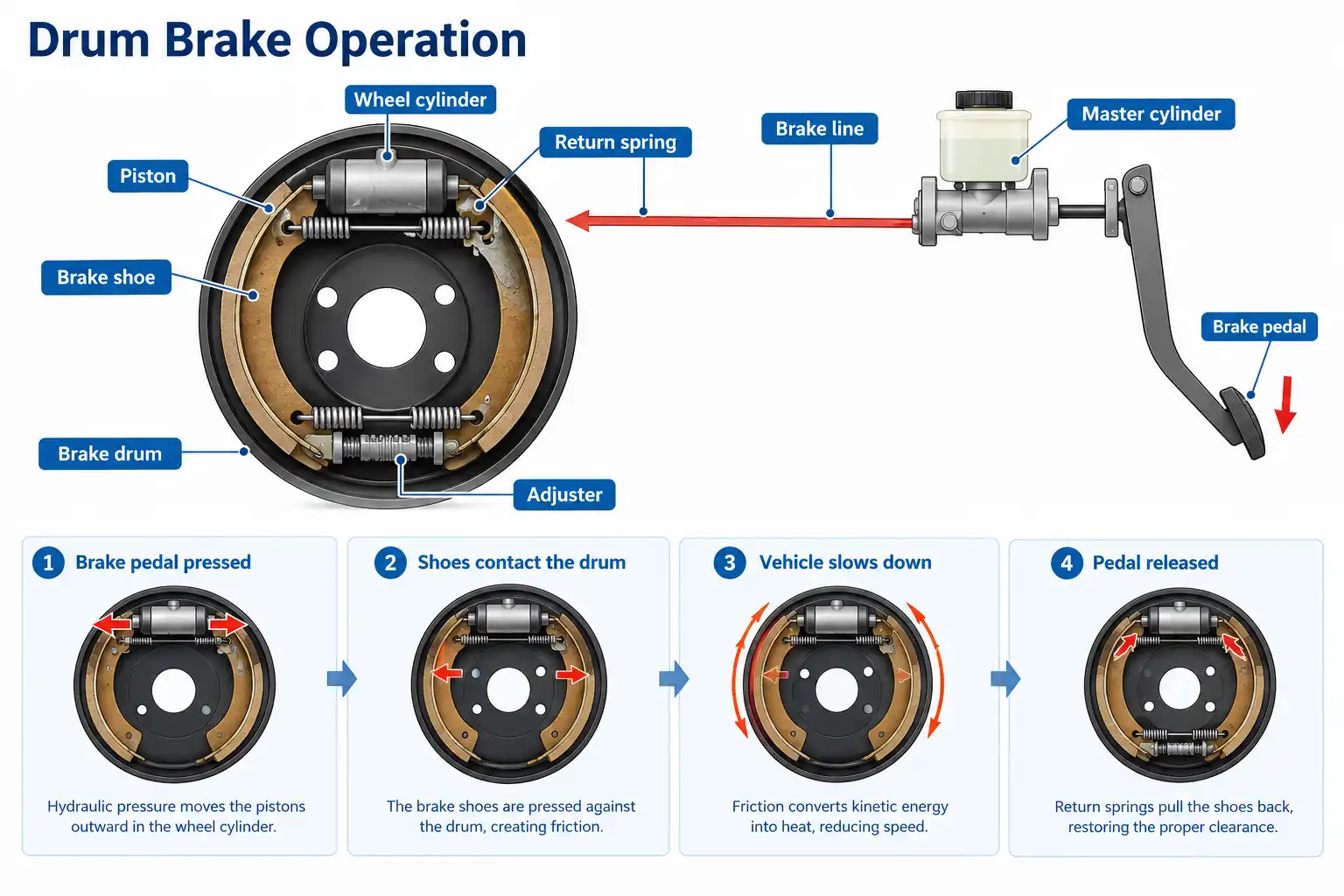
When the brake pedal is pressed, hydraulic pressure is transmitted through the brake lines to the wheel cylinder, forcing the pistons outward and pressing the brake shoes against the brake drum. The resulting friction converts the vehicle’s kinetic energy into heat, causing the vehicle to slow down. When the brake pedal is released, the return springs retract the brake shoes, restoring the proper operating clearance.
Three Types of Drum Brake
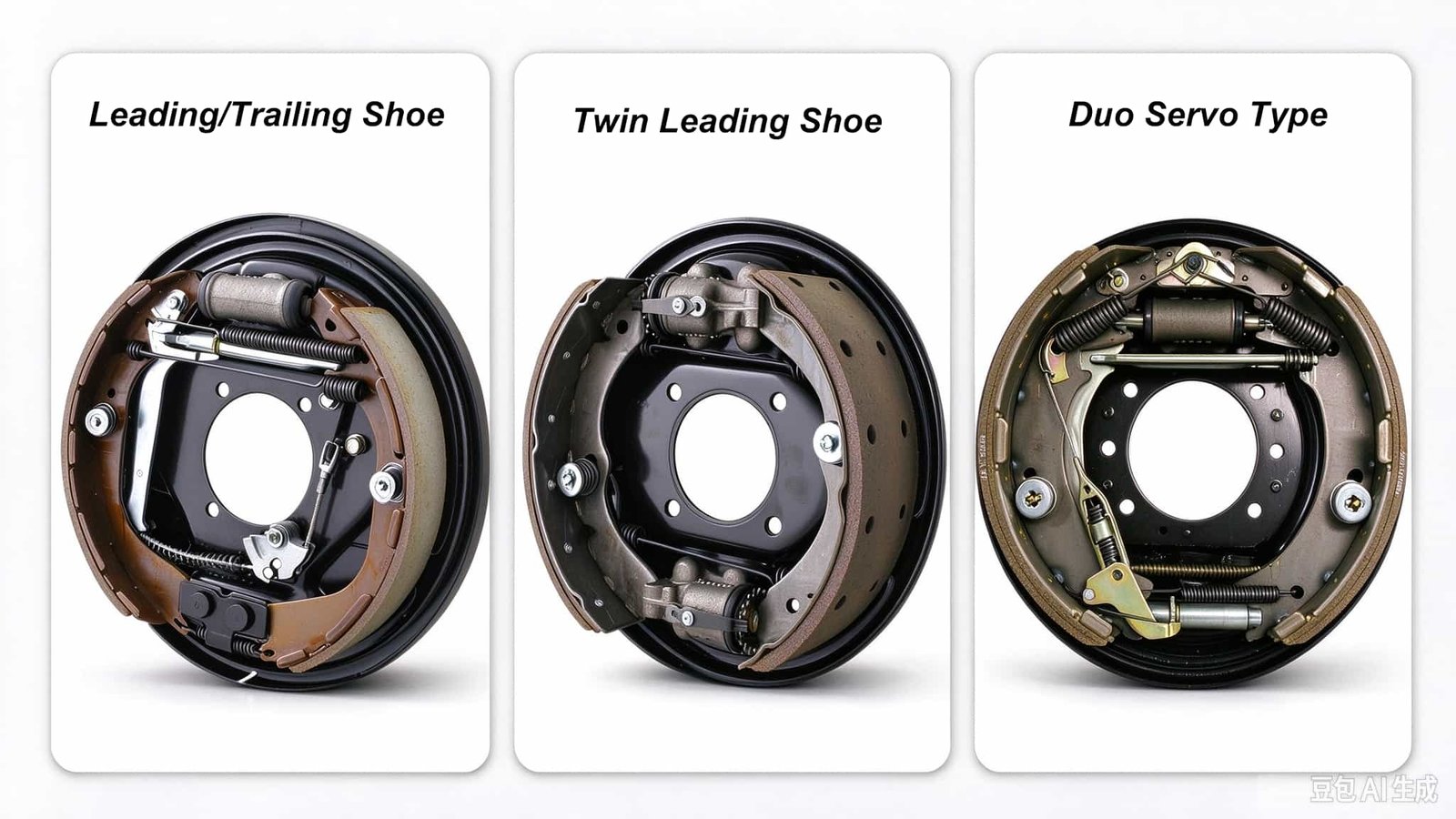
Drum brakes are generally classified into three main designs based on the arrangement of the brake shoes and their self-energizing characteristics: leading-trailing, twin leading shoe, and duo-servo. The main differences between these designs lie in how the brake shoes are affected by friction forces during braking and how their braking performance varies when the vehicle moves forward or in reverse.
01.
Leading/Trailing Shoe
The leading-trailing drum brake is one of the most common drum brake designs and is widely used on the rear wheels of passenger cars. It typically uses a single wheel cylinder, with one brake shoe serving as the leading shoe and the other as the trailing shoe. As the direction of drum rotation changes between forward and reverse travel, the two brake shoes switch roles, allowing the brake to provide effective braking in both directions. Its main advantages are a simple design, low cost, and good reliability.
02.
Twin Leading Shoe
The twin leading shoe drum brake typically uses two wheel cylinders, each actuating one brake shoe. When the vehicle moves forward, both brake shoes act as leading shoes, providing greater braking force. When the vehicle moves in reverse, both shoes become trailing shoes, resulting in relatively lower braking force. This design is mainly used on the front wheels of light- and medium-duty trucks.
03.
Duo Servo Type
The duo-servo drum brake uses an adjuster link to connect the two brake shoes and transfer force between them. When the brakes are applied, friction between one brake shoe and the rotating drum produces a strong self-energizing effect. The resulting force is transmitted through the adjuster link to the other brake shoe, increasing the force with which it is pressed against the drum and thereby generating greater braking force and braking torque.
Because of its strong self-energizing effect, the braking torque of a duo-servo brake is relatively sensitive to the direction of rotation and friction conditions. This can also result in a somewhat nonlinear pedal response. Duo-servo brakes are commonly used as parking brakes on passenger cars, driveline brakes on trucks, and brakes on forklifts.
Advantages and Disadvantages of Drum Brakes
Discover the advantages and disadvantages of drum brakes to help you choose the right braking system for your vehicle.
Read More
Advantages of Drum Brakes
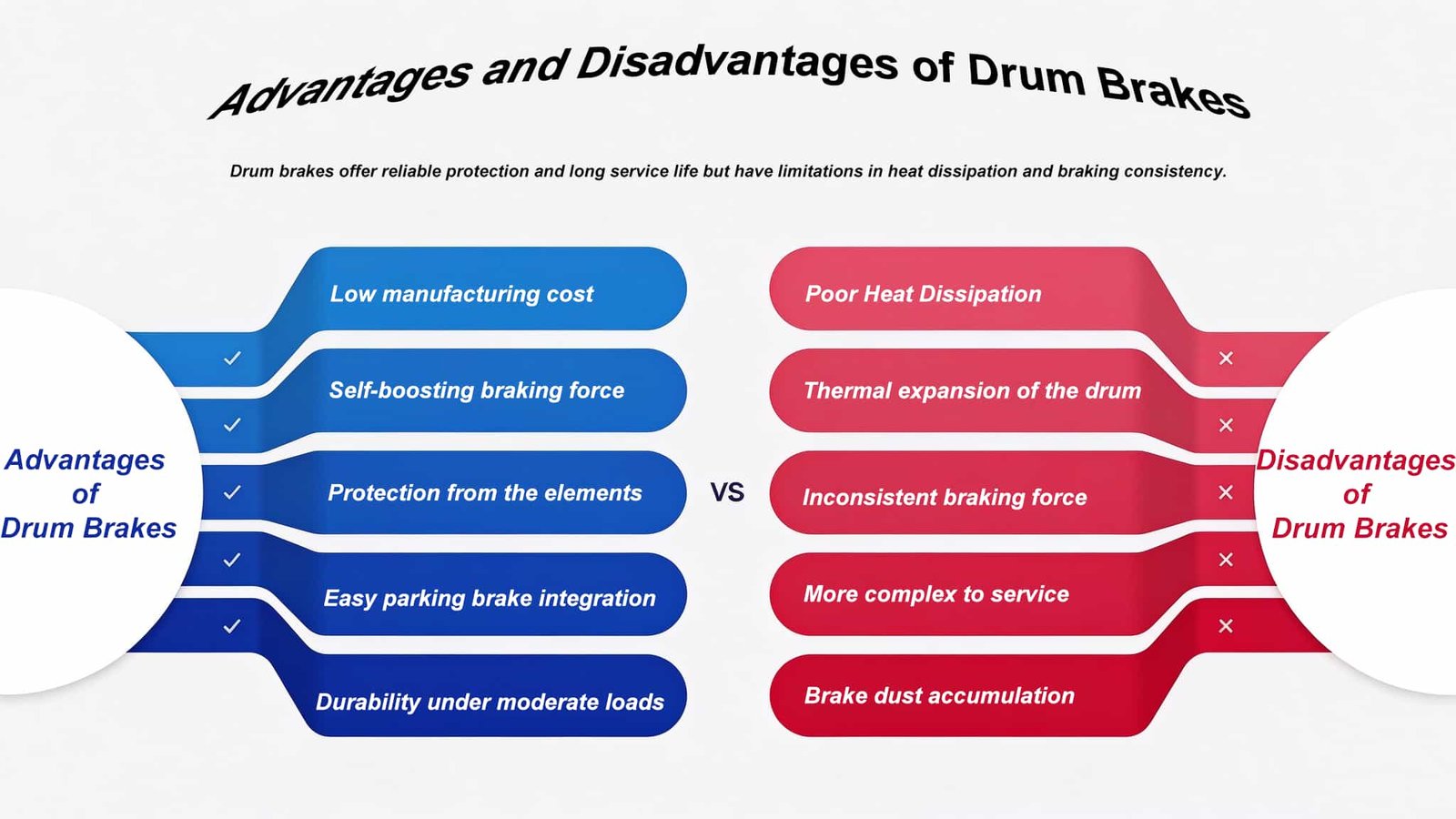
Low manufacturing cost.
Drum brakes have a simple design and are inexpensive to manufacture, making them a cost-effective choice for economy cars and commercial vehicles.
Self-boosting braking force
The servo effect increases braking force with less hydraulic pressure, allowing drum brakes to use smaller components while remaining cost-effective and efficient.
Protection from the elements
The enclosed drum protects brake components from water, mud, salt, and debris, improving durability in harsh conditions while also keeping brake dust off the wheels.
Easy parking brake integration
The design naturally supports a mechanical parking brake, using a cable-operated lever to press the shoes against the drum, providing a simple and reliable system that works independently of the hydraulic circuit.
Durability under moderate loads
Drum brakes have large friction surfaces and wear slowly, making them a durable choice for trucks, buses, and trailers, while their enclosed design helps ensure long service life and reliable operation.
Related Articles