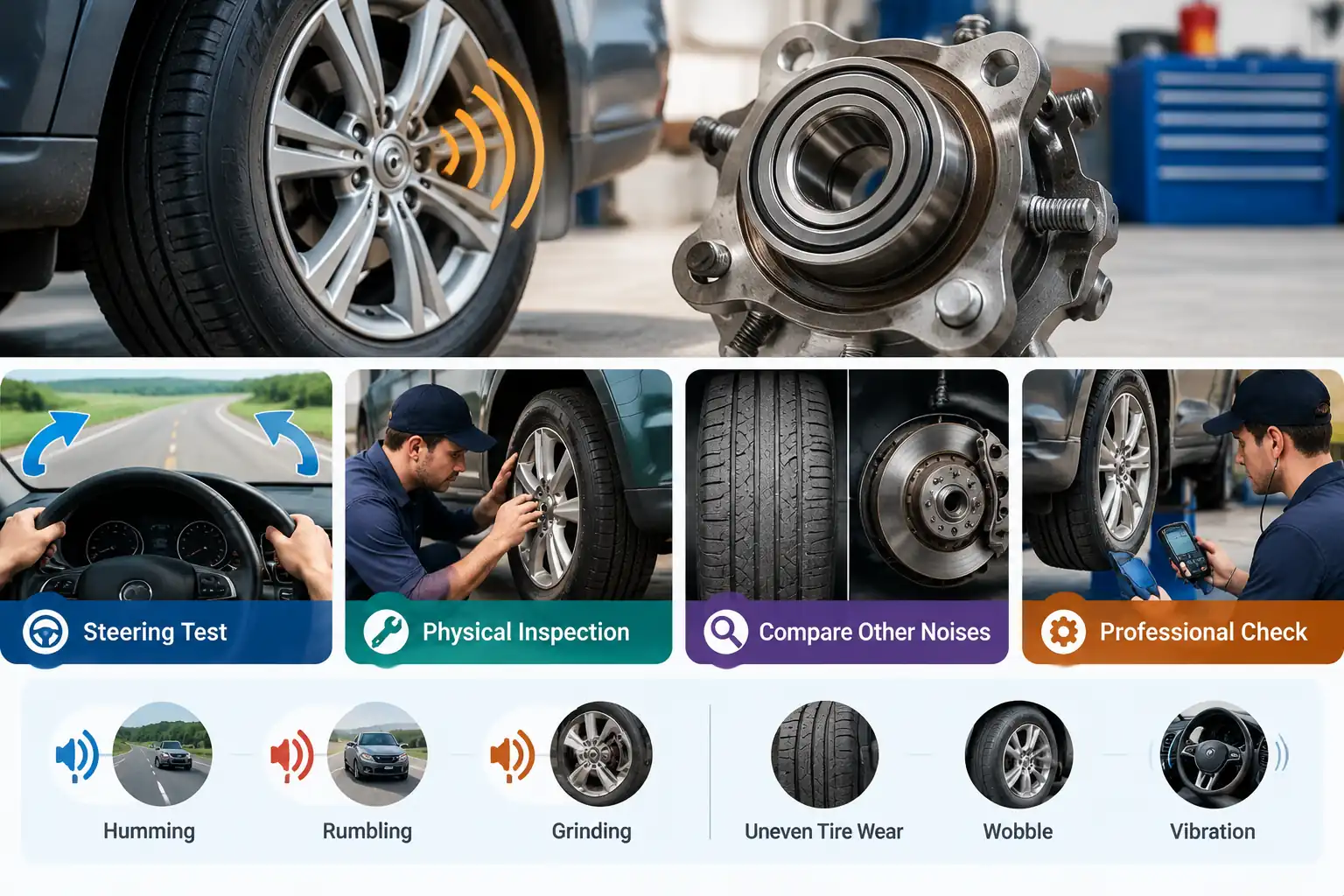
Regular wheel bearing inspections help identify wear, damage, and potential failures before they become serious safety issues. Common inspection methods include checking for unusual noises, excessive wheel play, vibration, and visible damage.
01.
Check for Unusual Noises
Listen for humming, grinding, or growling noises while driving. These sounds may indicate worn or damaged wheel bearings.
02.
Check for Wheel Play
Safely raise the vehicle and support it with jack stands. Grip the tire at the 12 and 6 o’clock positions and gently rock it back and forth. Excessive movement may indicate a worn wheel bearing, but other suspension components, such as ball joints, can also cause similar symptoms.
03.
Rotate the Wheel by Hand
With the wheel lifted off the ground, rotate it by hand. Listen for grinding or scraping noises and feel for roughness or resistance during rotation. These symptoms may indicate bearing wear or damage.
04.
Check for Wheel Vibration
Pay attention to unusual vibrations while driving, especially if they change or increase with vehicle speed. Worn wheel bearings may cause vibration, although tire, wheel, and suspension problems can also produce similar symptoms.
04.
Visually Inspect for Damage
Check the wheel hub assembly and surrounding components for visible signs of wear or damage, including:
- Rust or corrosion around the hub.
- Damaged or worn bearing seals.
- Grease leakage around the bearing assembly.
- Cracks or visible damage to the hub.
- Discoloration that may indicate overheating.
Some internal bearing damage cannot be identified through a visual inspection alone. Further testing or disassembly may be necessary.
05.
Check ABS Sensor Operation
If the wheel hub assembly includes an integrated ABS wheel speed sensor, check for warning lights and use a diagnostic scanner to identify possible sensor or wheel speed signal problems. An ABS warning light may also indicate wiring or other ABS system issues.
How Many Miles Do Wheel Bearings Last?
Wheel bearings typically last between 85,000 and 100,000 miles, although their lifespan depends on vehicle type, driving conditions, maintenance, and bearing quality.
Rough roads, heavy loads, water contamination, and improper installation can shorten wheel bearing life. Regular inspections can help identify problems before complete bearing failure occurs.
How Do You Visually Inspect a Wheel Bearing?
To visually inspect a wheel bearing, check the wheel hub assembly and surrounding components for signs of damage or wear.
Look for damaged seals, grease leakage, rust, corrosion, cracks, and signs of overheating. These conditions may indicate potential bearing or hub problems.
Keep in mind that most modern wheel bearings are sealed units, so internal damage cannot always be identified through visual inspection alone. Additional testing may be required.
What Is a Sign of Wheel Bearing Failure?
Common signs of wheel bearing failure include:
- Unusual Noise: Humming, grinding, or growling sounds while driving.
- Wheel Vibration: Unusual vibration that may change or increase with vehicle speed.
- Excessive Wheel Play: Noticeable looseness or movement when checking the wheel.
- Uneven Tire Wear: Abnormal tire wear that may be associated with wheel bearing or suspension problems.
- ABS Warning Light: A faulty integrated wheel speed sensor or related ABS system issue may trigger a warning light.
If these symptoms appear, have the vehicle inspected by a qualified mechanic. Severely damaged wheel bearings should be replaced promptly.
Note: Always use proper lifting equipment and jack stands when inspecting wheel bearings. Never work underneath a vehicle supported only by a jack. Wheel bearing lifespan and inspection requirements vary by vehicle. Follow the manufacturer’s recommendations.