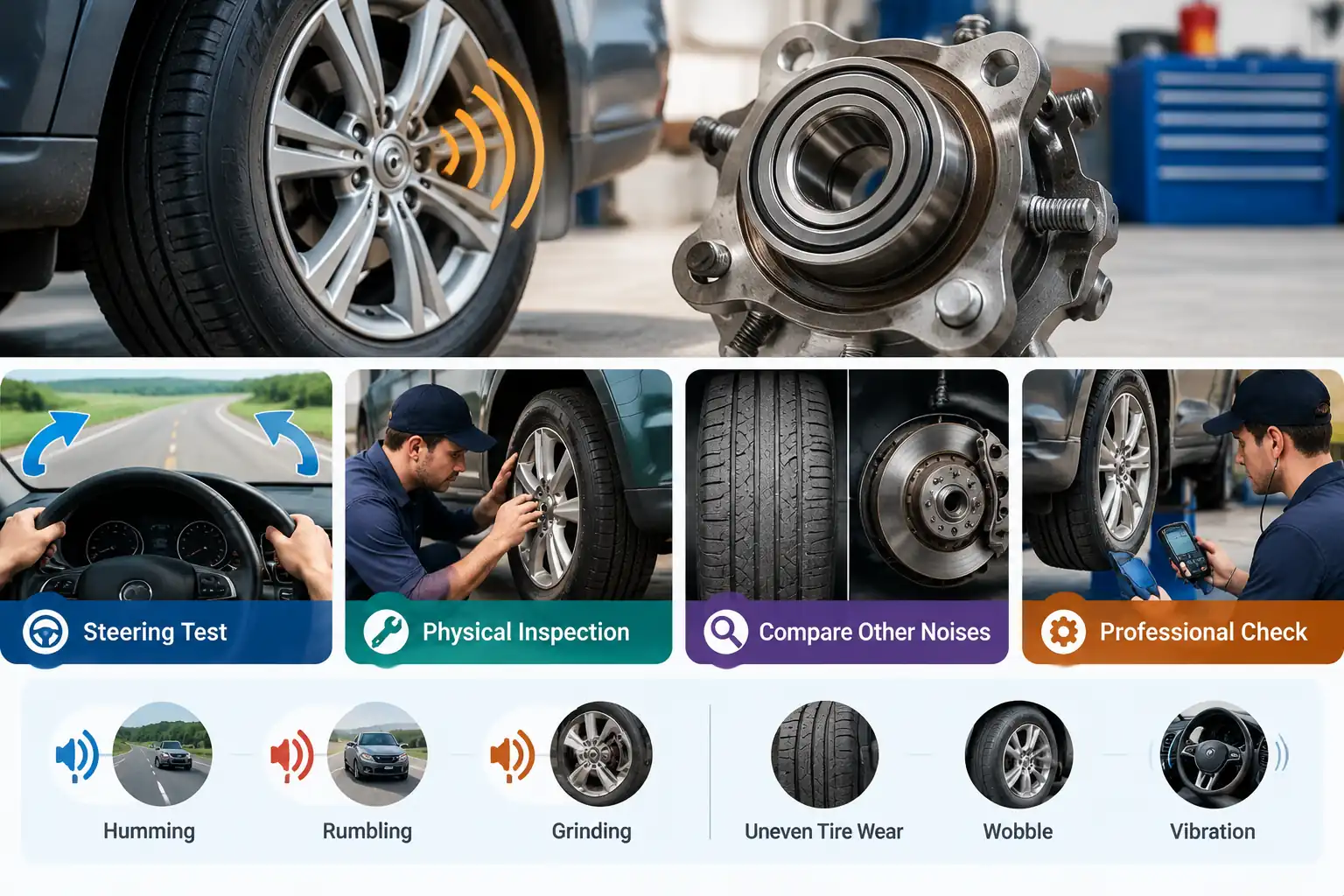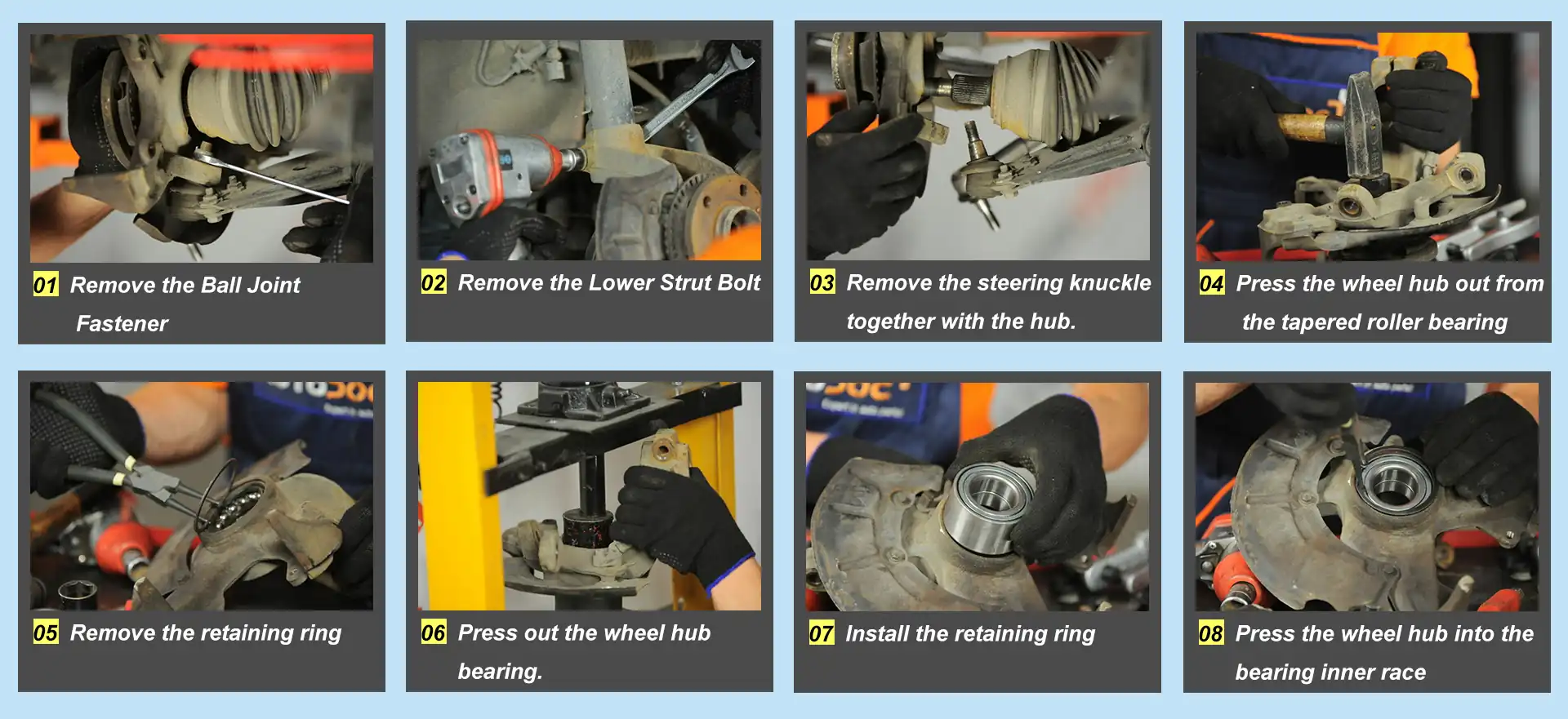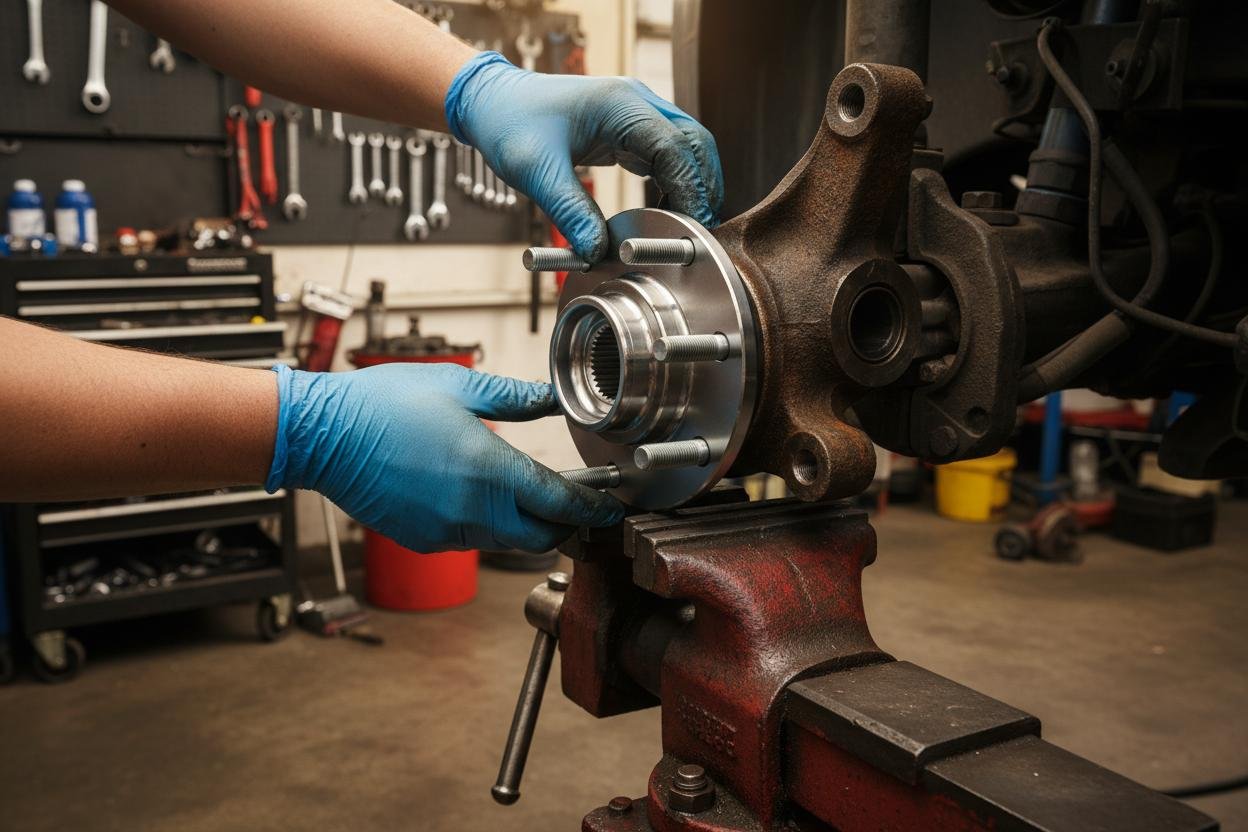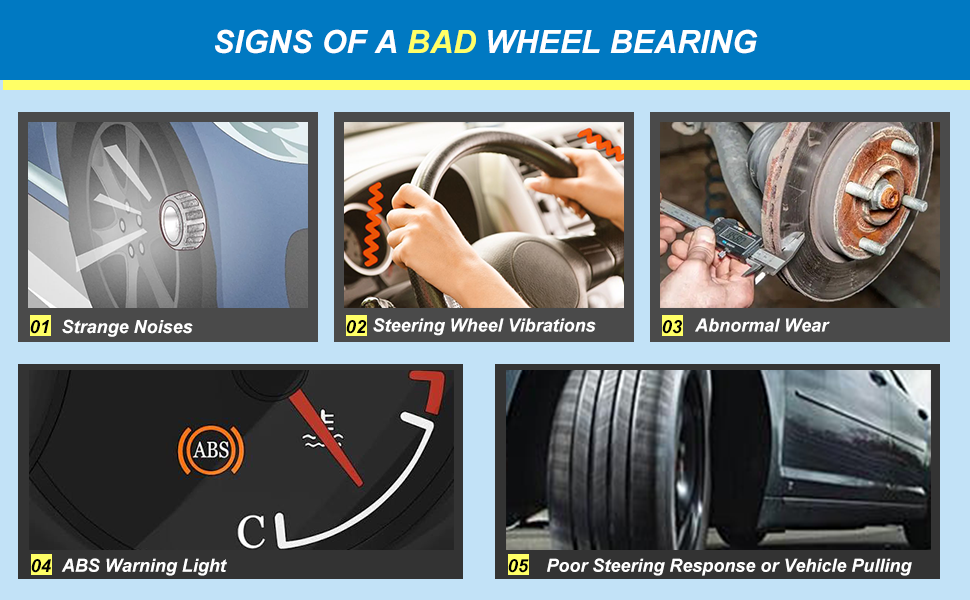
A wheel bearing supports the wheel and allows it to rotate smoothly relative to the steering knuckle. It reduces friction during rotation and helps transfer loads through the wheel assembly. Wheel bearings must withstand heavy radial loads from the vehicle’s weight, as well as axial loads caused by lateral tire forces during cornering and side impacts.
Where Are Wheel Bearings Located?
Wheel bearings are typically mounted near the center of each wheel, in the wheel hub, steering knuckle, or a dedicated bearing support structure. In many modern vehicles, the bearings are integrated into a wheel hub assembly.
Wheel bearings support the wheels and carry vehicle loads while allowing the wheels to rotate smoothly with minimal friction. They support the wheels relative to the vehicle’s stationary structure. The exact mounting location depends on the vehicle’s wheel hub and suspension design.
Types of Wheel Bearings Used in Modern Vehicles
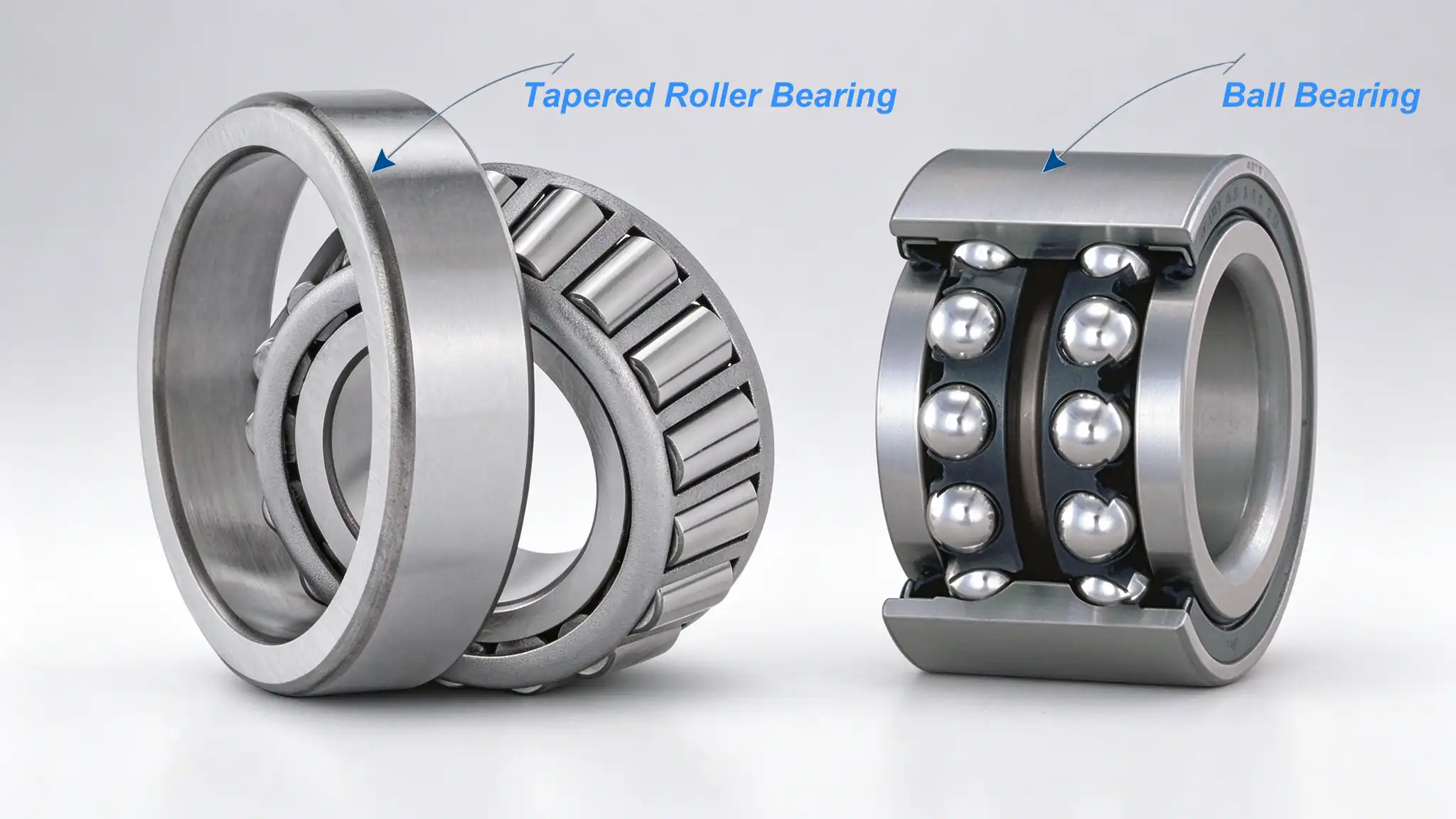
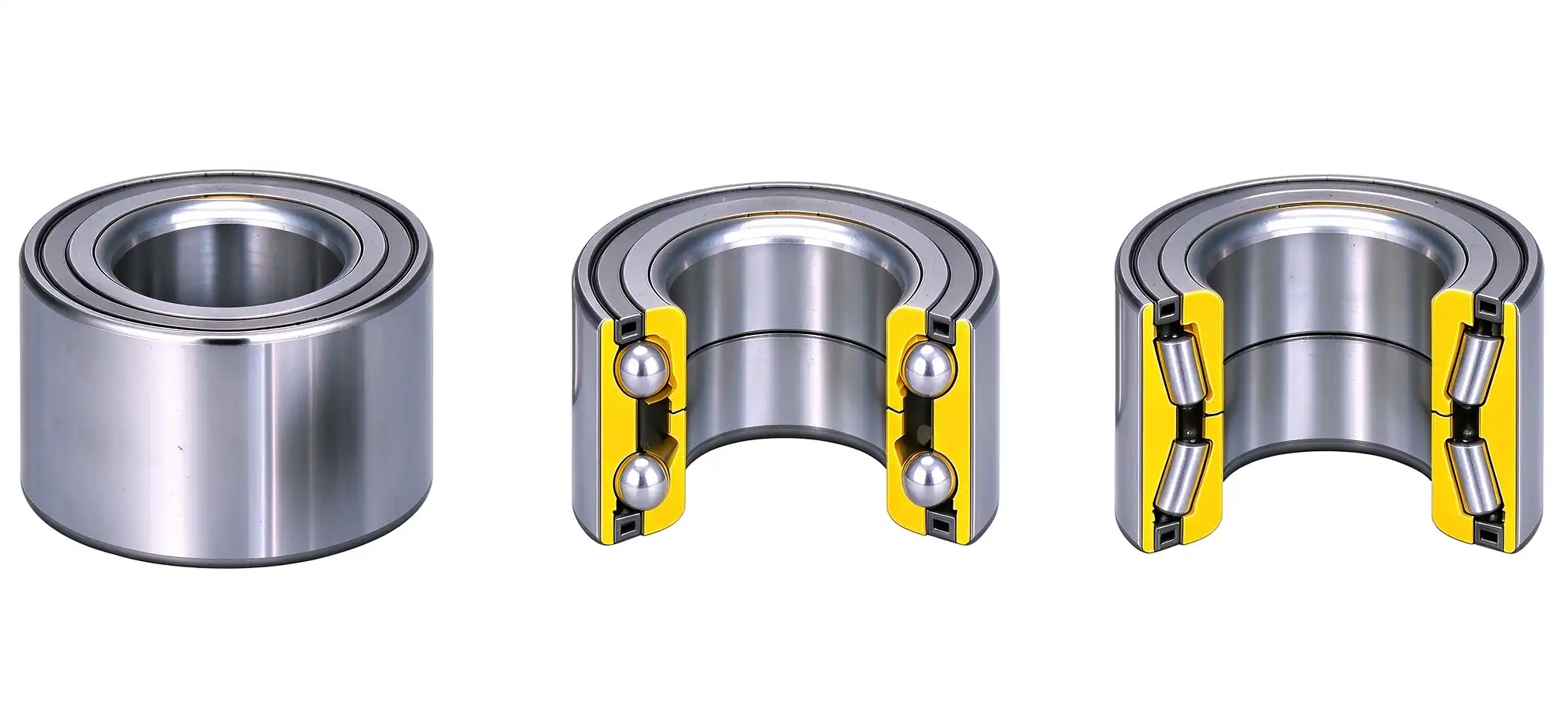
Based on the shape of their rolling elements, wheel bearings generally fall into two categories: ball bearings and tapered roller bearings. The key difference lies in the rolling elements themselves—balls versus tapered rollers. Ball bearings are commonly used in passenger vehicles, while tapered roller bearings are often used in applications that require greater load-carrying capacity, including some heavy-duty vehicles, large SUVs, and pickup trucks.
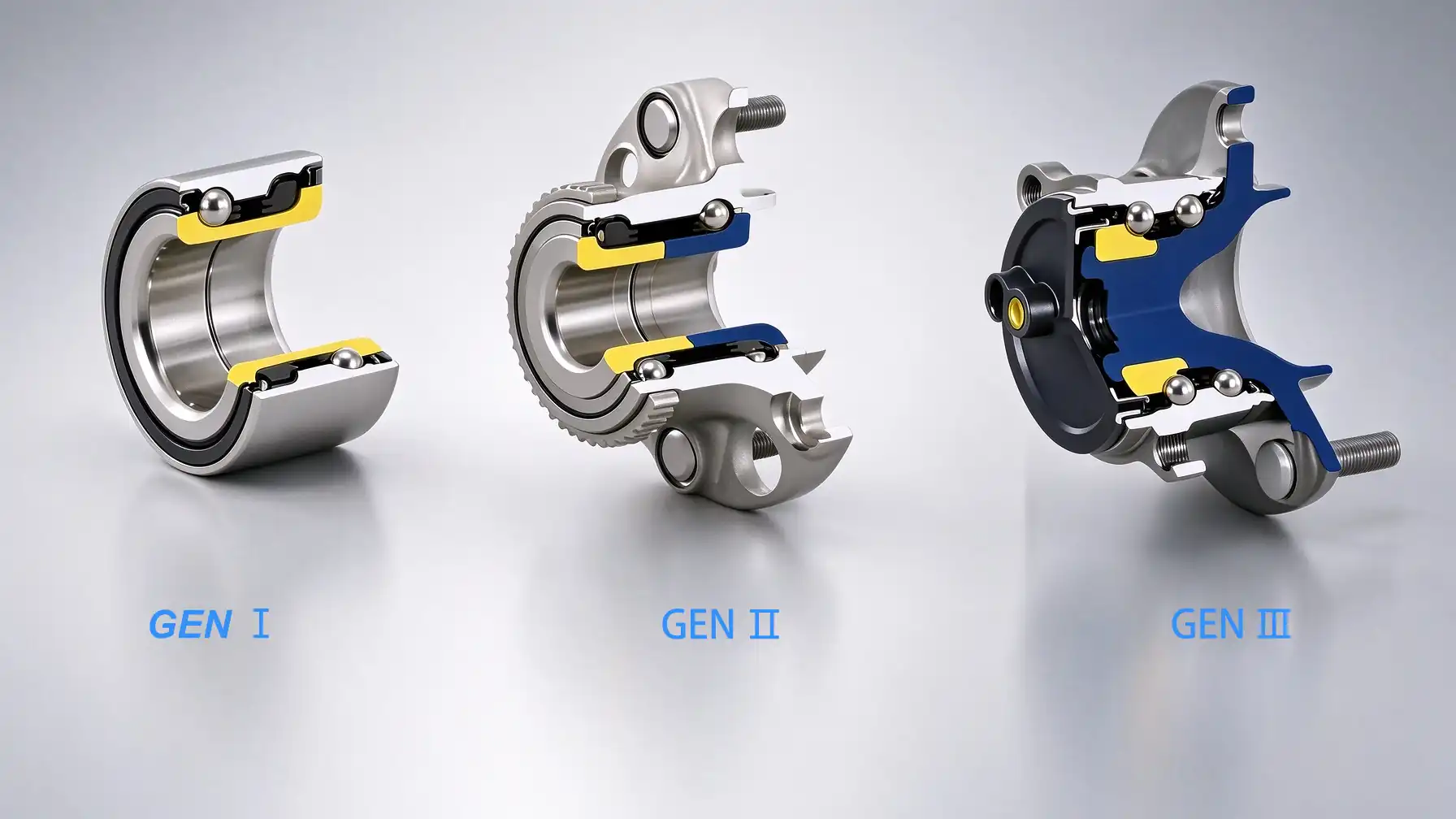
Wheel bearings can also be classified by their level of integration into three generations: Generation 1 (Gen 1), Generation 2 (Gen 2), and Generation 3 (Gen 3):
01.
Generation 1 Wheel Bearings
Generation 1 wheel bearings have a relatively simple design, typically consisting of inner and outer rings and rolling elements. One of their main advantages is their relatively low manufacturing cost.
Because the bearing is separate from both the wheel hub and the steering knuckle, installation typically requires the bearing to be press-fitted onto the hub and into the steering knuckle. This involves more assembly steps and requires precise equipment and tight control of the assembly process, making consistent installation more difficult to achieve.
Despite their cost advantage, Gen 1 bearings require a relatively complex installation process. As more integrated wheel bearing designs have become common, Gen 1 bearings have been replaced by higher-generation designs in some applications. However, they are still used in certain vehicles where cost remains an important consideration.
02.
Generation 2 Wheel Bearings
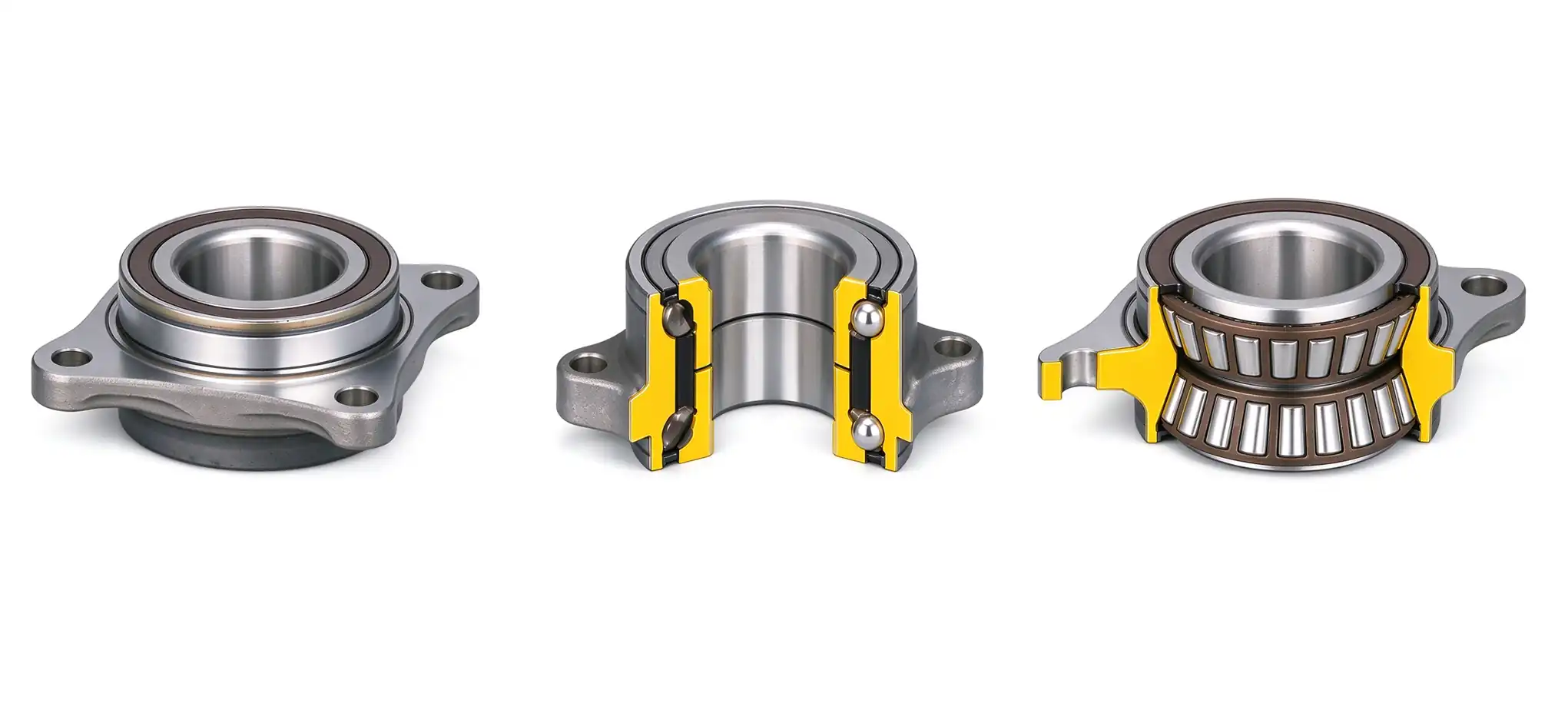
Generation 2 wheel bearings build on the Gen 1 design by incorporating a wheel mounting flange, reducing the number of separate assembly steps. The bearing no longer needs to be press-fitted separately onto the wheel hub. However, the bearing assembly typically still requires an interference fit with the steering knuckle, so proper installation procedures and dimensional accuracy remain important.
Compared with Gen 1 bearings, Gen 2 bearings simplify the assembly process but still have a relatively limited level of integration. They continue to be used in certain vehicles, including some rear-wheel applications.
03.
Generation 3 Wheel Bearings
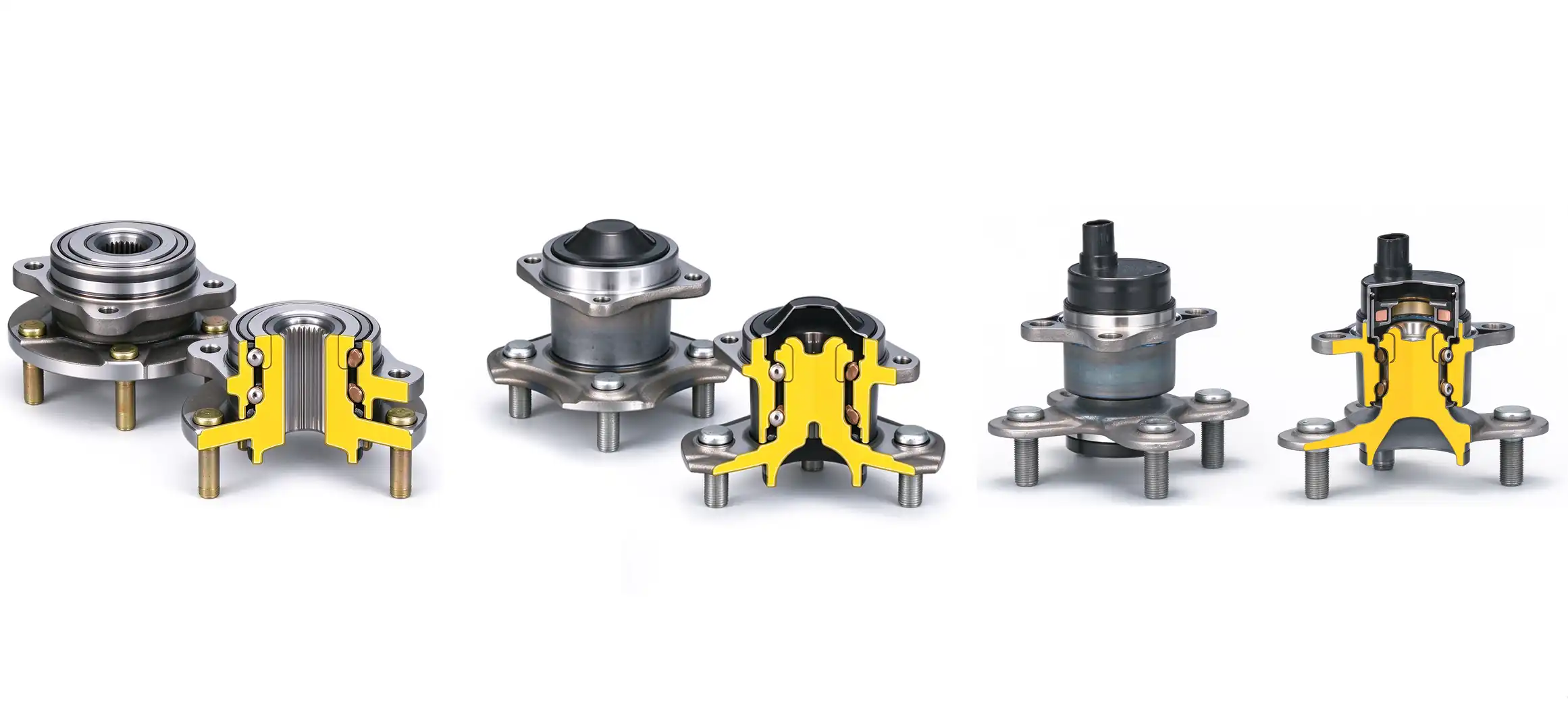
Generation 3 wheel bearings take integration a step further by incorporating both the wheel mounting flange and the knuckle mounting flange into the bearing assembly. They are typically bolted into place, eliminating the need for the traditional press-fit installation used with earlier designs.
Compared with Gen 1 and Gen 2 bearings, Gen 3 bearings simplify installation and allow critical dimensions and manufacturing tolerances to be controlled more consistently, improving assembly efficiency and product consistency. Some designs also incorporate an ABS wheel speed sensor or magnetic encoder, further increasing functional integration. Although Gen 3 bearings generally have a higher manufacturing cost, their high level of integration, ease of installation, and reliable performance have made them widely used in modern passenger vehicles.
How do Wheel Bearings Work?
Wheel bearings use steel balls or rollers that roll between the inner and outer rings, reducing friction as the wheels rotate and allowing the wheels to turn smoothly. They also support the vehicle’s weight and withstand loads generated during driving, cornering, and braking. Lubricant inside the bearings helps reduce friction and wear between the rolling elements and raceways, extending bearing service life.
What Are the Components of a Wheel Bearing?
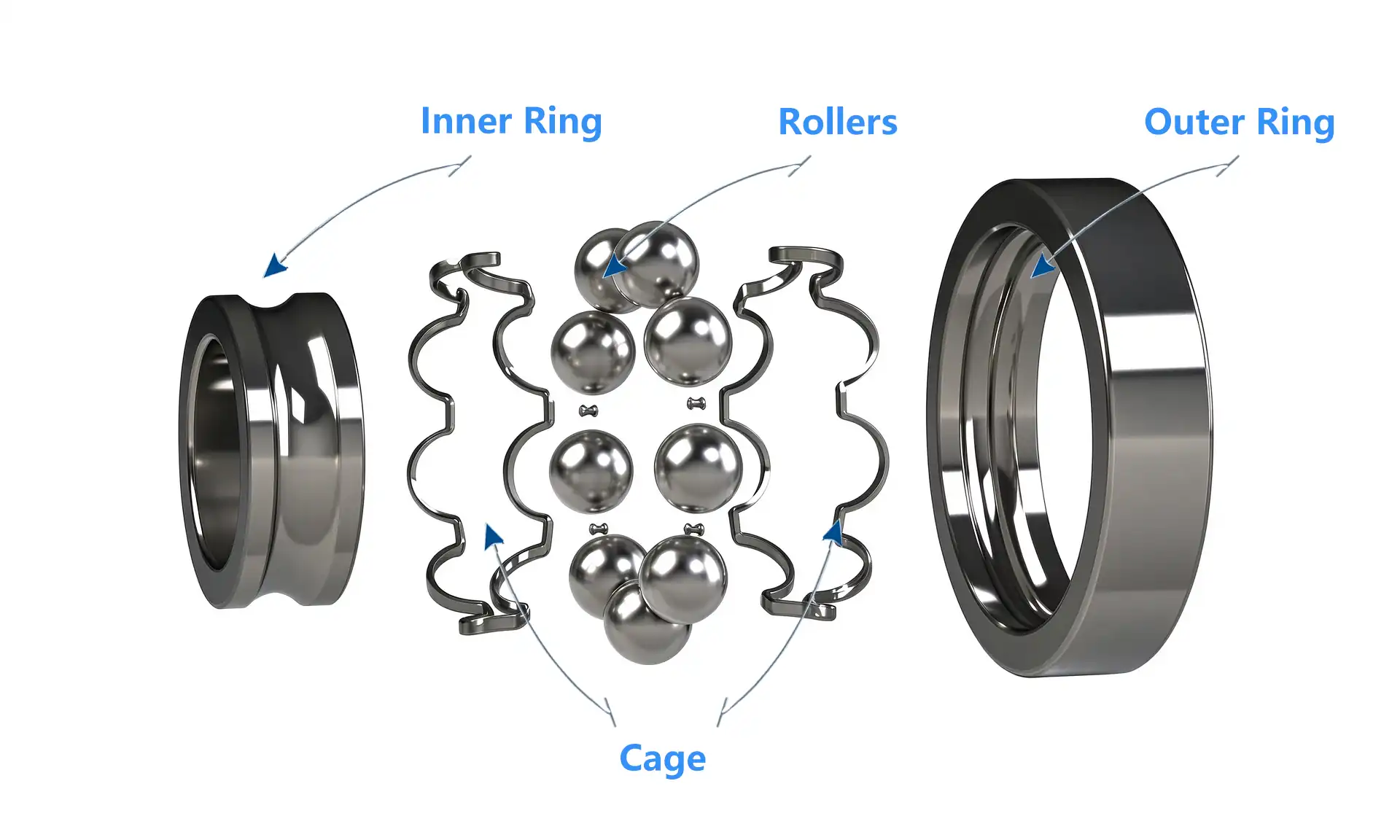
A wheel bearing typically consists of four main components: an inner ring, an outer ring, rolling elements, and a cage. The inner and outer rings provide raceways for the rolling elements, while the rolling elements—either steel balls or rollers—transmit loads between the inner and outer rings. The cage keeps the rolling elements evenly spaced and helps guide their movement. Many modern sealed wheel bearings also incorporate seals that retain the grease and help prevent contaminants such as dirt and moisture from entering the bearing.
How are Wheel Bearings Made?
The main components of a wheel bearing are typically made from high-strength bearing steel. The manufacturing process generally involves forming, heat treatment, precision machining, grinding, and assembly. Depending on the bearing design, grease and seals are then added. Quality checks are performed to ensure that the finished bearing meets the required standards for strength, wear resistance, and rotational accuracy.
Wheel Hub vs Wheel Bearing: What’s the Difference?
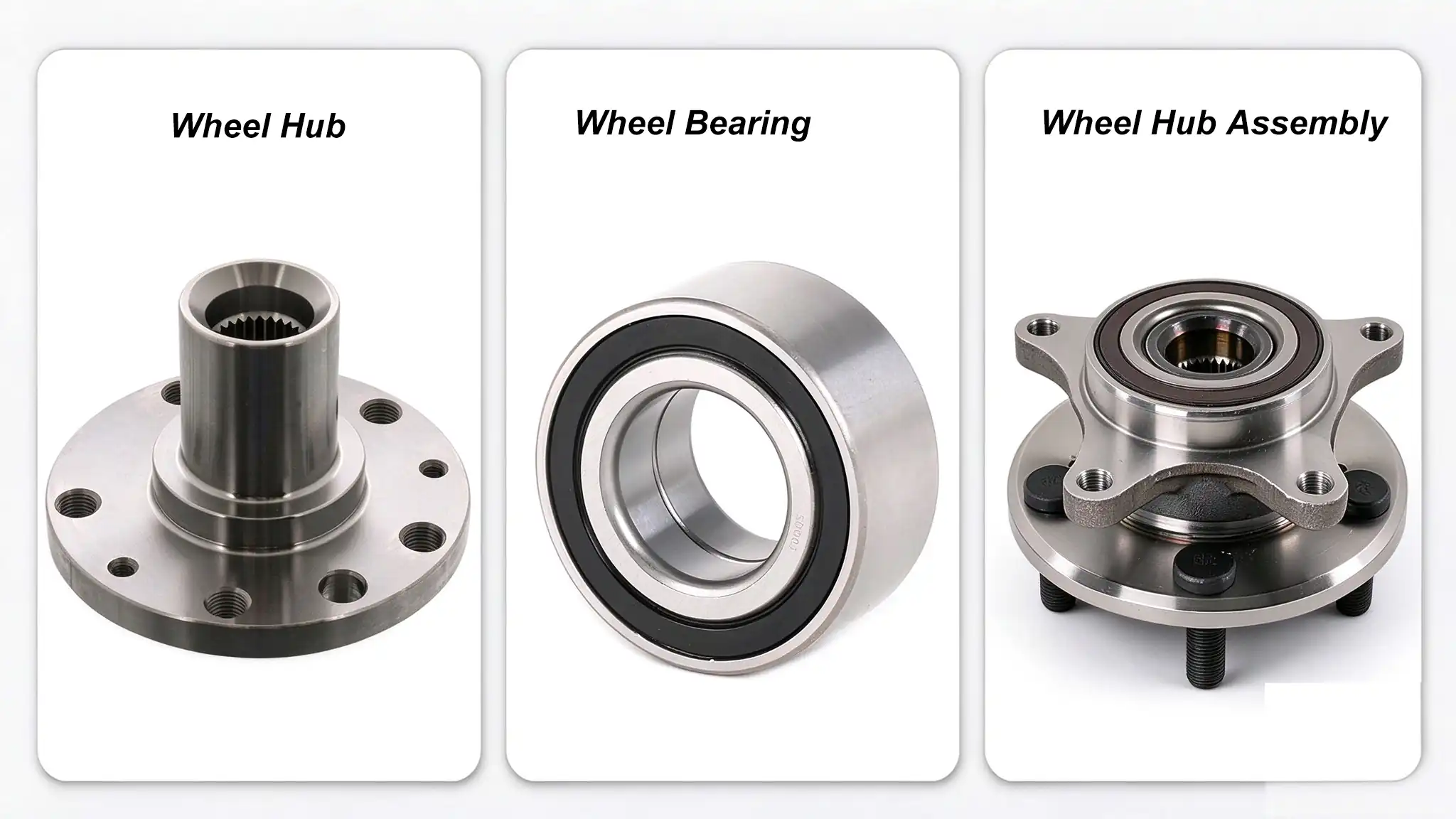
The wheel hub and wheel bearing are two distinct components of a vehicle’s wheel assembly. The wheel hub provides the mounting point for the wheel, while the wheel bearing allows the wheel to rotate smoothly while supporting the vehicle’s weight and carrying loads generated during driving.
The wheel hub provides mounting surfaces for the wheel and components such as the brake rotor. Inside the wheel bearing, rolling elements move along the raceways with minimal friction, allowing the wheel to rotate smoothly.
What Is a Wheel Hub?
What is a wheel hub? Learn what a wheel hub does, how it works, its main components and types, and how it differs from a wheel bearing and hub assembly.
Read More
How Long Can You Drive On A Bad Wheel Bearing
How long you can drive with a bad wheel bearing depends on the severity of the damage. There is no fixed mileage that can be considered safe. Even if the vehicle still seems to drive normally, the bearing may continue to deteriorate without warning.
If you notice persistent abnormal noise, vibration, or excessive play in the wheel, have the vehicle inspected and repaired as soon as possible. If you hear loud or worsening noises, notice significant wheel wobble, or experience abnormal handling, stop driving immediately and arrange for the vehicle to be towed. Do not continue driving.
Key Design Considerations for Wheel Bearings
Wheel bearing design requires careful consideration of assembly accuracy, load-carrying capacity, rotational resistance, service life, and sealing performance to ensure vehicle safety, reliability, and operating efficiency.
Main Considerations in Wheel Bearing Design
| Design Consideration | Main Purpose |
| Fit and internal clearance | Ensure proper assembly and bearing operation |
| Strength and stiffness | Provide adequate load-carrying capacity and control deformation under load |
| Drag torque | Reduce rotational resistance and energy loss |
| Service life | Meet vehicle durability requirements |
| Sealing performance | Prevent contaminant ingress and minimize grease leakage |
01.
Fit and Internal Clearance Design
Proper fits and internal clearance are critical to reliable wheel bearing operation. For Generation 1 and Generation 2 wheel bearings, particular attention must be paid to the fits between the bearing, wheel hub, and steering knuckle. Improper fits can affect the bearing’s internal clearance, operating temperature, and service life.
02.
Fit and Internal Clearance Design
Wheel bearings must withstand both radial and axial loads generated during driving, cornering, and braking, so adequate strength and stiffness are essential.
Strength determines whether the bearing can withstand operating loads without structural failure. During the design process, finite element analysis (FEA) is commonly used to evaluate stress distribution in critical areas and verify that the design meets strength requirements.
Stiffness determines how much the bearing assembly deforms under load. Insufficient stiffness can result in excessive deformation of the wheel mounting flange, which may affect brake rotor alignment and potentially lead to uneven brake pad wear.
03.
Drag Torque
Drag torque is the resisting torque generated as the bearing rotates. It is influenced by factors such as bearing design, internal clearance or preload, grease, and seals.
Reducing drag torque helps minimize energy losses while the vehicle is in motion, which can improve fuel economy and help extend the driving range of electric vehicles.
04.
Service Life
Wheel bearings are typically designed to operate without periodic relubrication, so they must provide sufficient durability and reliability throughout their intended service life.
Bearing life is evaluated by considering factors such as load, rotational speed, material properties, lubrication conditions, and operating environment. Fatigue life calculations and durability testing are used to verify that the design meets the target service life.
05.
Sealing Performance
The primary function of the sealing system is to prevent contaminants such as water and dust from entering the bearing while minimizing grease leakage.
Effective sealing helps maintain proper lubrication inside the bearing, reduces wear of the rolling elements and raceways, and lowers the risk of premature bearing failure.
Related Articles