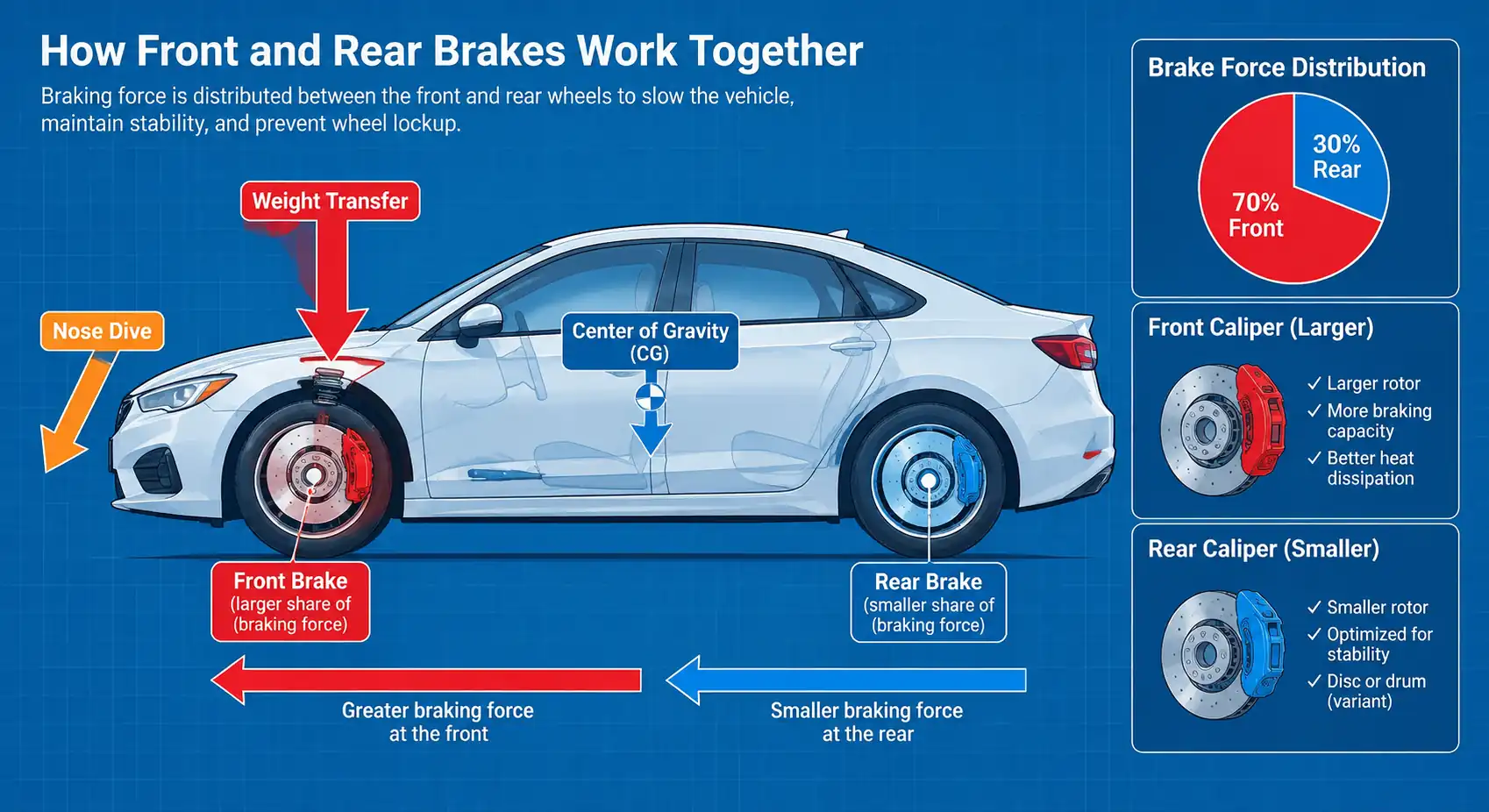
Front and rear brakes differ in braking force, wear rates, and design. Front brakes typically wear faster, while rear brakes may use disc or drum systems. Understanding these differences helps ensure proper brake maintenance and replacement.
How Front Brakes vs. Rear Brakes Work
01.
Weight Transfer During Braking
When a vehicle brakes, friction between the tires and the road generates the force needed to slow it down. Because the vehicle’s center of gravity is above the ground, braking causes a forward weight transfer, increasing the load on the front axle and reducing the load on the rear axle. This phenomenon is known as weight transfer.
02.
How Front and Rear Brakes Work
When a vehicle brakes, friction between the brake pads and rotors, or between the brake shoes and drums, converts kinetic energy into heat, slowing the vehicle down.
Both front and rear brakes work together to slow the vehicle, but they typically handle different amounts of braking force. The front brakes generally provide a larger share of the braking force, while the rear brakes contribute to overall braking performance and vehicle stability.
To maintain effective braking and vehicle stability, the braking system manages how braking force is distributed between the front and rear wheels. This helps reduce the risk of wheel lockup, particularly when braking conditions change.
03.
How Front and Rear Brakes Work Together
Modern vehicles use electronic braking systems to regulate brake force distribution and help prevent wheel lockup, improving braking performance and vehicle stability.
Electronic Brakeforce Distribution (EBD)
Adjusts the distribution of braking force between the front and rear wheels based on vehicle load and braking conditions, helping maintain stable braking performance.
Anti-lock Braking System (ABS)
Modulates brake pressure when a wheel is at risk of locking up, helping maintain steering control and directional stability during braking.
EBD manages brake force distribution, while ABS helps prevent sustained wheel lockup. Together, these systems help maintain effective braking, vehicle stability, and steering control.
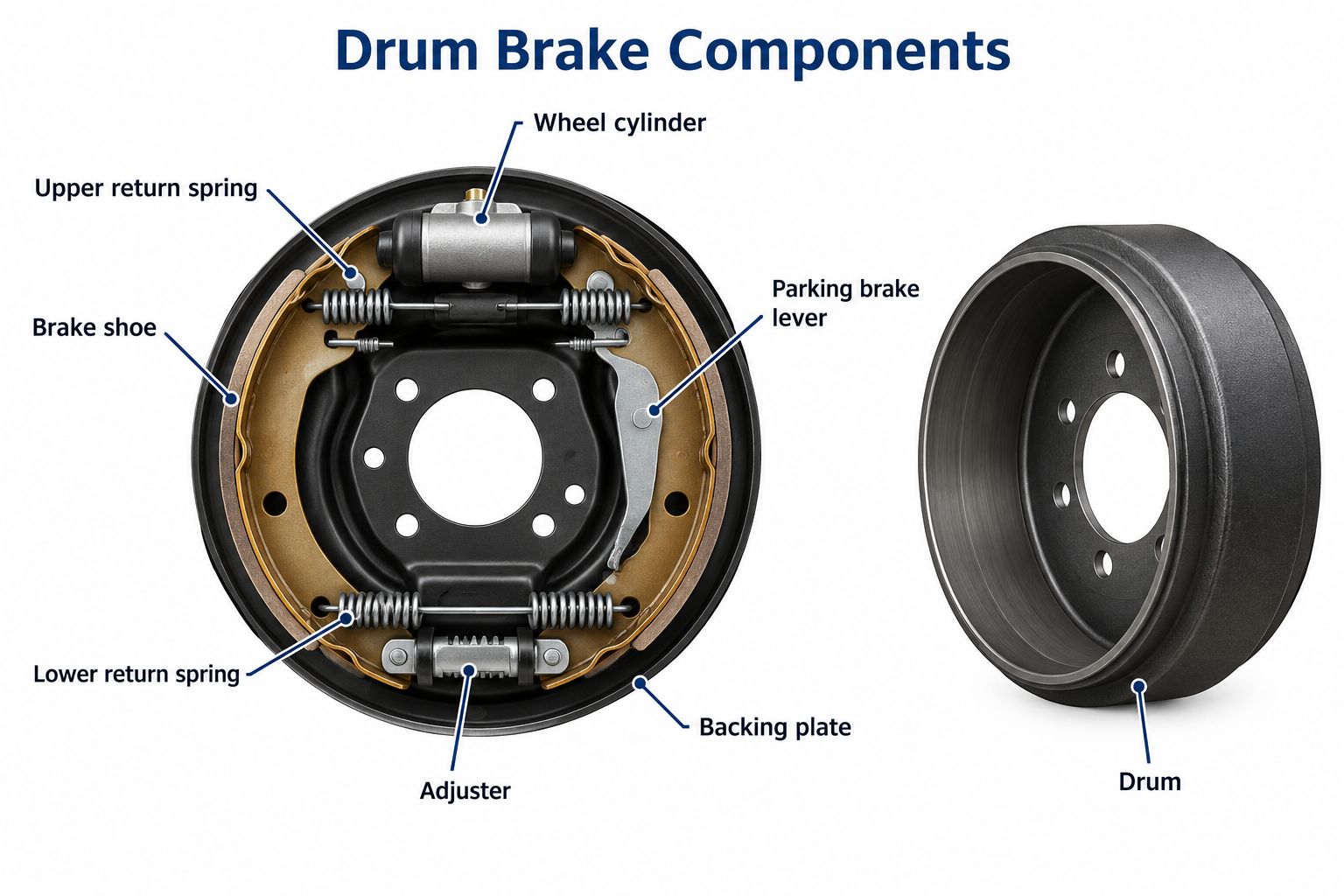
What Are Drum Brakes? How They Work, Types, and Benefits
What Are Drum Brakes? Learn how they work, explore their key components and three main designs, and discover their advantages, disadvantages
Read More
Key Differences Between Front and Rear Brakes
Although front and rear brakes work together to slow a vehicle, they differ in design, braking force distribution, heat dissipation, and their role in vehicle stability. These differences largely stem from how axle loads change during braking.
01.
Differences in Brake Types
Front brakes
Most modern passenger cars use disc brakes on the front wheels. Some feature ventilated rotors to improve heat dissipation.
Rear brakes
Rear wheels may use either disc or drum brakes. Some economy cars use rear drum brakes to keep manufacturing costs down.
02.
Differences in Braking Force Distribution
Front brakes
During braking, weight shifts forward, increasing the load on the front wheels. This generally allows the front brakes to handle a larger share of the braking force.
Rear brakes
As the load on the rear wheels decreases, rear braking force must be carefully controlled to reduce the risk of premature wheel lockup.
The actual distribution depends on the vehicle’s design, braking system calibration, and road conditions.
03.
Differences in Brake Design
Front brakes
Because they typically handle a larger share of the braking load, front brakes often feature larger rotors or other design features that provide greater braking capacity.
Rear brakes
Rear brake components are sized according to the vehicle’s weight, axle load distribution, and overall braking requirements. Their design may differ from the front brakes and may use either disc or drum systems.
04.
Differences in Heat Dissipation
Front brakes
Front brakes typically absorb a larger share of the vehicle’s braking energy, placing greater demands on heat capacity and cooling performance. Ventilated rotors help dissipate heat more effectively.
Rear brakes
Rear brakes generally absorb less braking energy under typical conditions, but they still need adequate heat dissipation during repeated hard braking, when carrying heavy loads, or under other demanding driving conditions.
05.
How Wheel Lockup Affects Vehicle Stability
Front-wheel lockup
When the front wheels lock up, their ability to respond to steering inputs is significantly reduced, making it difficult to maintain the intended direction.
Rear-wheel lockup
When the rear wheels lock up, the vehicle can become less directionally stable, increasing the risk of skidding or fishtailing.
Do You Need to Replace Front and Rear Brake Pads at the Same Time?
Brake pads generally do not need to be replaced on both axles at the same time. Instead, they should typically be replaced in pairs on the same axle, with the front and rear brake pads replaced separately based on their condition. For example, if the front brake pads have reached their wear limit while the rear pads still have sufficient material remaining, only the front pads may need replacing.
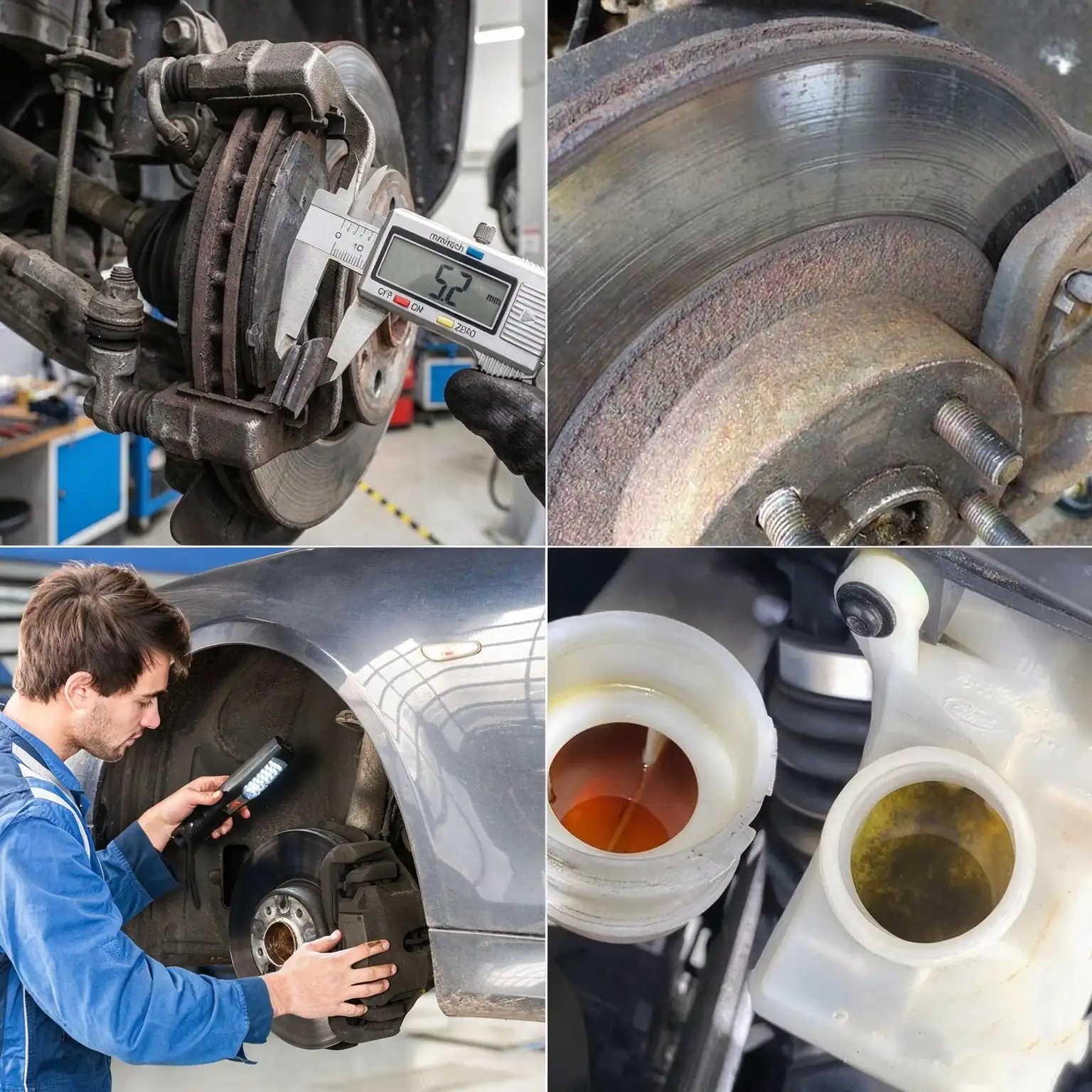
Front brake pads often wear faster because the front brakes typically handle a larger share of the braking force. However, wear rates also depend on vehicle design, driving habits, and regenerative braking. During replacement, both sides should be checked for uneven wear. Significant differences may indicate a problem with the calipers or other brake components and should be investigated.
Should I Replace Front and Rear Brakes at the Same Time
Should I replace front and rear brakes at the same time? Learn when to replace brake pads and rotors, recognize signs of wear, and extend brake life.
Read More