
A humming, roaring, or rumbling noise while driving can indicate problems with the tires, wheel bearings, or drivetrain. Learn how to identify possible causes, recognize warning signs, and determine when your vehicle needs inspection.
Wheel Bearing Noise Vs Tire Noise
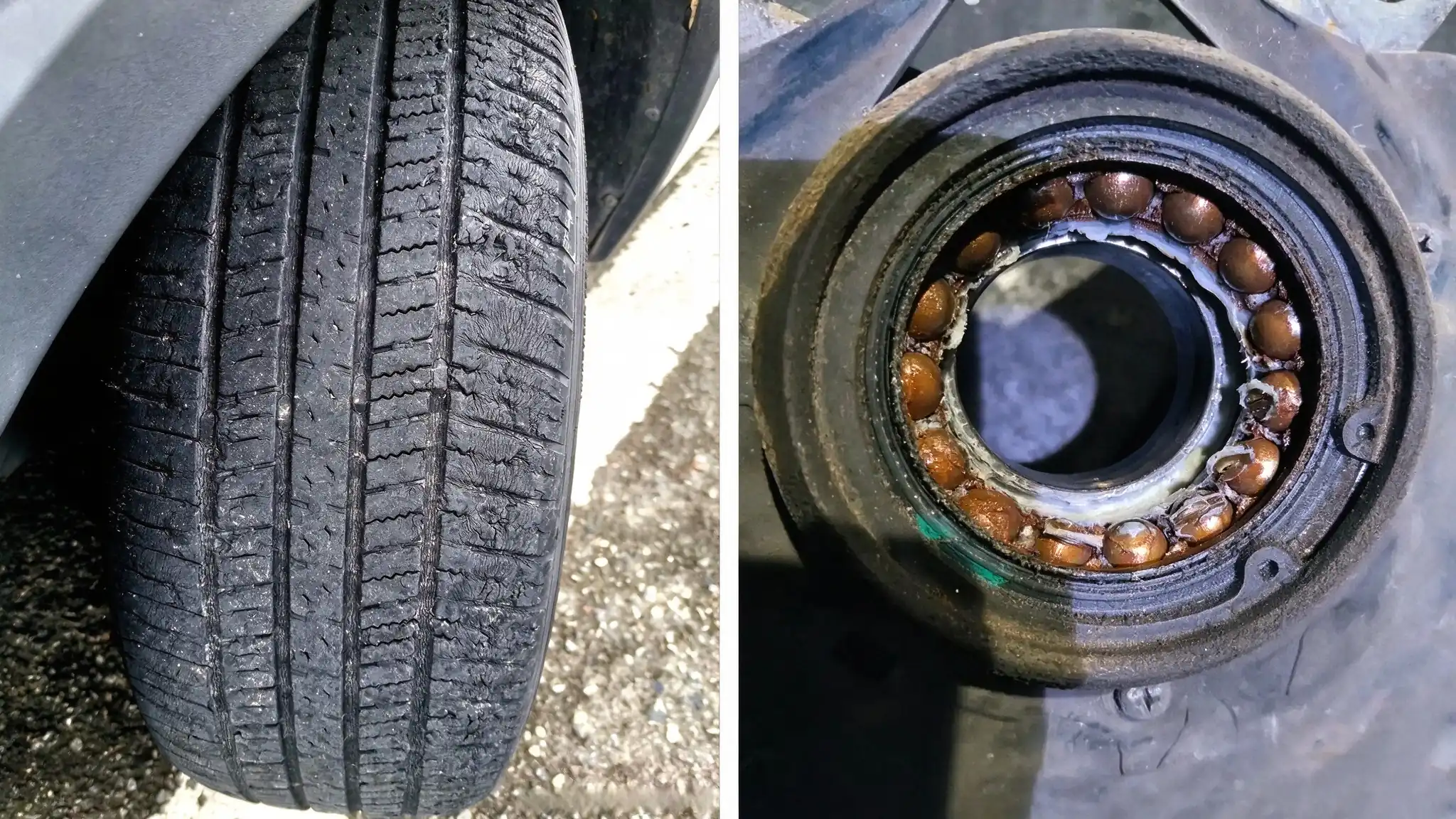
Wheel bearing wear and uneven tire wear can both cause humming or roaring noises that change with vehicle speed. Observing whether the noise varies with road surface or changes when cornering, along with checking for uneven tire tread wear, can help narrow down the possible cause.
Wheel Bearing Sound
Wheel bearings support the wheels and allow them to rotate smoothly. As lubrication deteriorates, seals fail, or internal rolling elements wear, the bearings may produce humming, rumbling, or roaring noises that change with vehicle speed.
01.
Changes in noise when cornering
Gentle turns can change the load on the wheel bearings, potentially affecting the noise produced by a worn bearing. However, noise changes alone cannot reliably identify which side is affected. Other symptoms and inspection findings should also be considered.
02.
Relationship to vehicle speed
If the noise changes mainly with vehicle speed rather than engine RPM, inspect the wheel bearings, tires, and other related components.
Early wheel bearing wear may produce only a faint humming noise. As the damage progresses, the noise may become progressively louder. If the noise persists, have the wheel bearings, tires, and related components inspected promptly to identify the cause and prevent further dama
Tire Noise
Uneven tire wear can produce humming or roaring noises similar to those caused by worn wheel bearings. For example, cupping and feathering can cause irregular tire noise as the tire rolls over the road surface.
01.
Noise Changes with Road Surface
Tire noise often varies with road surface texture. Rough surfaces may make the noise louder, while smoother roads may reduce it. However, this alone cannot reliably distinguish tire noise from wheel bearing noise.
02.
Tread Inspection
Gently run your hand over the tire tread to check for uneven wear, cup-shaped depressions, or sawtooth-like edges. These patterns may indicate cupping or feathering. Make sure the vehicle is safely parked, the engine is off, and the vehicle cannot move before inspecting the tire. Avoid sharp objects and do not touch damaged areas.
Uneven tire wear can result from incorrect tire pressure, wheel alignment issues, wheel imbalance, or worn suspension components. Before replacing the tires, identify and address the underlying cause to reduce the risk of uneven wear recurring.
What Does A Bad Wheel Bearing Sound Like
What does a bad wheel bearing sound like? Learn common warning signs, how to distinguish wheel bearing noise from other vehicle noises, and when to seek repair.
Read More
Other Possible Causes of Humming Noise While Driving
If the source of the noise is unclear, the following components may also be worth checking.
01.
Drivetrain and Differential
Worn gears or bearings, as well as insufficient lubrication, can cause whining or humming noises. The sound may change during acceleration, deceleration, or under different loads, depending on the faulty component and vehicle design.
02.
Brake Drag and Brake Rotor Issues
A sticking brake caliper can cause continuous friction, a burning smell, or excessive heat around one wheel. Brake rotor thickness variation or excessive rotor runout may cause vibration or brake pedal pulsation during braking. If a wheel becomes unusually hot, stop safely and arrange an inspection.
03.
Engine Accessories and Belt-Driven Components
The A/C compressor, fan clutch (where fitted), and belt tensioner can produce humming, whining, or squealing noises. The sound may vary with engine RPM, A/C operation, or cooling fan activity. If the noise changes when the A/C is switched off, inspect the compressor and related components.
04.
Transmission Gears and Bearings
Worn gears or bearings, or insufficient lubrication, can cause humming or whining noises. The sound may vary with gear selection, vehicle speed, engine RPM, or load. If the noise occurs mainly in a specific gear, consider the vehicle type and other symptoms during further inspection. The noise alone cannot identify the exact faulty component.
05.
Wind Noise, Roof Racks, and Loose Trim
Side mirrors, window seals, roof racks, and other loose exterior components can cause whistling or resonance at certain speeds. If the noise changes mainly with vehicle speed and is not clearly affected by engine RPM or gear selection, check for loose exterior components and worn or displaced seals.
How to Identify the Cause of Humming Noise While Driving
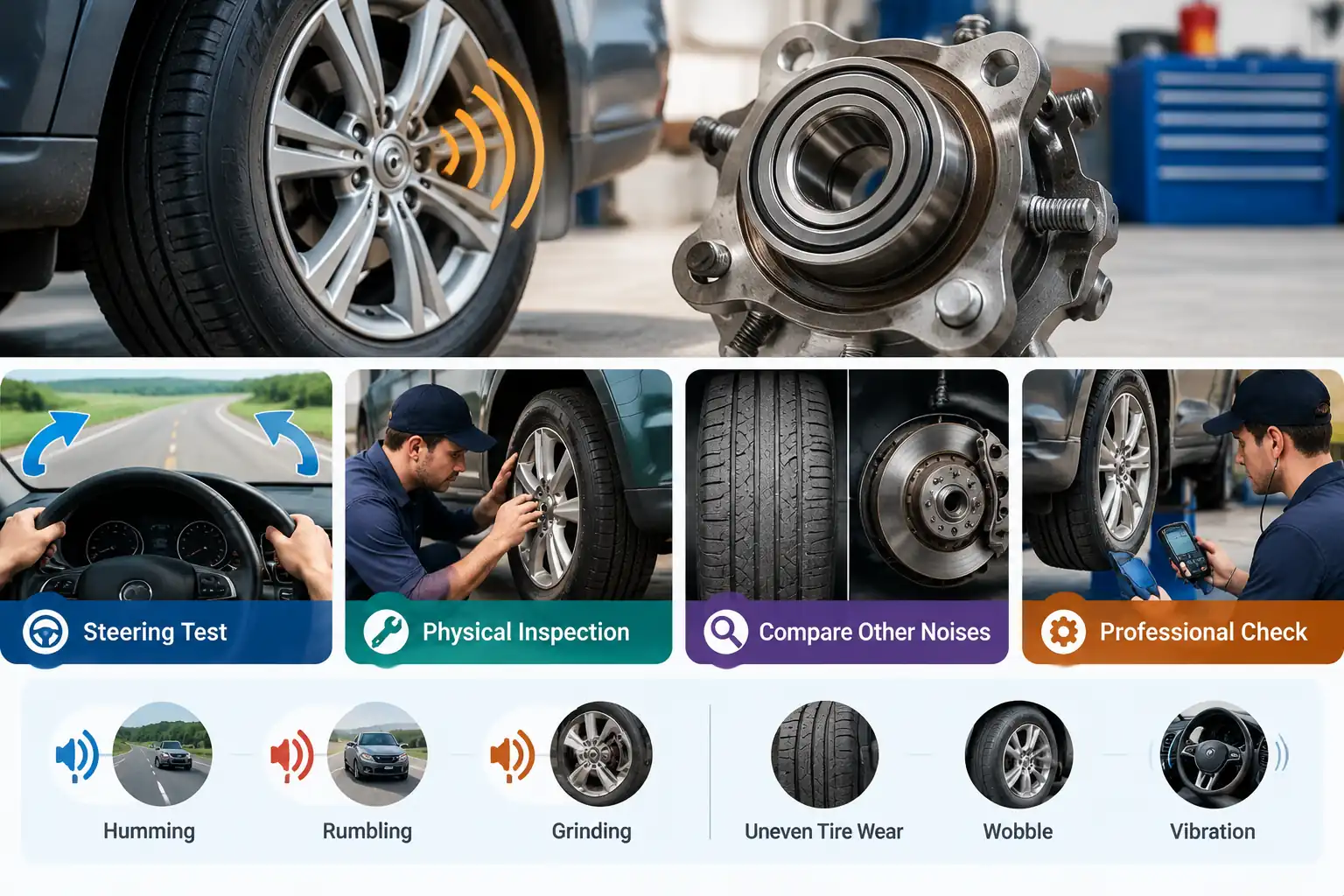
When it is safe and legal to do so, turn off the audio system and pay attention to when the noise occurs, how it changes, and where it seems to originate. Note whether the noise changes with vehicle speed, engine RPM, road surface, or steering input. These observations can help narrow down the possible causes.
01.
Observe Noise Changes During Turns
During normal driving, note whether gentle turns affect the noise. A worn wheel bearing may produce different levels of noise as the load on the bearing changes. However, noise changes alone cannot reliably identify which side has the faulty bearing. Do not make repeated steering movements to test for noise.
02.
Determine Whether the Noise Changes with Vehicle Speed or Engine RPM
Observe the noise during normal driving to see whether it changes mainly with vehicle speed or engine RPM. This can help guide further inspection, but it cannot rule out problems with wheel bearings, tires, the transmission, or other components. Do not coast in neutral to test for noise.
03.
Inspect the Tires and Look for Signs of Excessive Heat
Once the vehicle is safely parked, check the tire tread for cupping, feathering, cracks, or embedded objects. Check tire pressure according to the vehicle manufacturer’s recommendations. If you notice a burning smell, smoke, or excessive heat around one wheel, stop driving when safe and arrange for an inspection. Do not touch the brake rotors or other potentially hot components.
04.
Consider Professional Tire Rotation
If the tire type and vehicle manufacturer’s recommendations permit, have a professional rotate the tires from front to rear. If the noise changes after rotation, this may indicate that tire noise is contributing to the problem, but further inspection is needed to confirm the cause. If the noise persists, the wheel bearings, suspension, and drivetrain should also be checked. Uneven tire wear should prompt further inspection of tire pressure, wheel alignment, and suspension components.
How to Prevent Humming Noise While Driving
Regular maintenance of tires, suspension components, and wheel bearings can help reduce abnormal noise and avoid unnecessary repair costs.
01.
Check Tire Pressure
Check tire pressure at least once a month and adjust it according to the tire pressure label on the driver’s door jamb or the vehicle manufacturer’s recommendations. Both overinflation and underinflation can contribute to uneven tire wear, affect ride comfort, and alter road noise.
02.
Rotate Tires Regularly
Rotate tires according to the vehicle manufacturer’s recommended schedule to help minimize uneven wear. The appropriate interval depends on the vehicle, tire type, and driving conditions.
03.
Check Wheel Alignment
Have the wheel alignment checked if the vehicle pulls to one side, the steering wheel is off-center, or the tires show uneven wear. After a significant impact with a pothole or curb, inspect the tires, wheels, and suspension for possible damage.
04.
Inspect Suspension Components
Regularly check suspension and steering components for looseness, wear, or damage. These issues can affect tire wear and contribute to abnormal noise.
05.
Address Uneven Tire Wear Promptly
If the tires develop noticeable uneven wear and begin making noise, inspect their condition and identify the underlying cause. Wheel alignment adjustments can help prevent further uneven wear but cannot reverse existing tread wear. Whether the tires need replacement depends on the extent of wear and their overall condition.
To help extend wheel bearing service life, avoid hitting deep potholes at high speeds or striking curbs forcefully. After a significant impact, watch for new noises, vibrations, or changes in vehicle handling. When washing the vehicle, avoid directing high-pressure water jets at close range toward wheel bearing seals.
If the source of the noise remains unclear after initial checks, or the noise continues to worsen, arrange a professional inspection promptly. If the noise is accompanied by significant vibration, abnormal handling, a burning smell, or excessive heat from a wheel, stop in a safe location and seek professional assistance rather than continuing to drive.