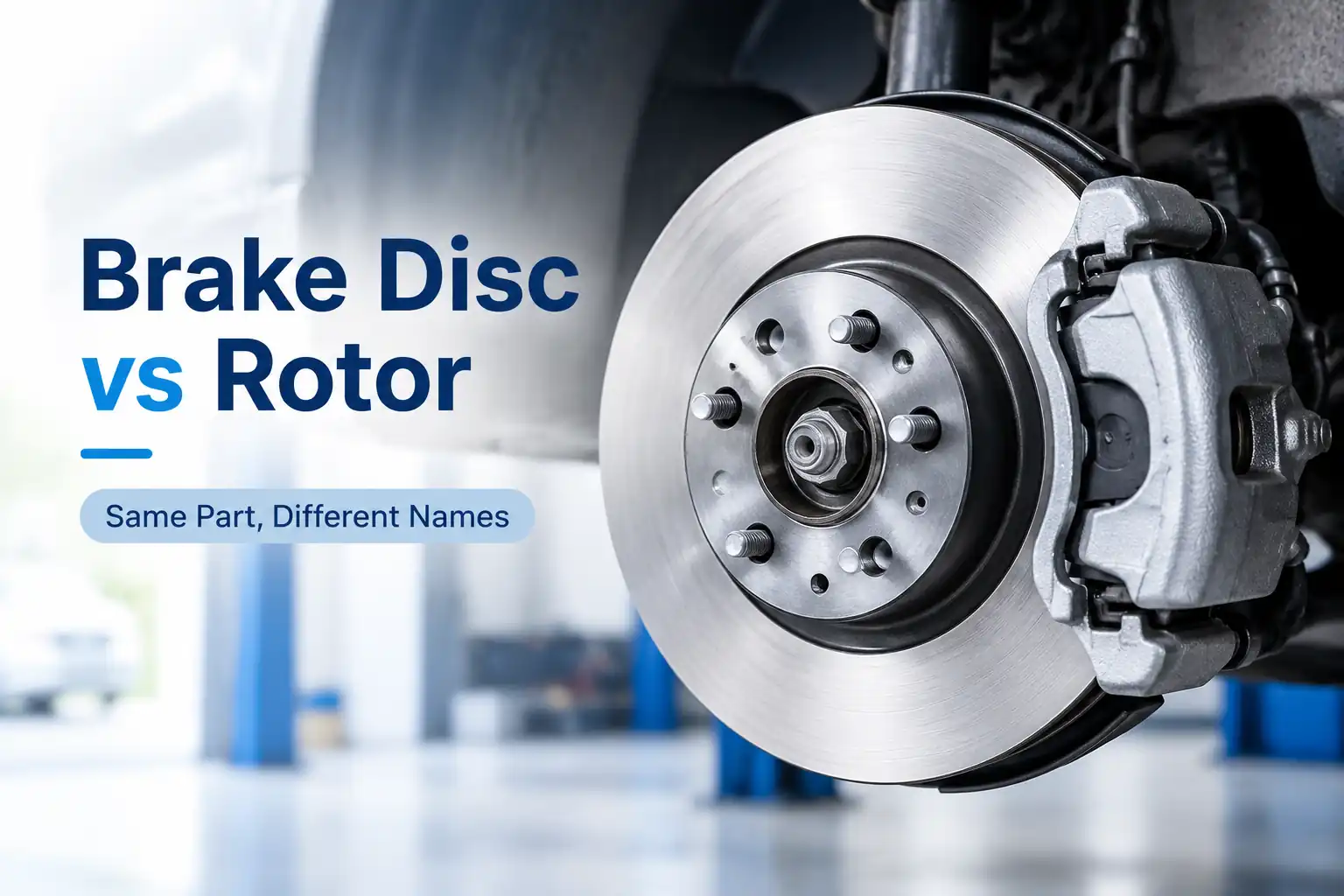
Brake discs are a key component of a vehicle’s braking system. Common types include solid, drilled, and slotted brake discs, each with its own design and performance characteristics. But do these designs actually improve braking performance, or are they simply for looks?
Brake disc performance depends on factors such as material, design, and heat dissipation. Each type has its own advantages and drawbacks, and the right choice depends on the vehicle’s intended use and driving needs.
How Do Disc Brakes Work?
Brake discs work by converting a vehicle’s kinetic energy into heat through friction with the brake pads, allowing the vehicle to slow down and stop.
However, repeated or prolonged braking causes the discs to heat up, which can reduce braking performance. If excessive heat builds up, the braking system may become less effective as temperatures rise. This is known as brake fade.
Therefore, brake discs must have sufficient strength, wear resistance, and heat resistance, while also providing effective heat dissipation under different driving conditions.
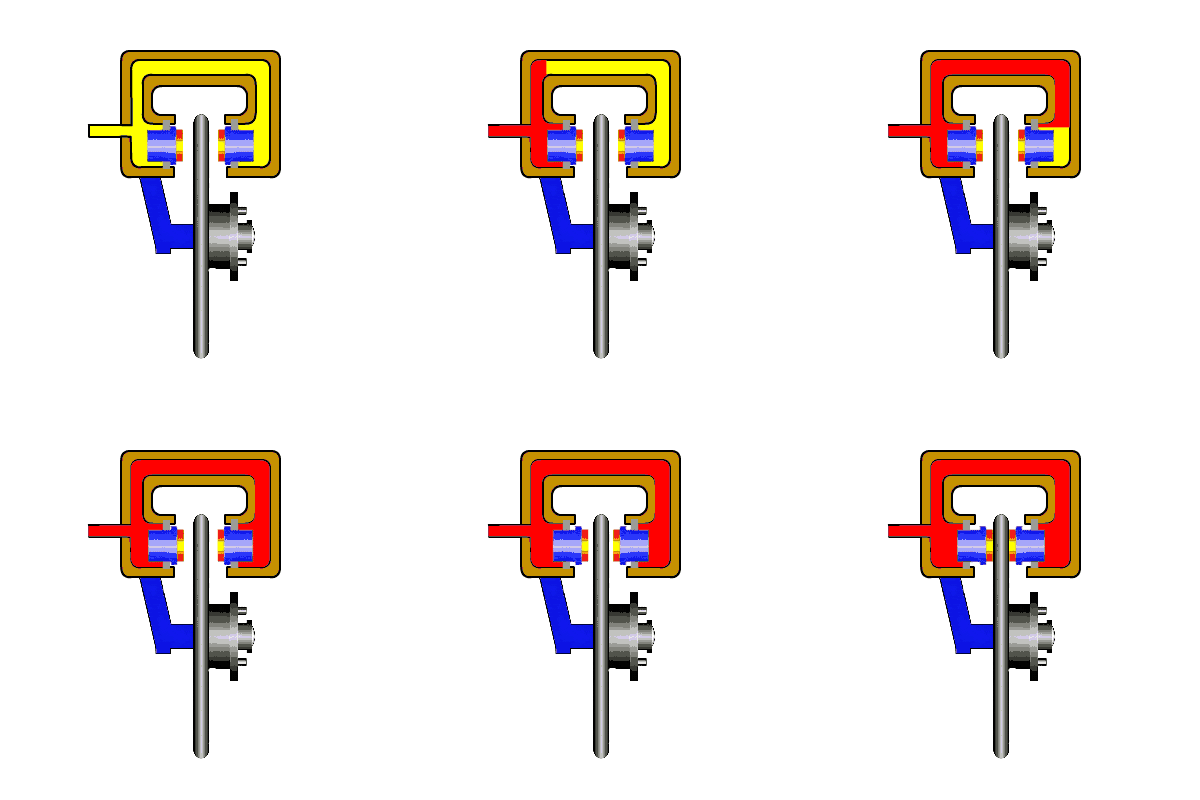
What Is a Brake Caliper and How Does It Work?
A brake caliper is the part of a disc brake system that does the clamping. This guide explains what the part is, what it is made of, and how it turns the pressure from your foot into the force that stops the car.
Read More
Types of Brake Discs by Material
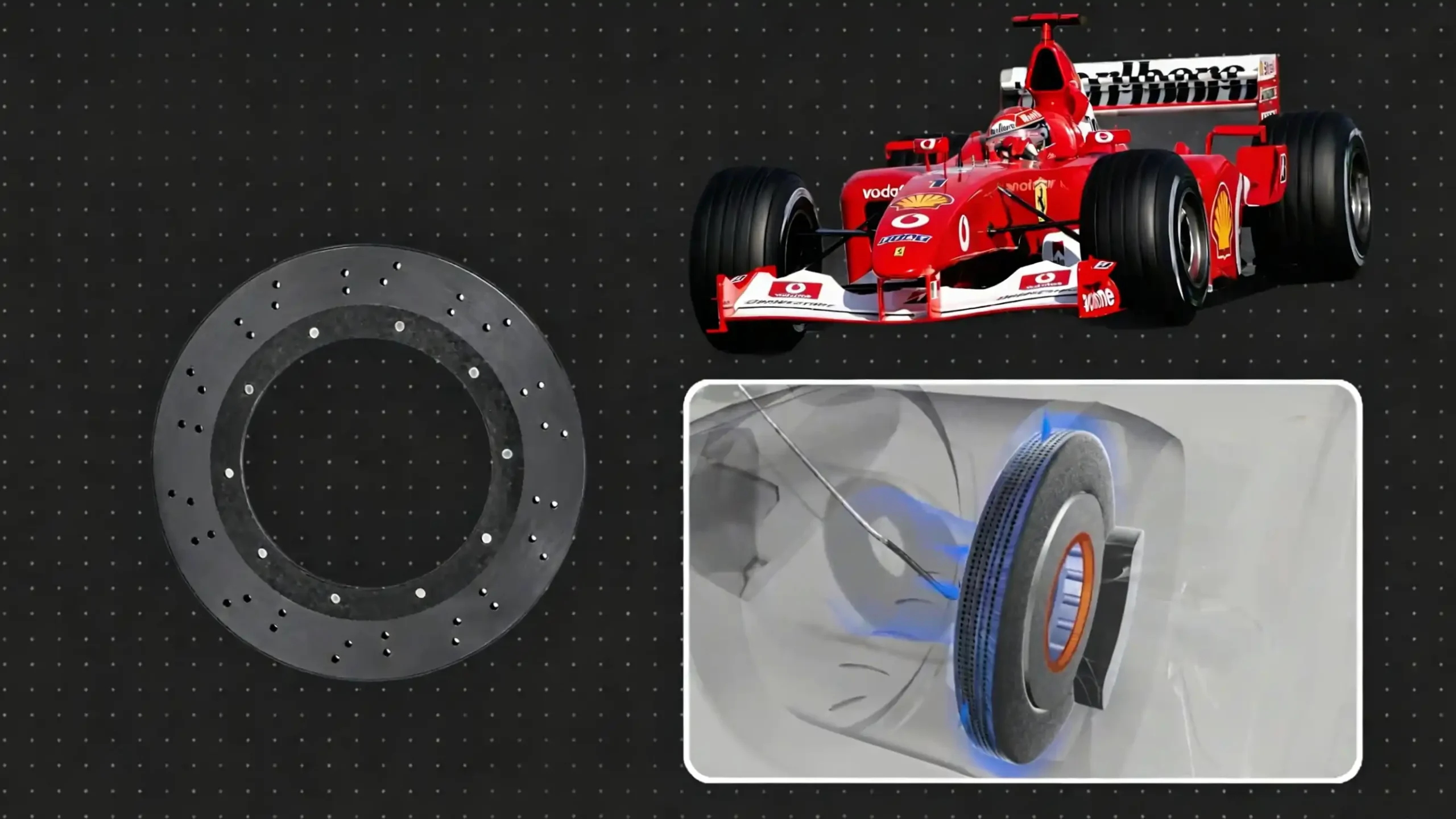
Brake disc material directly affects weight, heat resistance, manufacturing cost, and service life. Cast iron brake discs are widely used in everyday passenger cars, while carbon-ceramic and carbon-carbon brake discs are primarily found in high-performance vehicles and motorsport applications.
01.
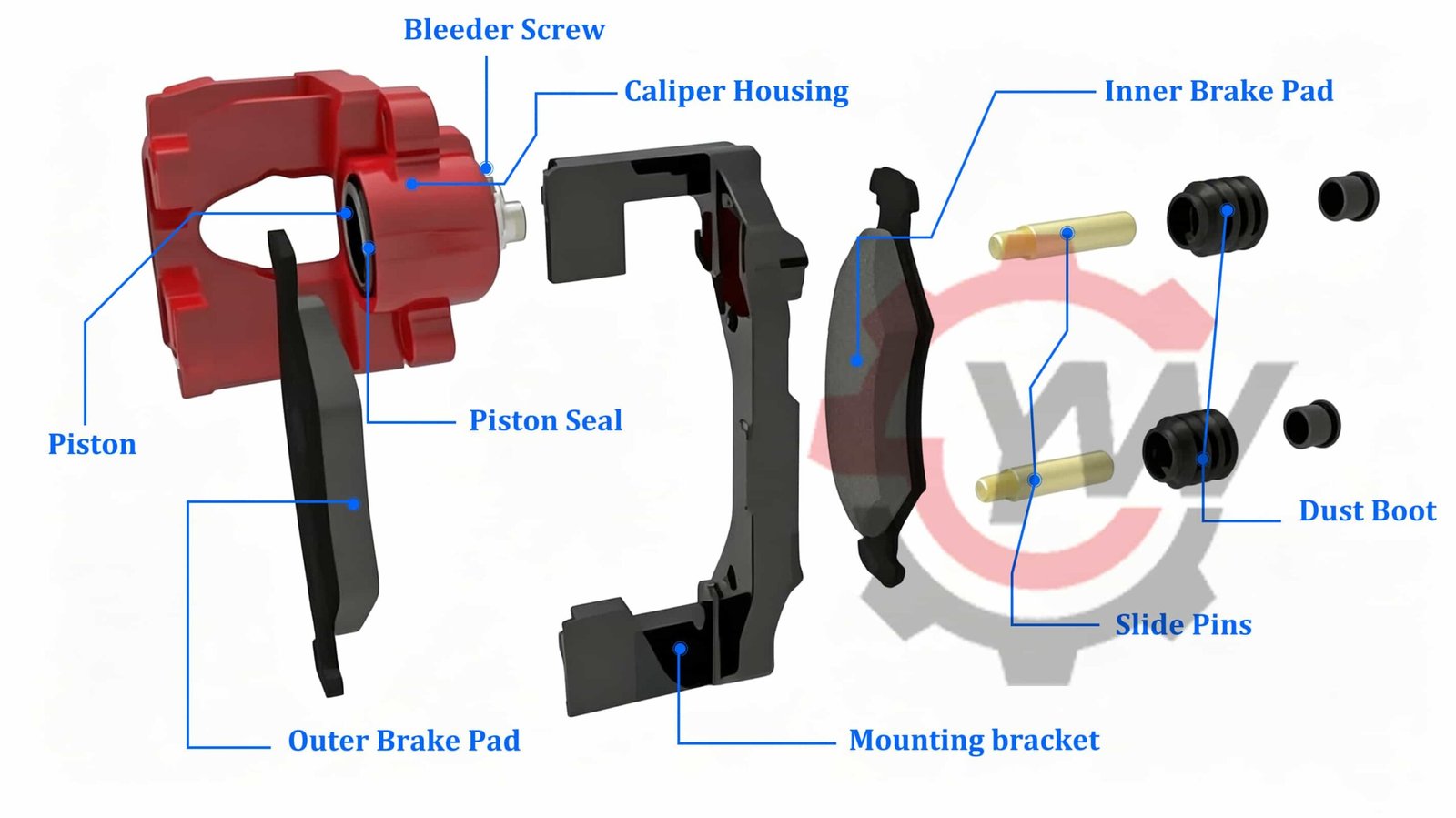
Cast Iron Brake Discs
Cast iron brake discs are the most common type used in everyday passenger cars. They offer consistent braking performance at a relatively low cost, making them well suited to daily driving.
Their main drawback is their weight. Repeated hard braking can also cause brake fade as temperatures rise. Some vehicles use ductile iron brake discs, which offer improved strength and wear resistance.
02.
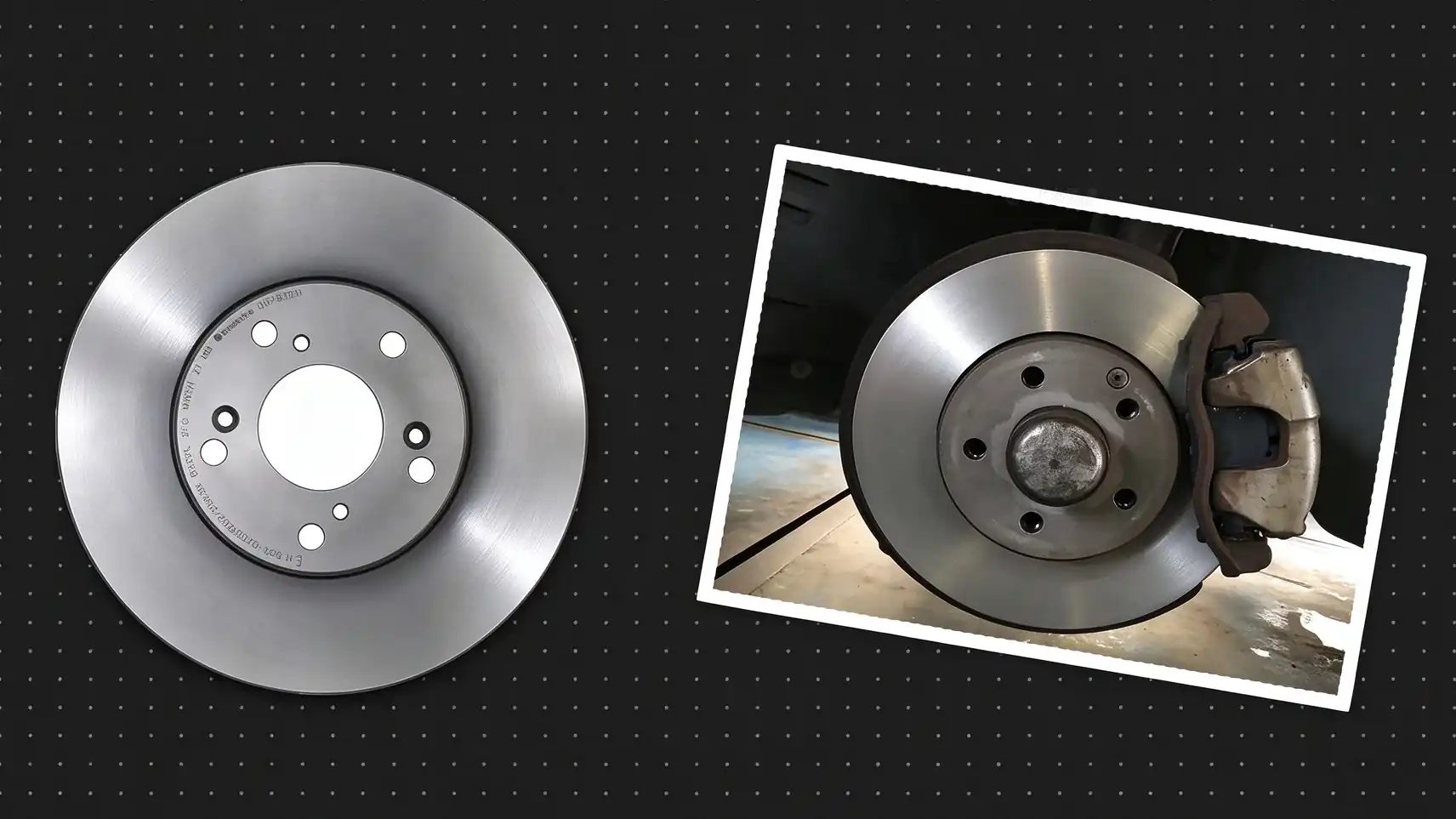
Carbon Ceramic Brake Discs
Made from a carbon-fiber-reinforced ceramic composite, typically containing silicon carbide, these discs are lightweight and highly heat-resistant. They are commonly used in high-performance vehicles and are well suited to demanding driving conditions.
Their main drawback is their high cost, making them an expensive option for everyday passenger cars.
03.
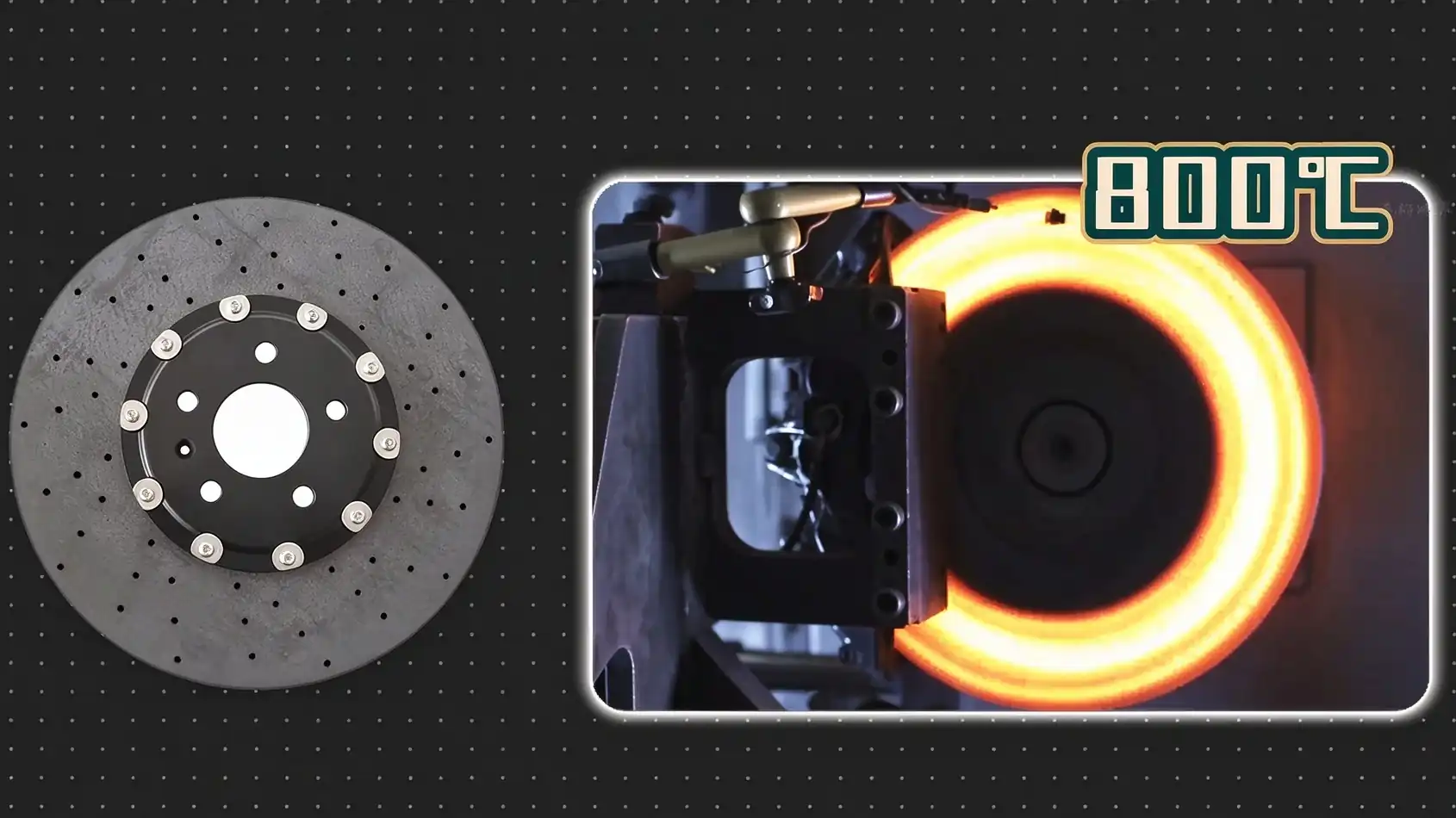
Carbon Fiber Ceramic Brake Discs
Carbon fiber carbon brake discs are primarily used in high-performance motorsport applications. Made from carbon fibers embedded in a carbon matrix, they are lightweight and capable of withstanding extremely high temperatures.
However, they are very expensive and generally require high operating temperatures to deliver optimal braking performance, making them unsuitable for most everyday passenger cars.
Types of Brake Discs by Design
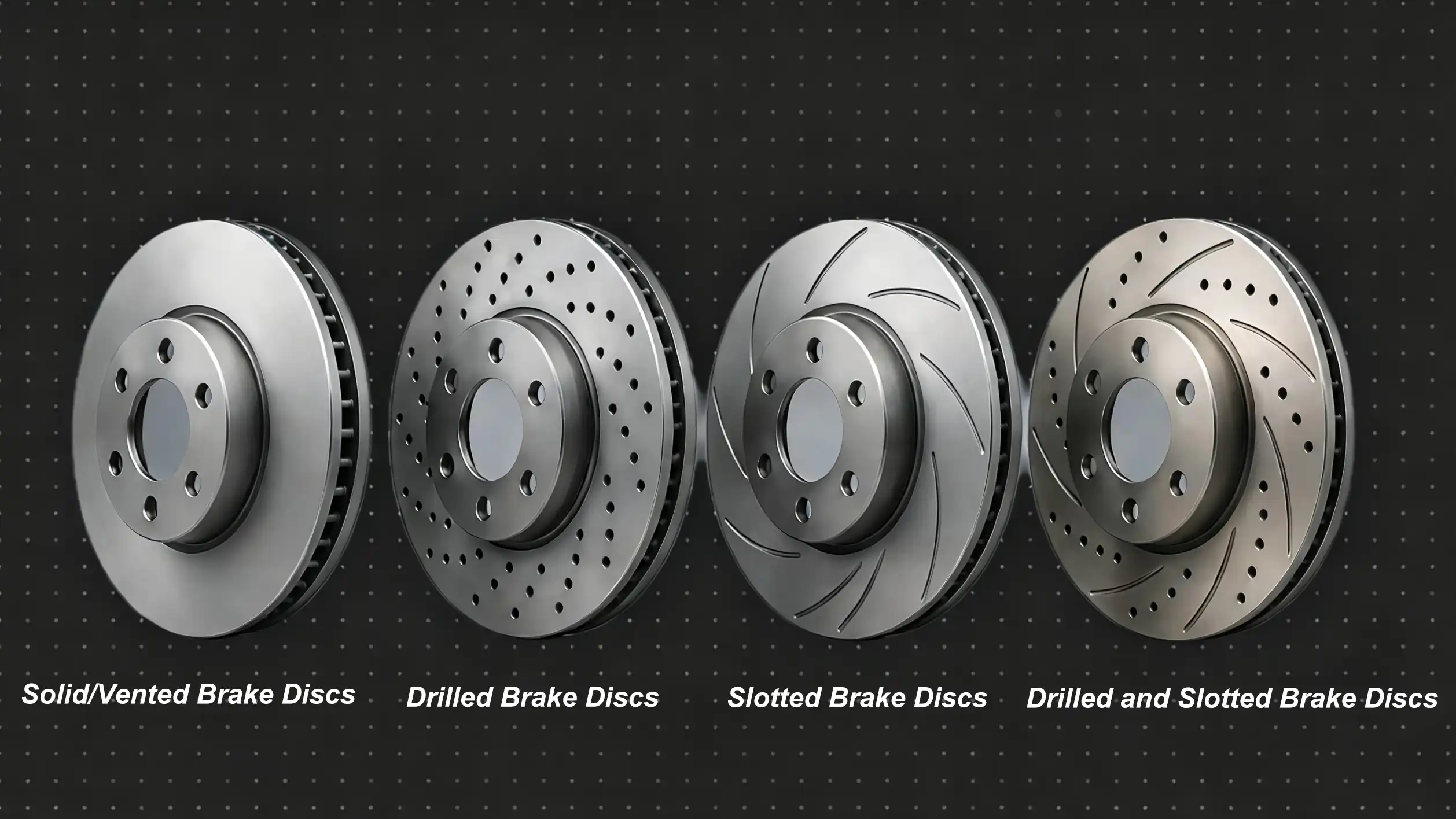
In addition to material, brake disc design also affects heat dissipation, weight, braking performance, and maintenance costs. It is important to distinguish between disc construction and surface design. Solid and vented discs are classified by their internal structure, while drilled and slotted discs are classified by their friction surface design. These features are not mutually exclusive, as drilled and slotted discs can also have a vented construction.
01.
Plain Solid Brake Discs
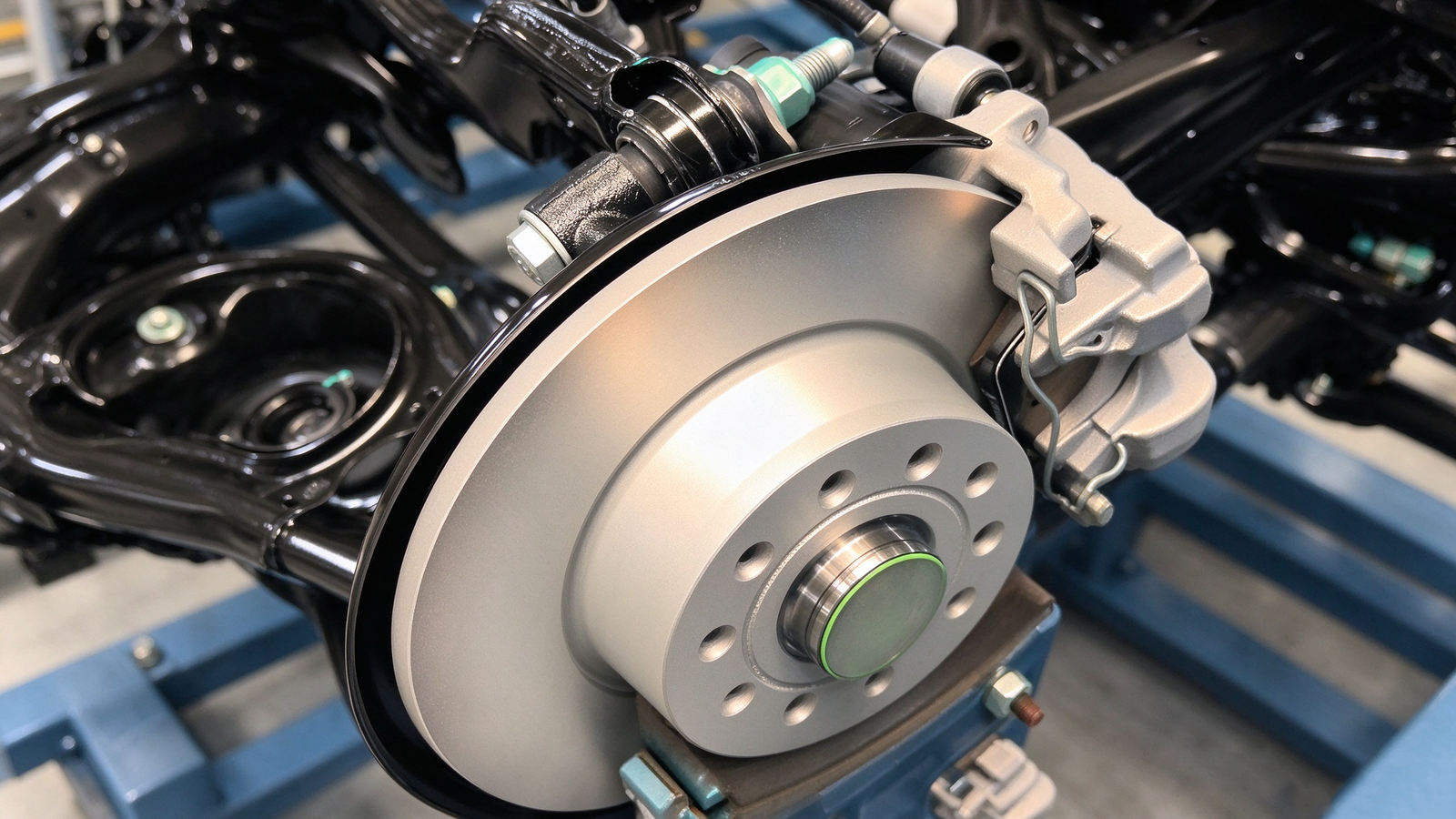
Plain solid brake discs have smooth friction surfaces without drilled holes or slots, and no internal ventilation channels. Their simple design keeps manufacturing costs low, and they are commonly used on the rear wheels of some passenger cars.
Compared with vented discs of similar size and material, solid discs generally dissipate heat less effectively and are better suited to vehicles with relatively low braking heat loads. However, when properly matched to the vehicle’s braking system, they can still meet the demands of everyday driving.
02.
Vented Brake Discs
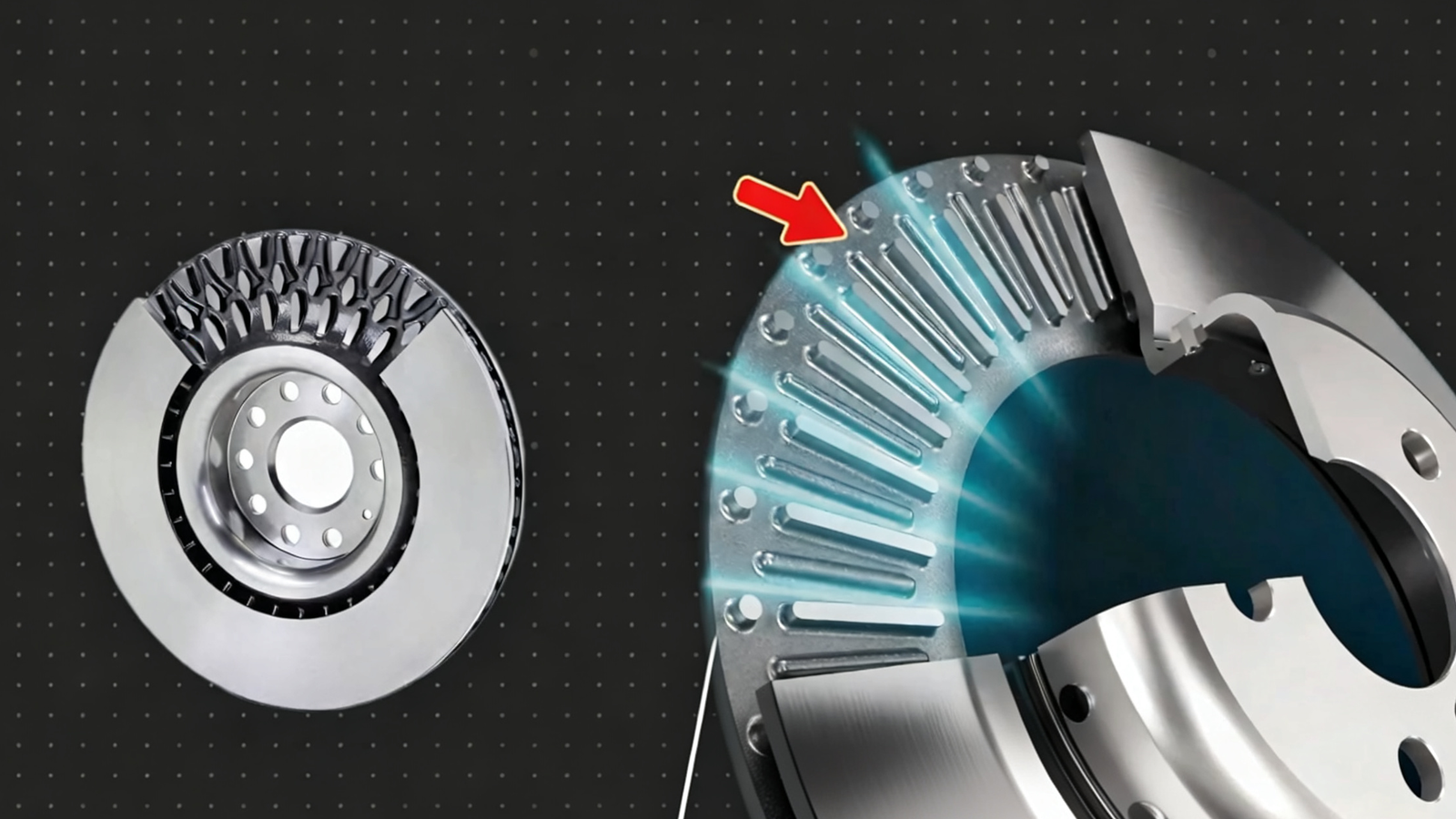
Vented brake discs have internal channels between their two friction faces, formed by ribs or vanes of various designs. As the disc rotates, air flows through these channels, helping carry away heat generated during braking.
As a result, vented discs generally offer better heat dissipation and are better suited to higher braking heat loads.
03.
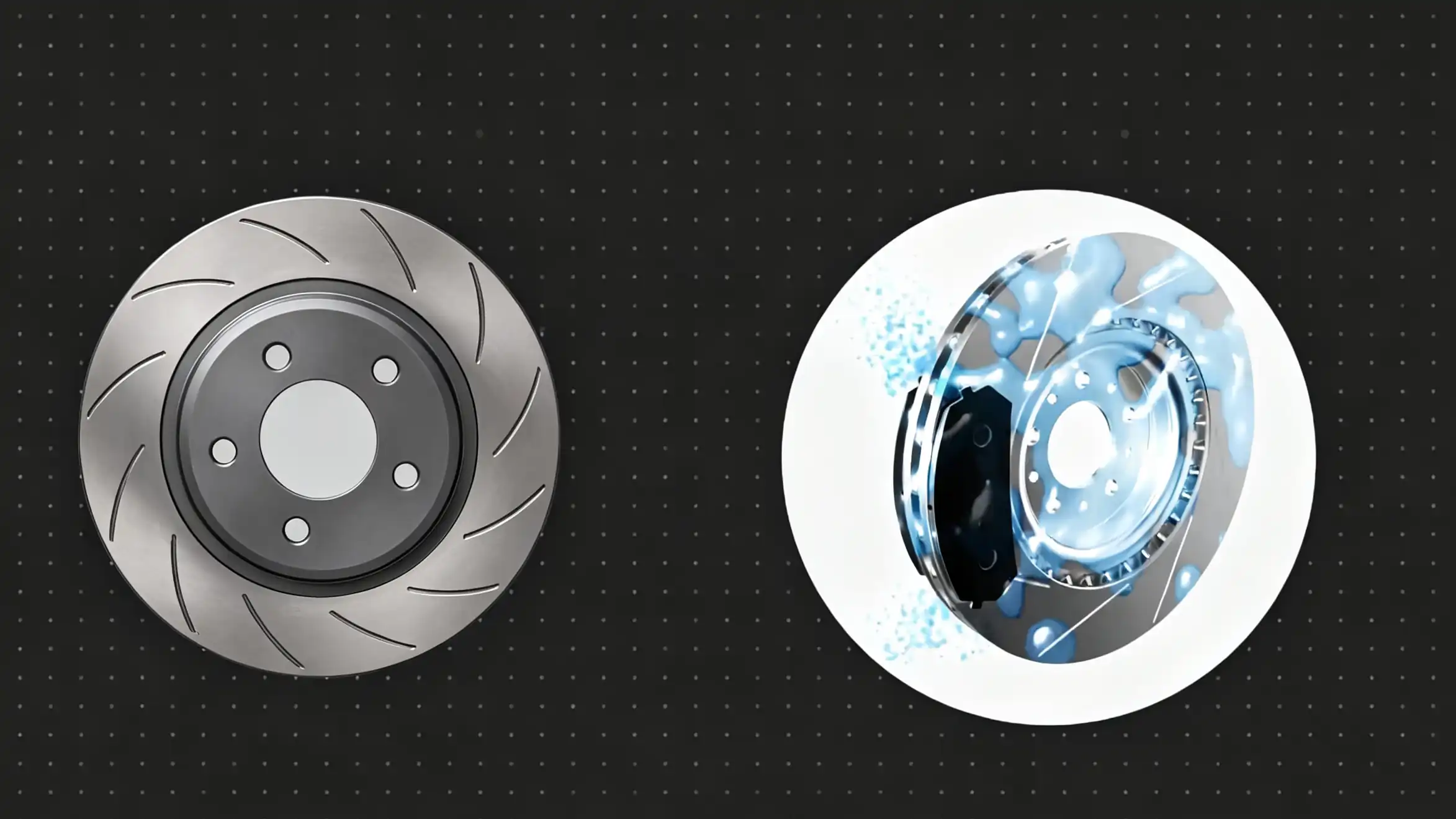
Drilled Brake Discs
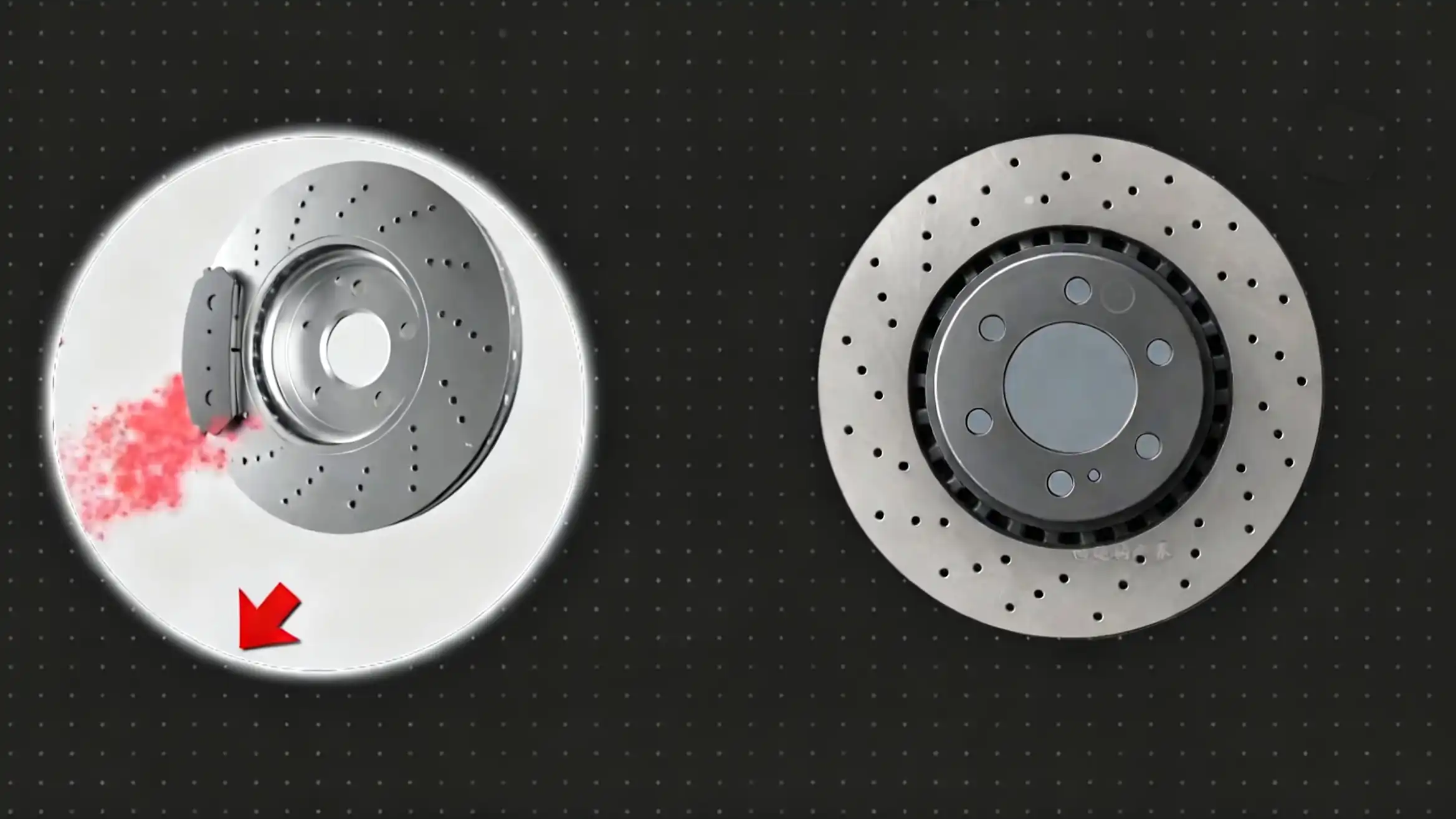
Drilled brake discs feature holes drilled through the disc. These holes can help disperse water and evacuate gases and debris from the friction interface under certain conditions.
However, the holes can also act as stress concentration points where cracks may develop, making material strength and manufacturing quality particularly important.
04.
Slotted Brake Discs
Slotted brake discs feature grooves cut into their friction surfaces. These grooves help remove debris and refresh the brake pad surface during braking.
However, slotted discs can increase brake pad wear, potentially requiring more frequent replacement.
05.
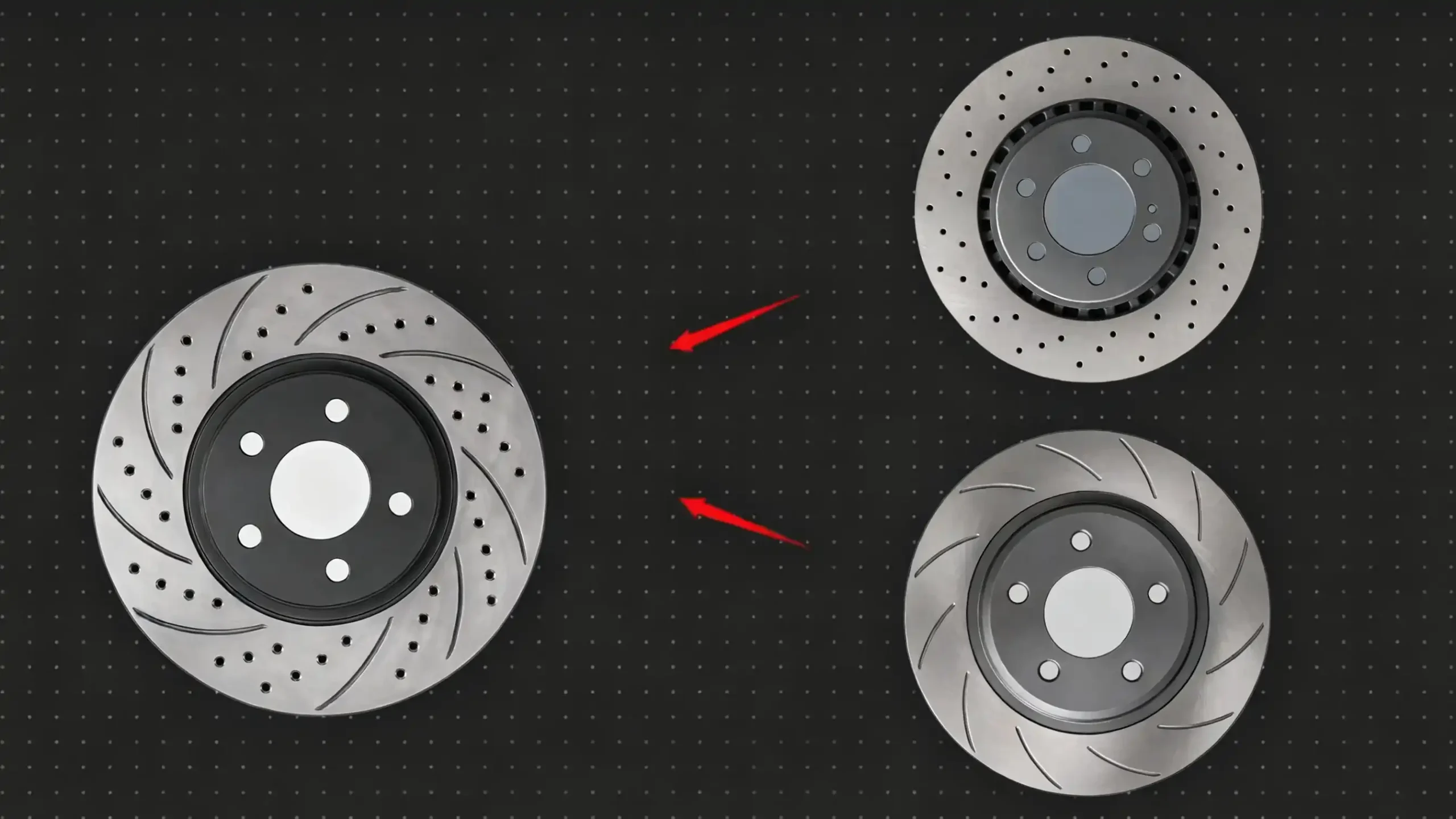
Drilled and Slotted Brake Discs
These discs combine drilled holes with surface slots and are used on some performance and modified vehicles.
However, they generally cost more and may accelerate brake pad wear, making them less cost-effective for everyday driving.
How to Choose the Right Brake Discs
Once you understand the differences in brake disc materials and designs, the next step is to consider your vehicle and driving conditions. More expensive discs or more elaborate designs do not automatically deliver better braking performance. The right choice depends on the vehicle’s original specifications, how it is driven, and the demands placed on the braking system.
| Driving Conditions | Recommended Choice | Key Considerations |
| Daily commuting and city driving | Brake discs that meet OEM specifications | Reliable braking, cost, durability, and ease of maintenance |
| Regular highway driving and family trips | OEM-specification discs, including the appropriate solid or vented design | Braking reliability, heat dissipation, and vehicle compatibility |
| Frequent mountain driving or more aggressive driving | A braking setup matched to the vehicle and driving conditions | Brake pad temperature capability, disc cooling, brake fluid condition, and overall system compatibility |
| Frequent track days | A braking system specifically designed for track use | High-temperature performance, cooling capacity, durability, and replacement and maintenance costs |
| High-performance vehicles where weight reduction is a priority | A compatible carbon-ceramic braking system, where appropriate | Weight savings, thermal performance, purchase cost, and maintenance requirements |
For most road-going vehicles, discs that meet OEM specifications are a suitable starting point. If driving conditions place unusually high demands on the brakes, consider the performance of the entire braking system rather than choosing discs based on material or design alone.
Brake Disc Manufacturer for Global Automotive Markets
Looking for a reliable brake disc manufacturer? We supply automotive brake discs with OEM customization, strict quality control, and wholesale solutions for global distributors and aftermarket brands.
Read More
What Else Should You Consider When Replacing or Upgrading Brake Discs?
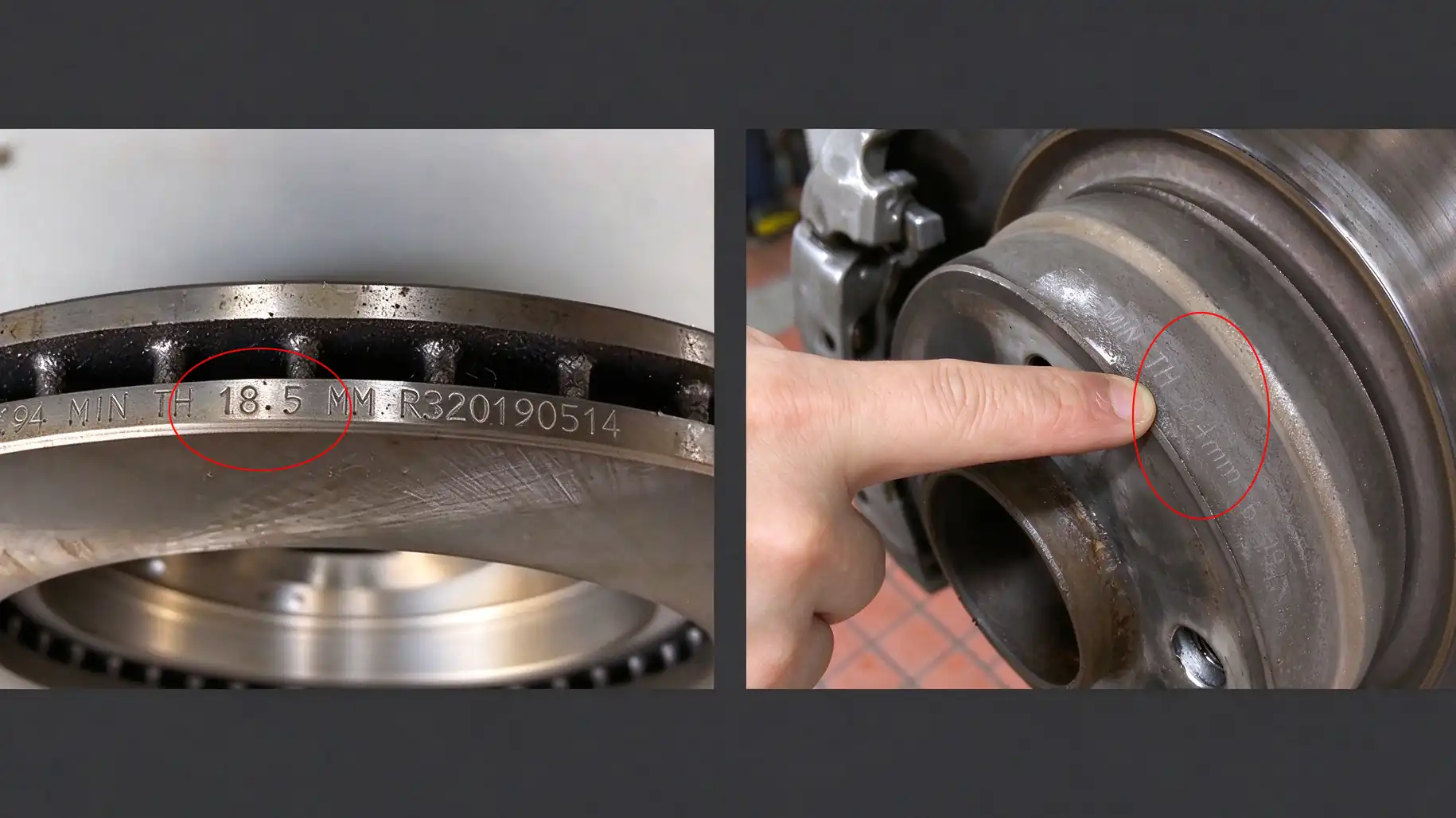
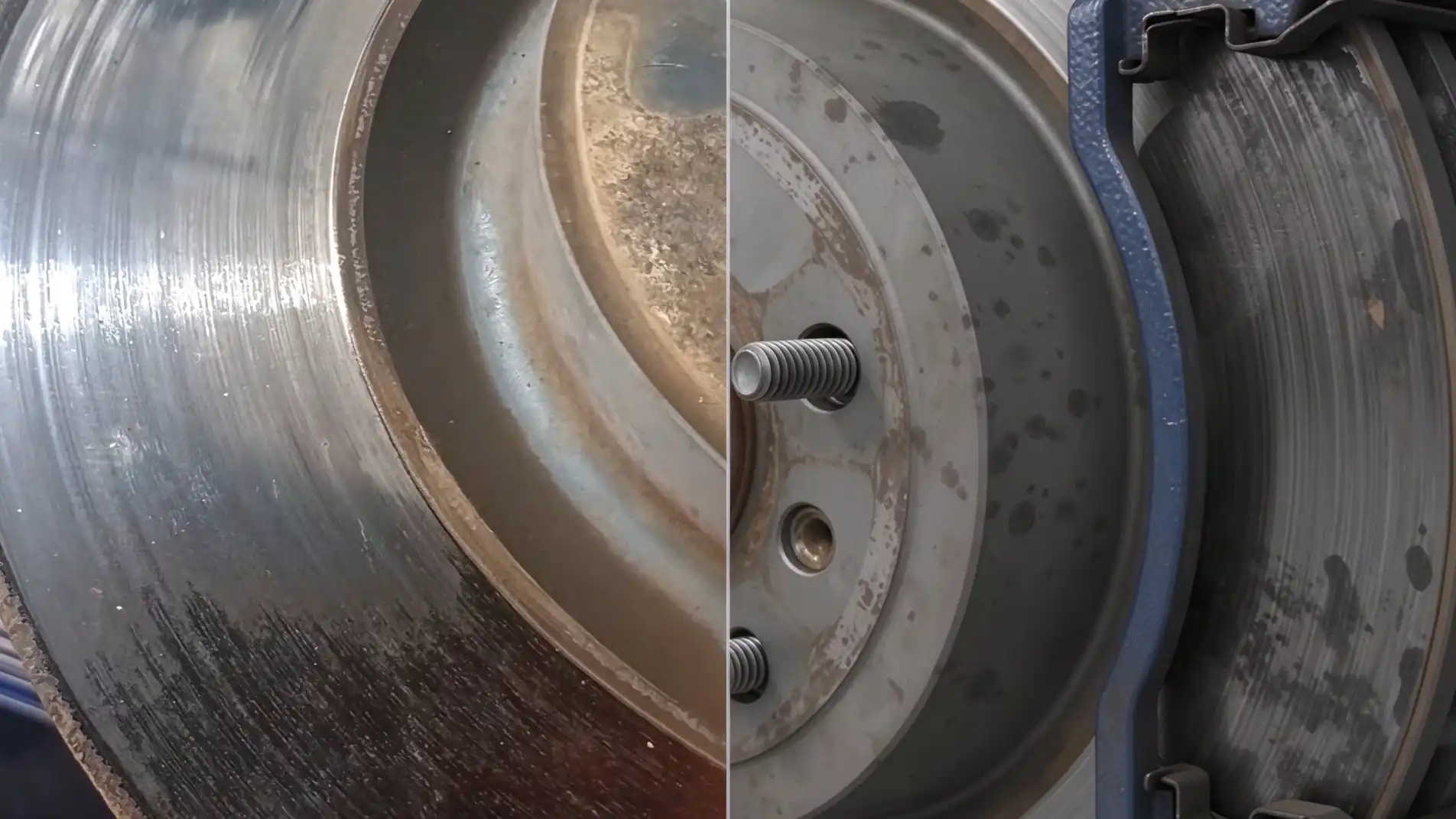
When choosing brake discs, always follow the vehicle manufacturer’s specifications and ensure that the discs are compatible with the vehicle’s braking system and brake pads. Replace discs if they are cracked, excessively worn, or worn below the manufacturer’s specified minimum thickness, in accordance with the manufacturer’s inspection and replacement guidelines.
When fitting aftermarket discs, such as drilled or slotted discs, pay particular attention to product quality, vehicle compatibility, and correct installation. Don’t choose aftermarket discs based on appearance alone.
FAQ
Related Articles